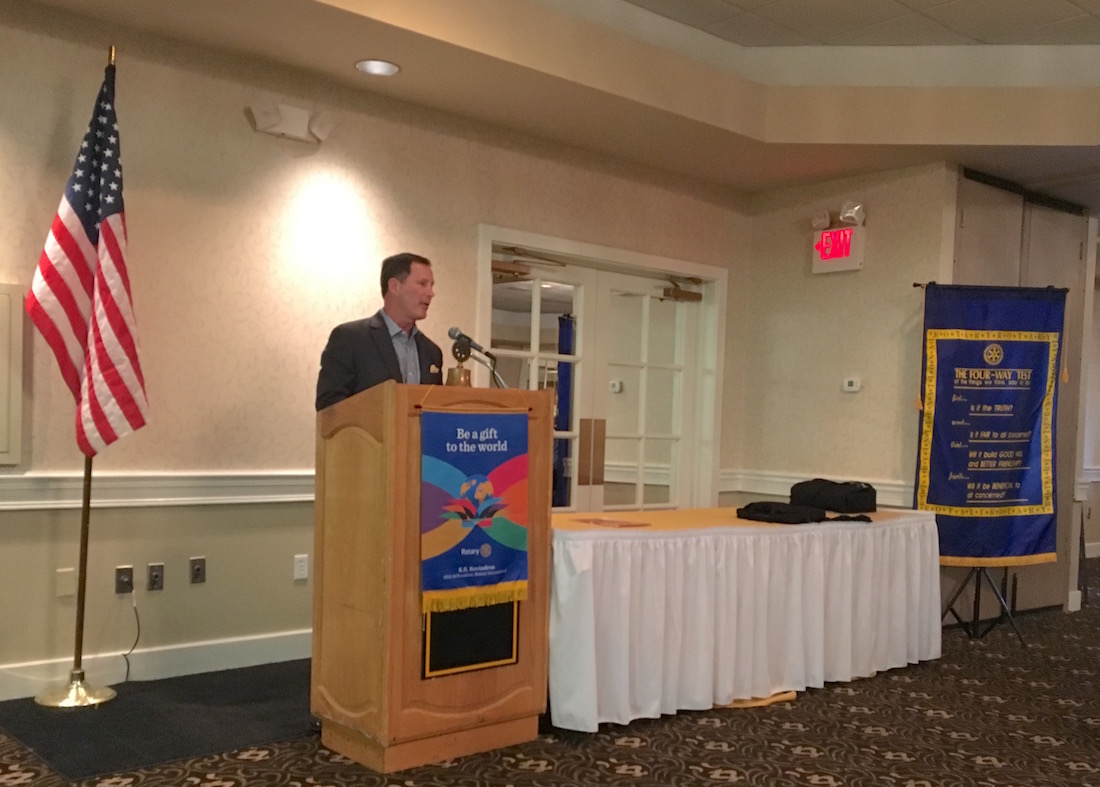
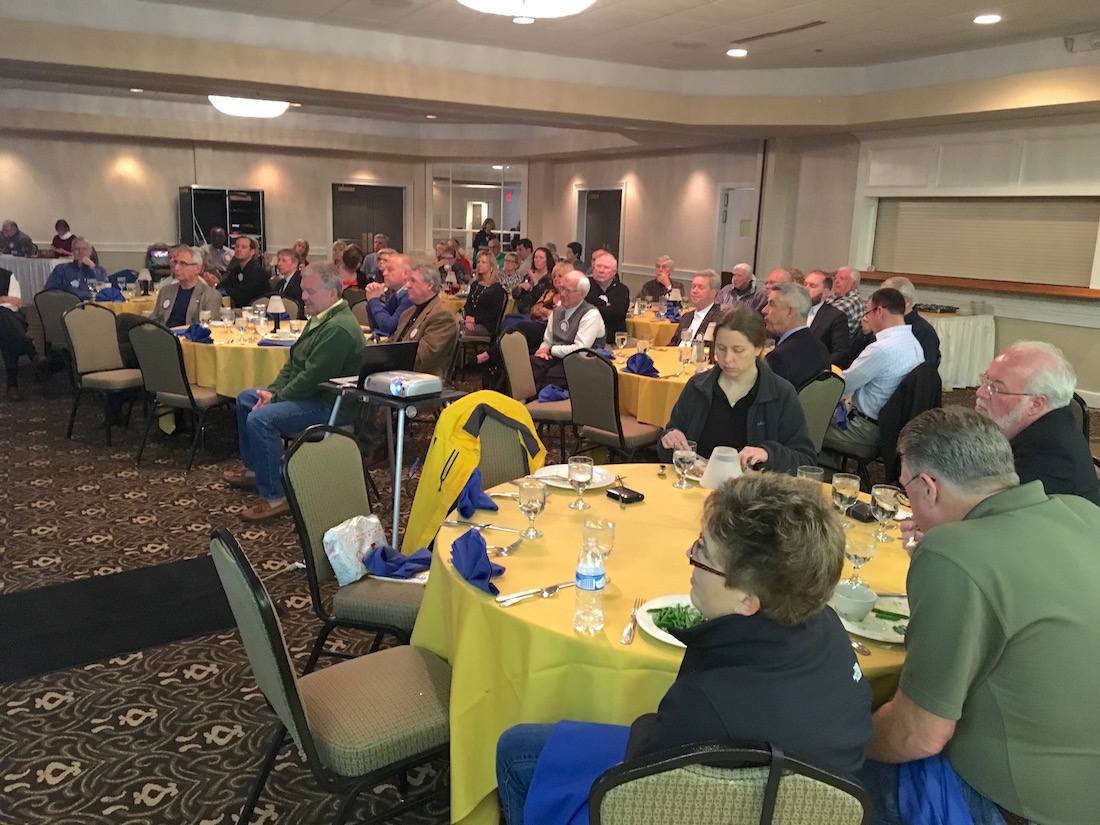
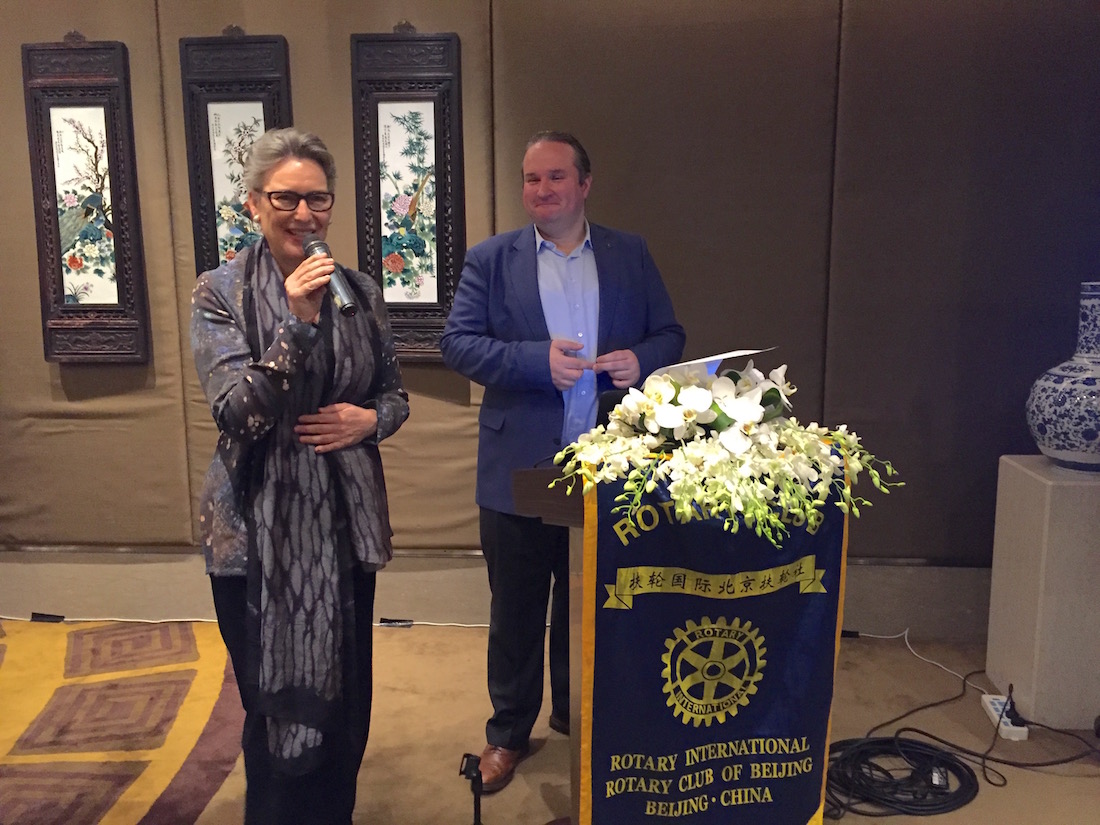
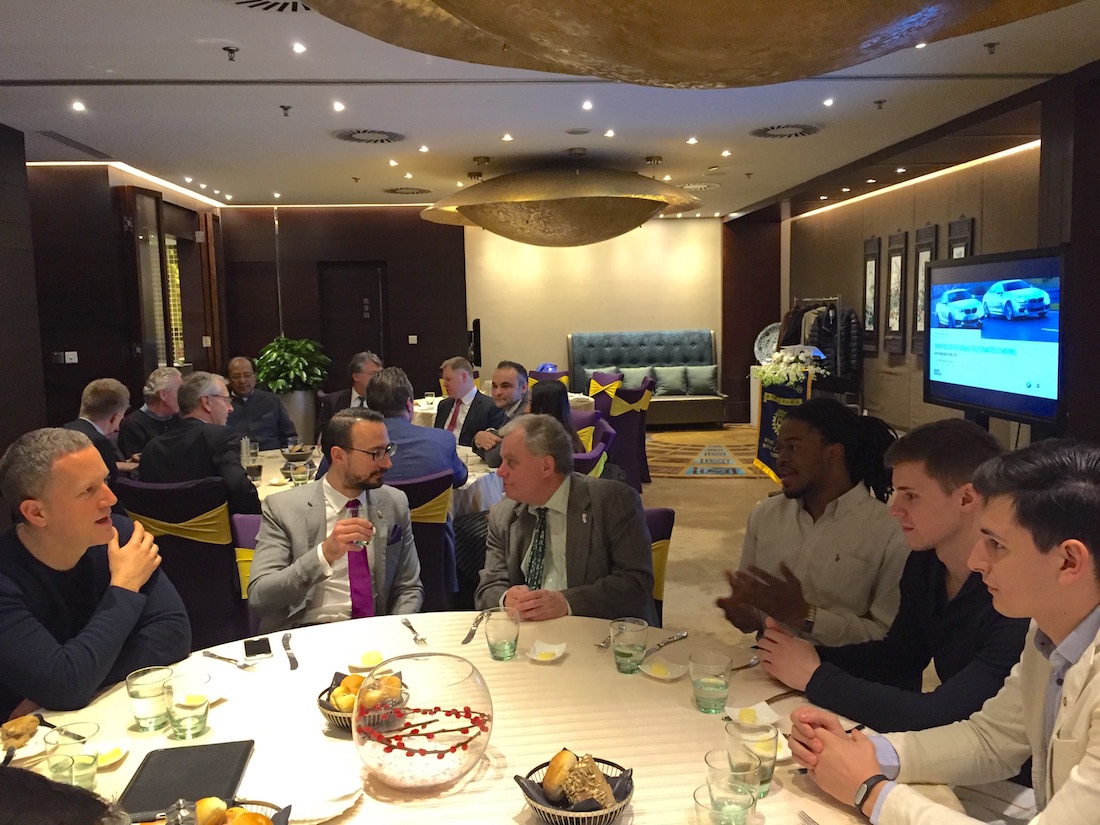
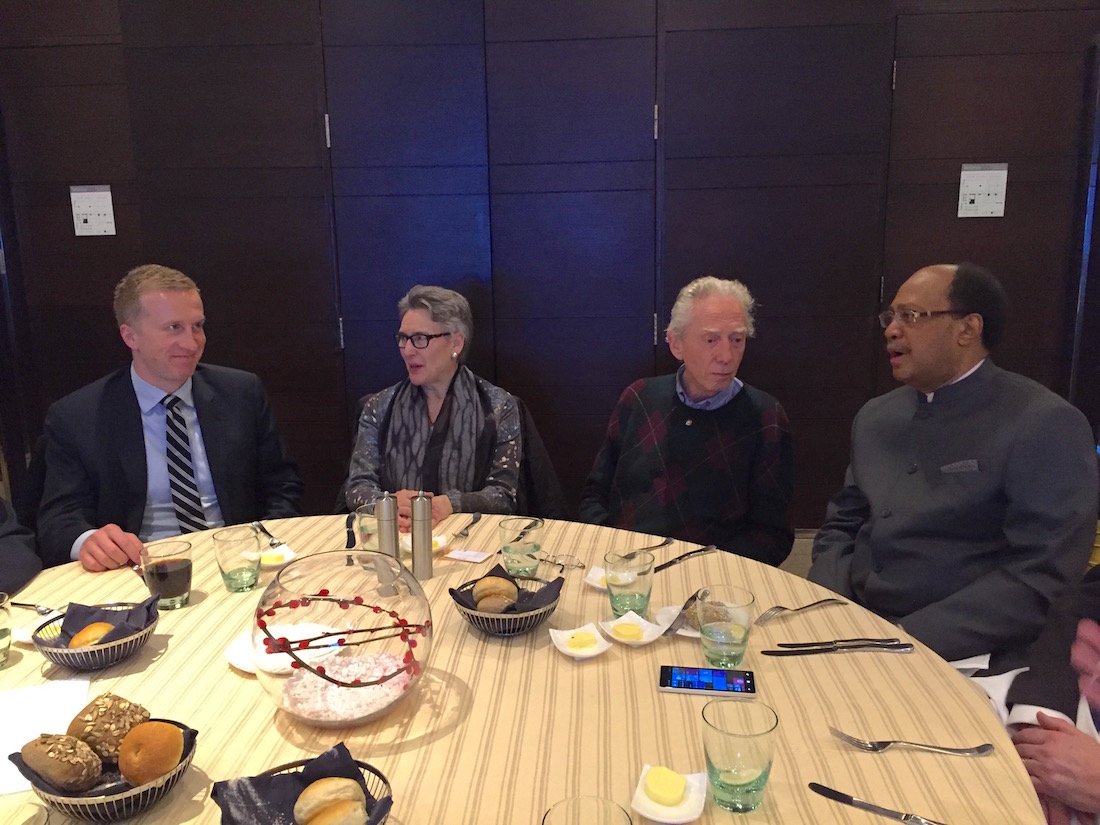
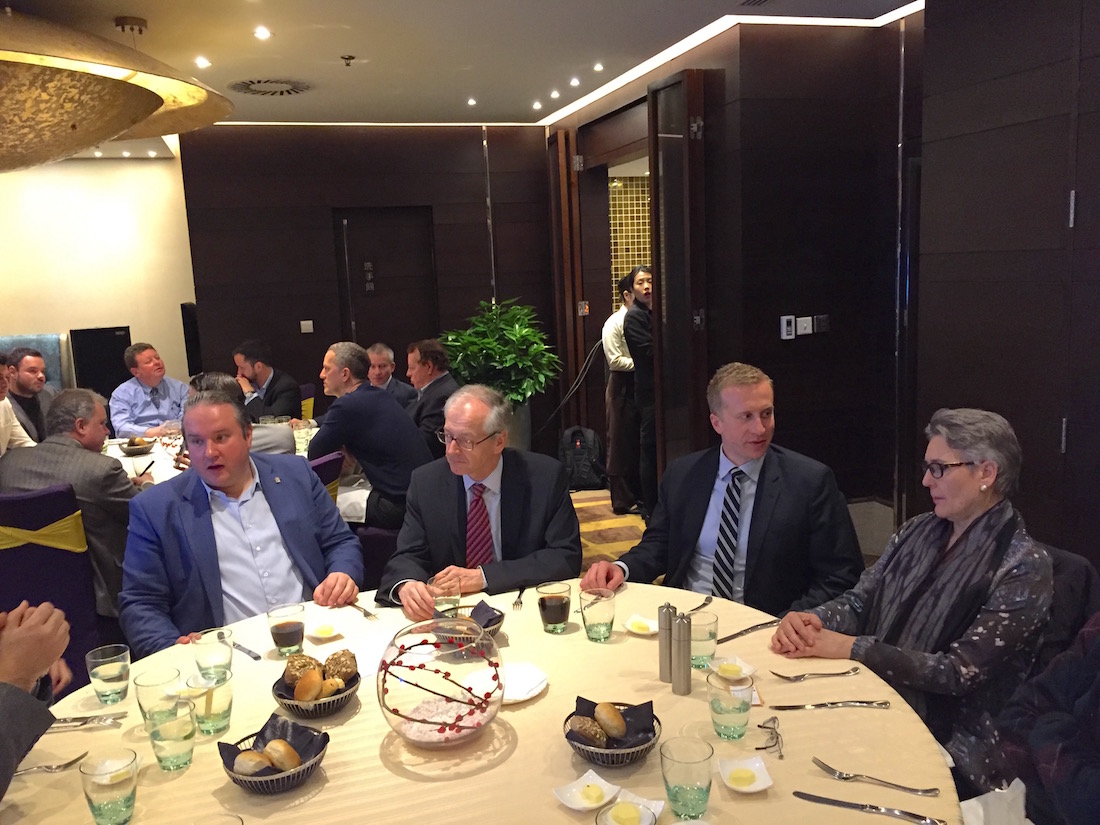
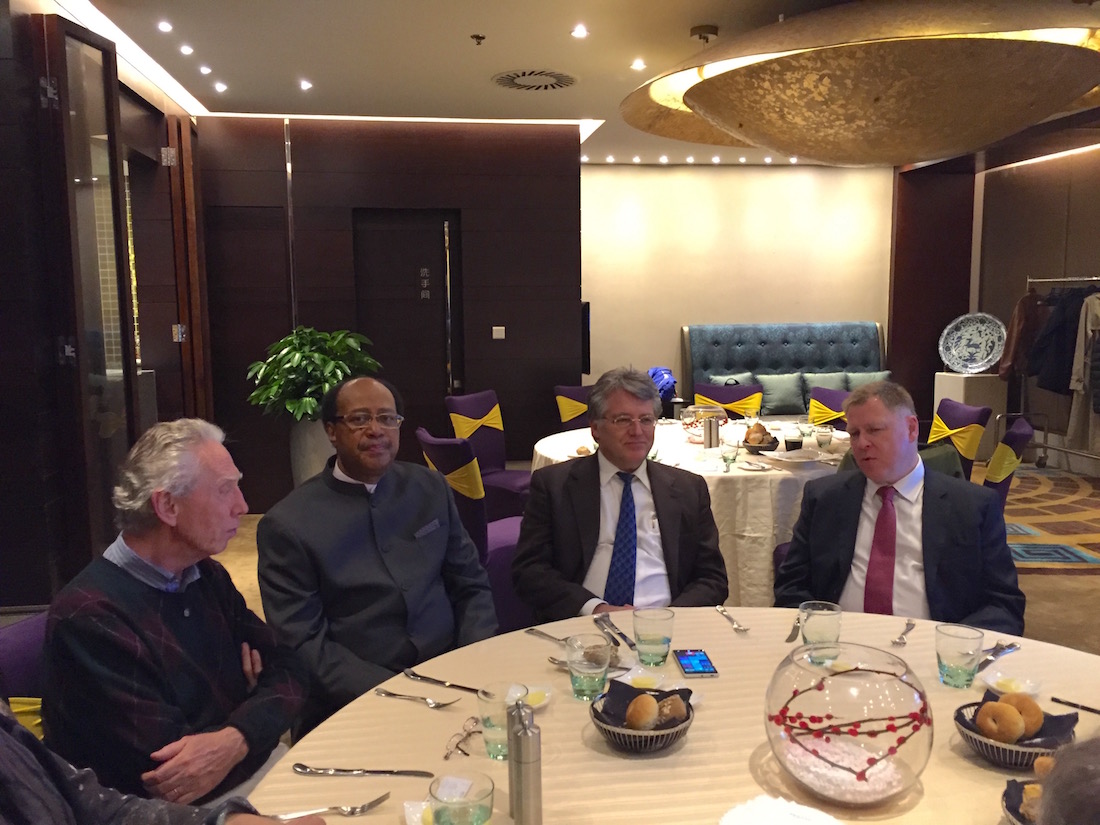
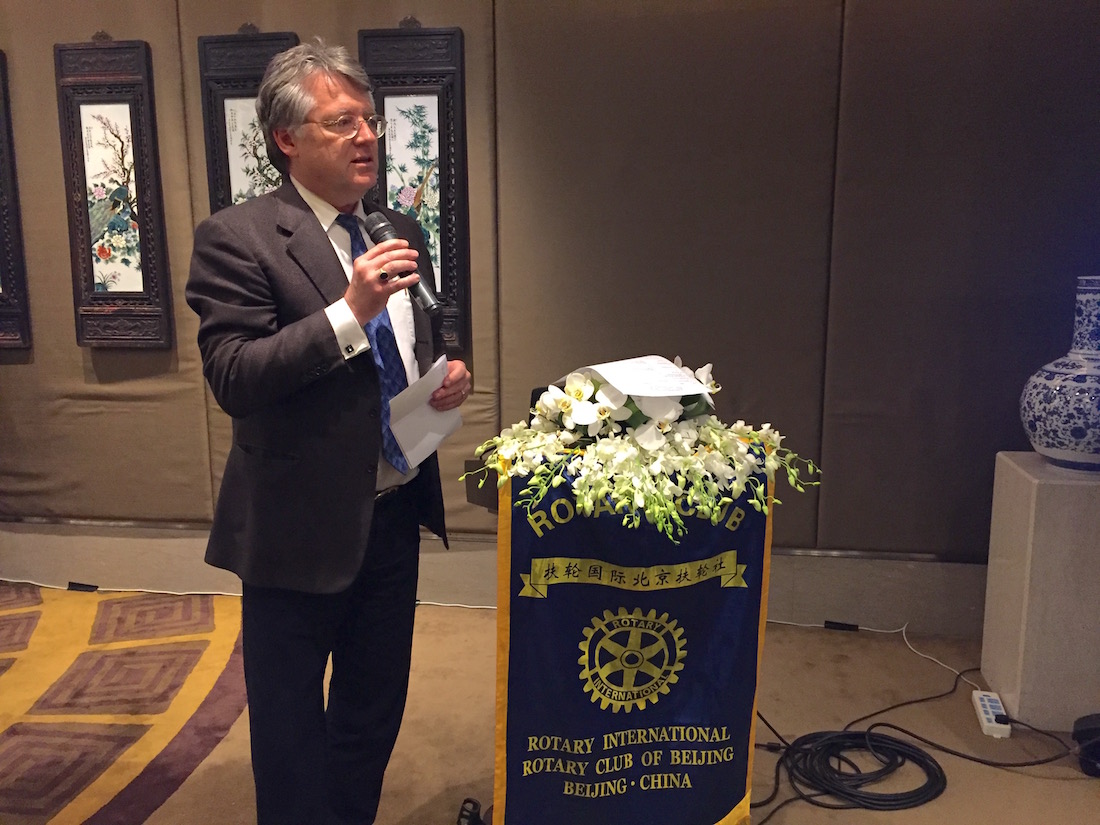
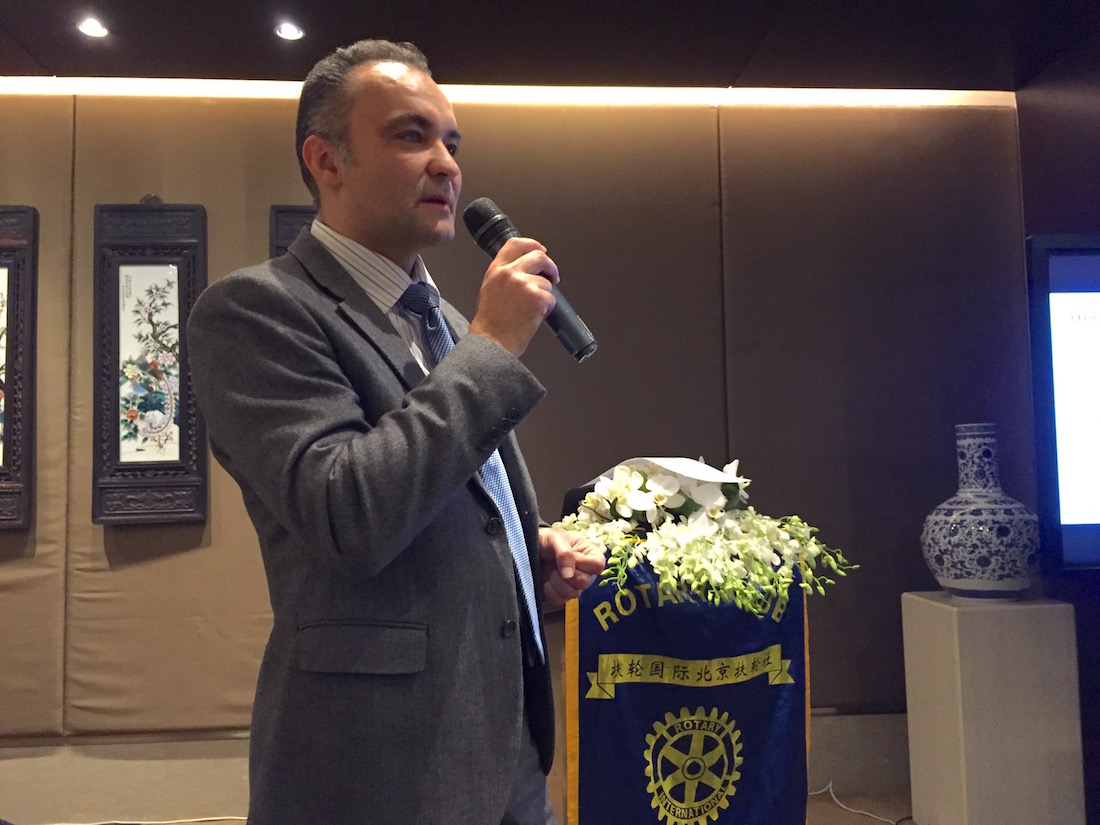
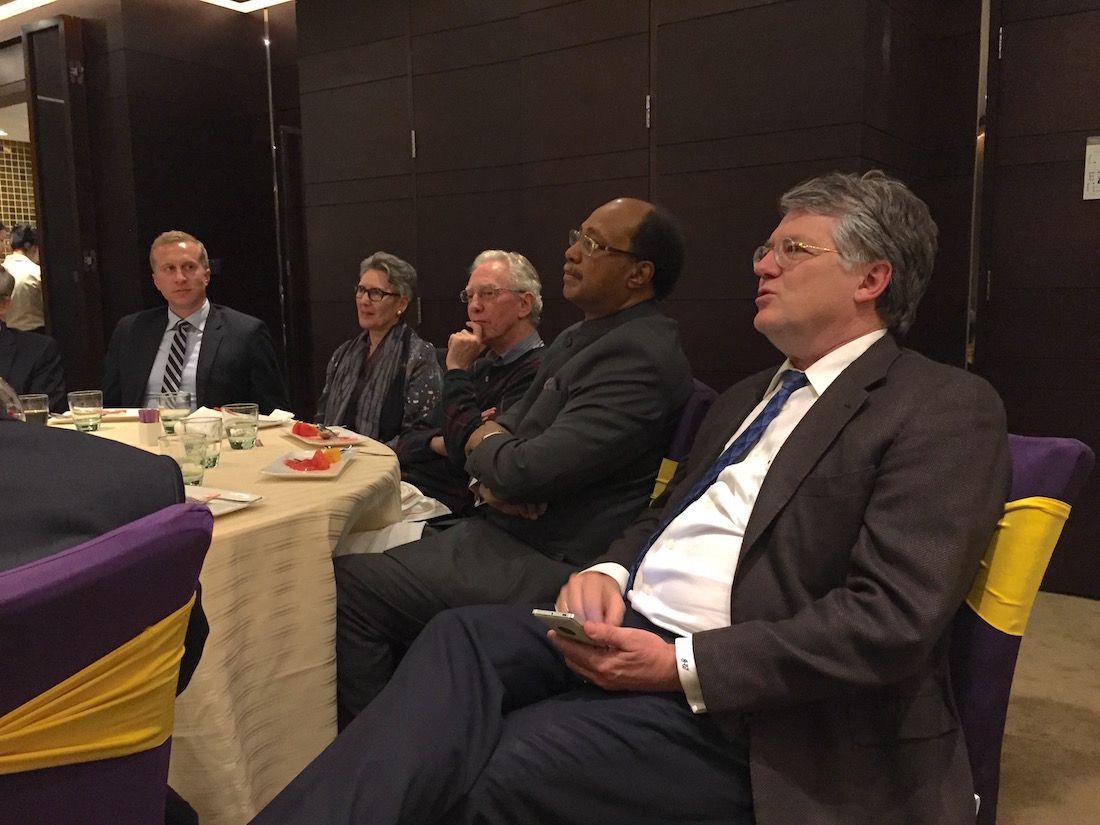
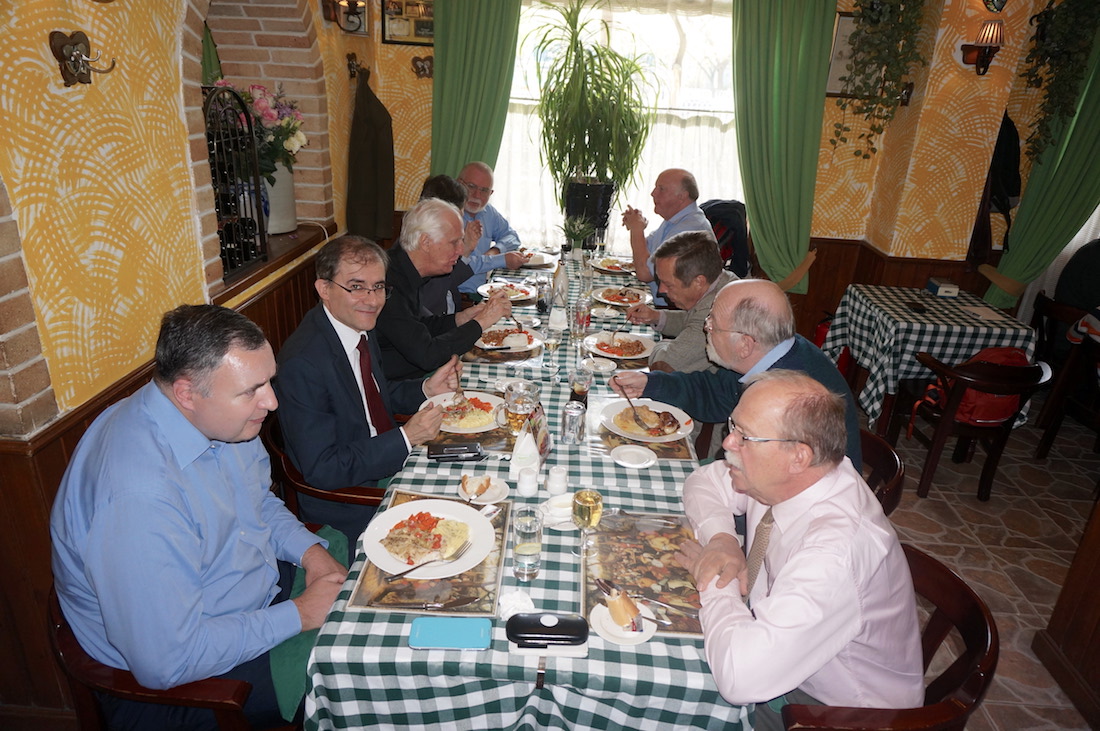
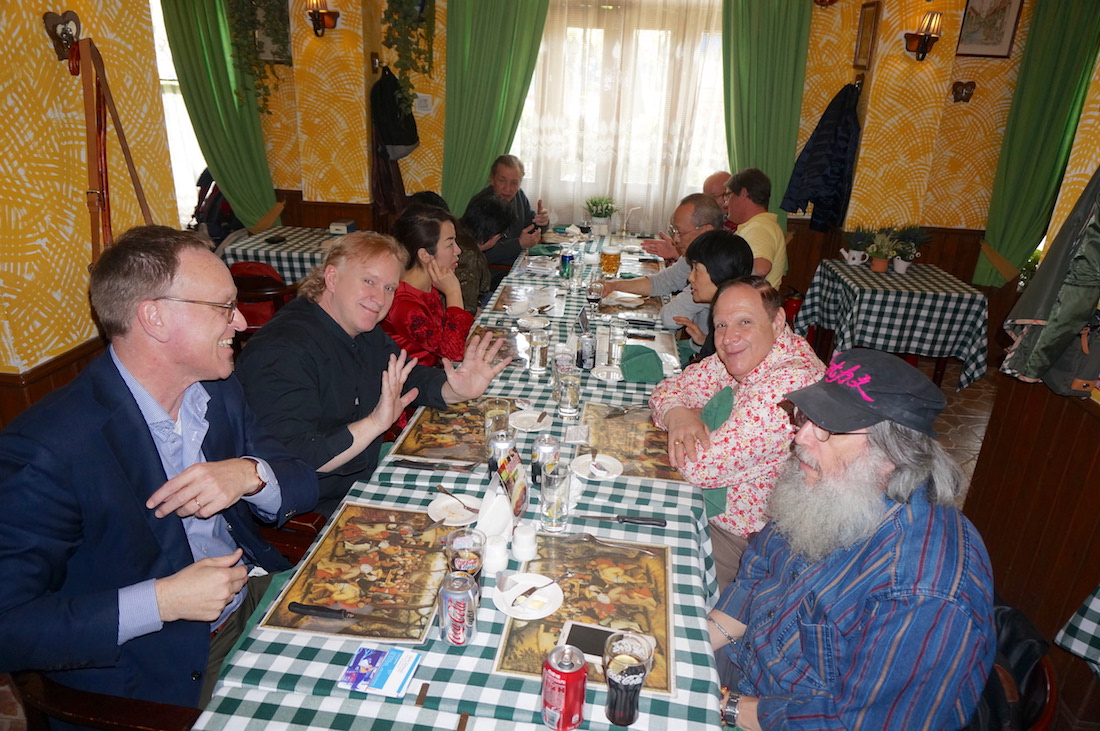
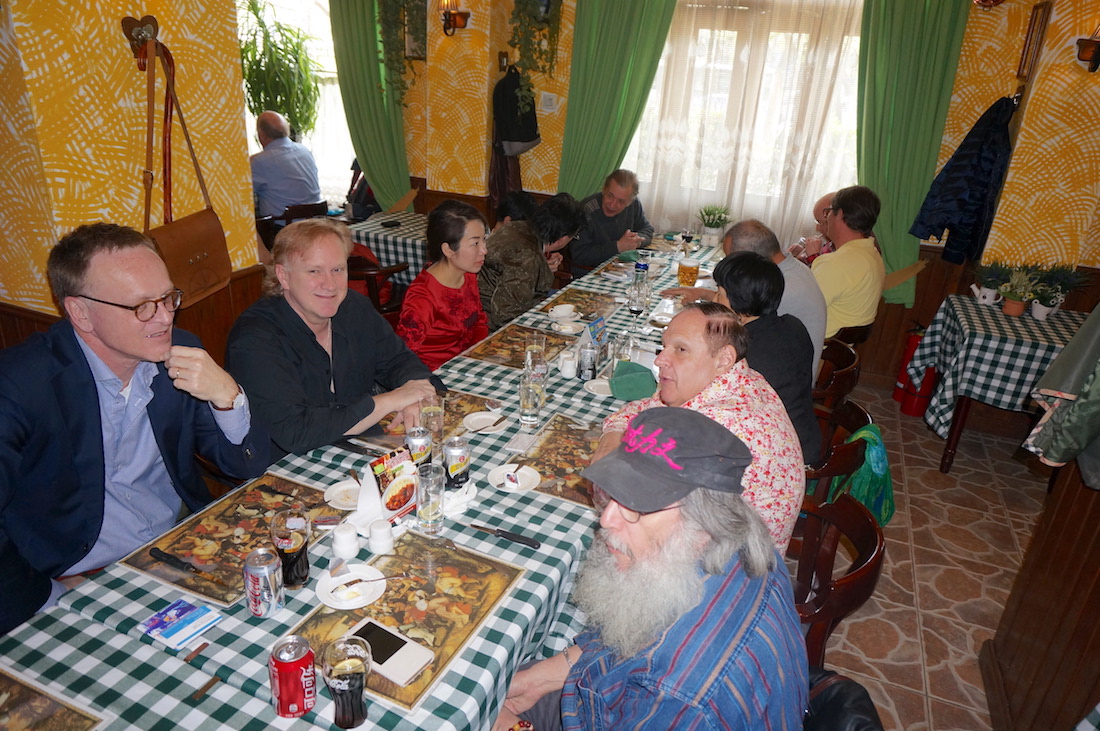
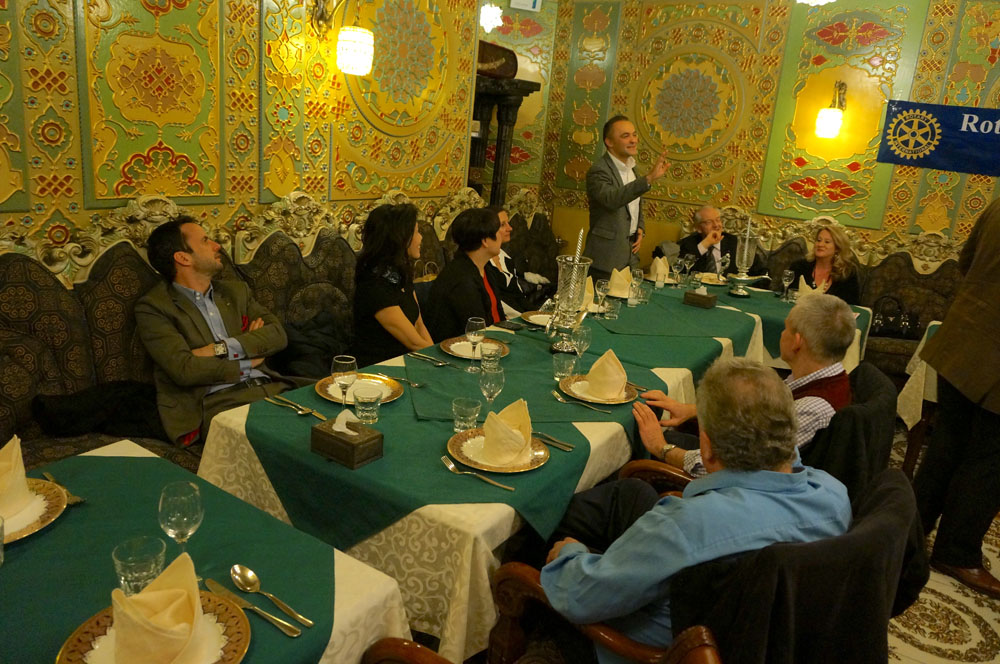
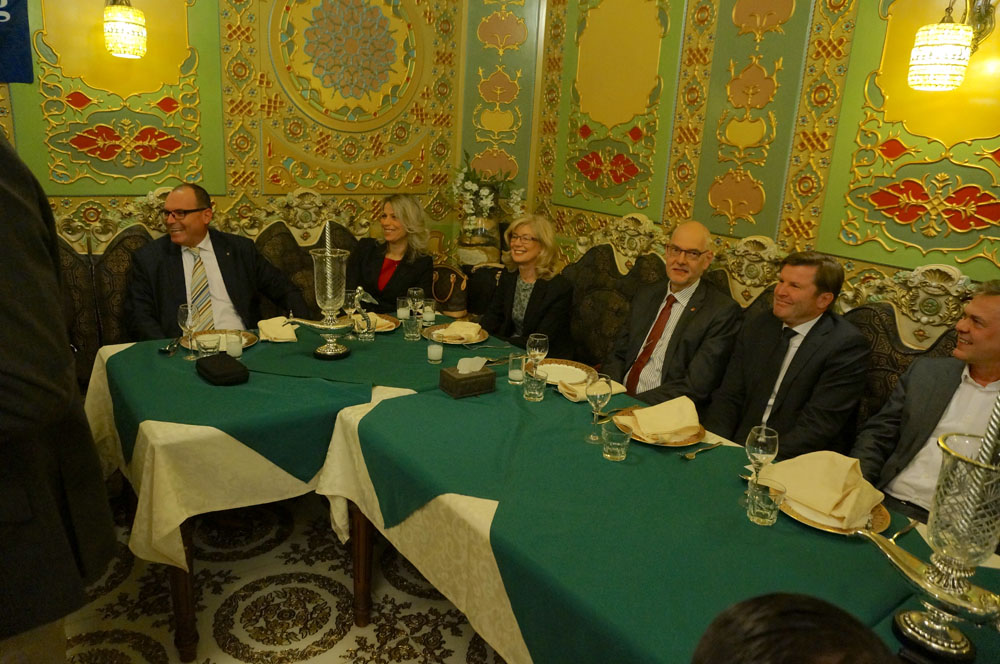
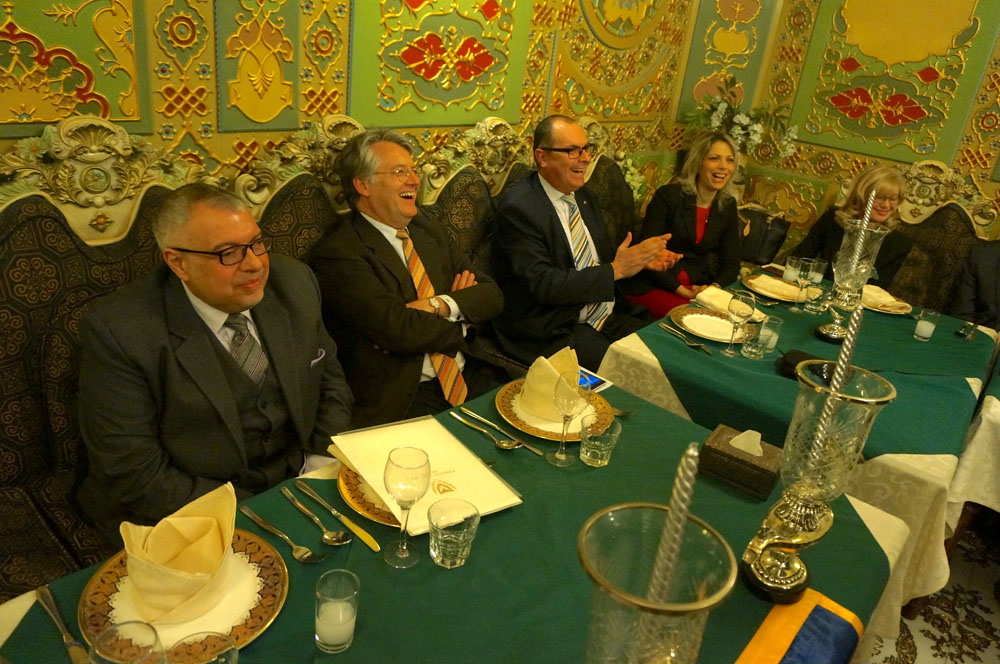
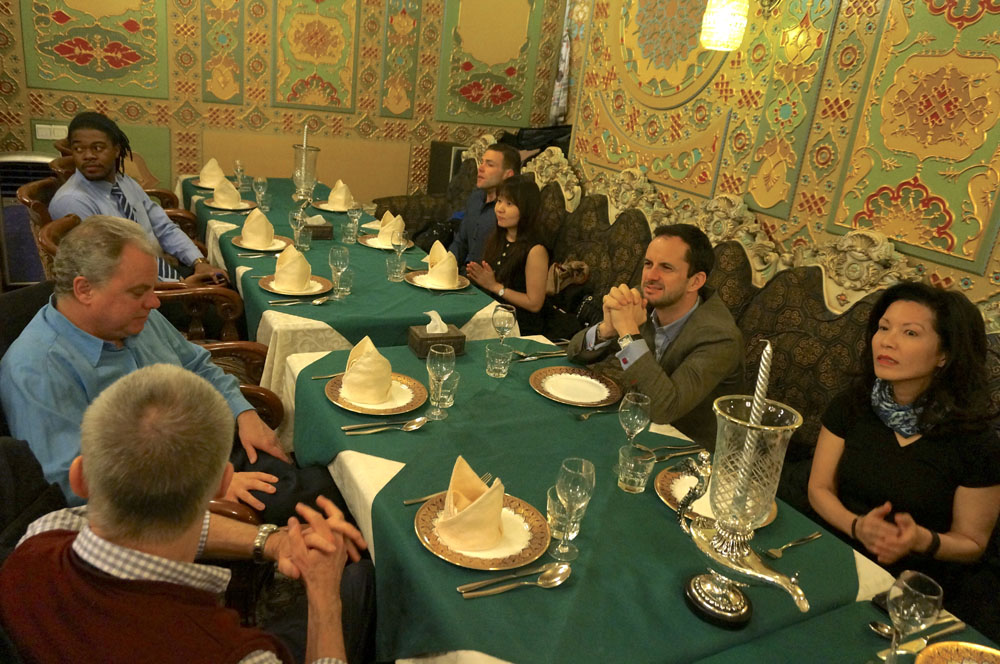
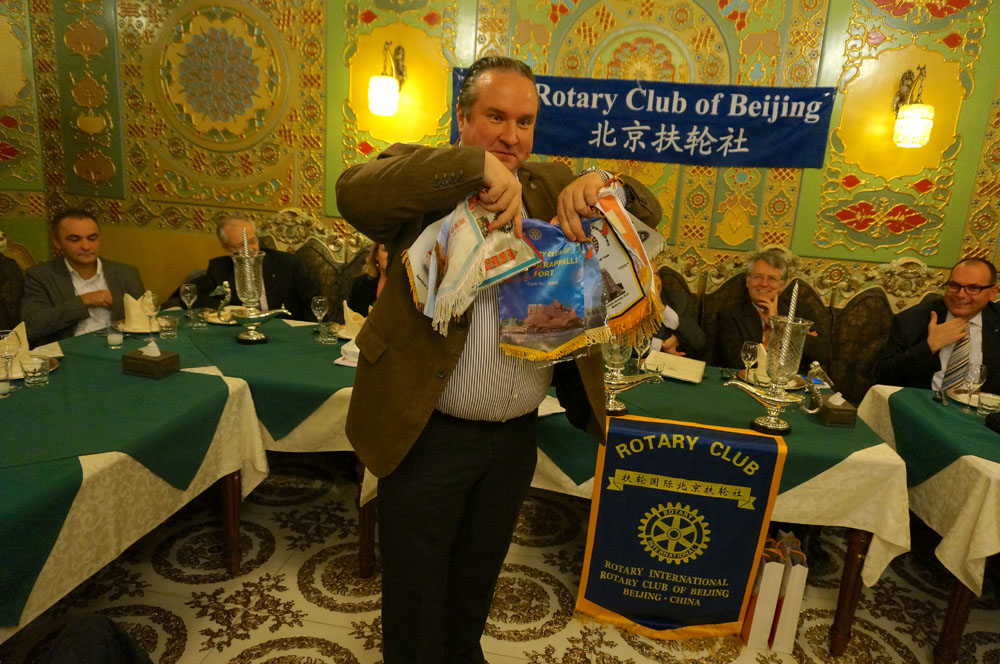
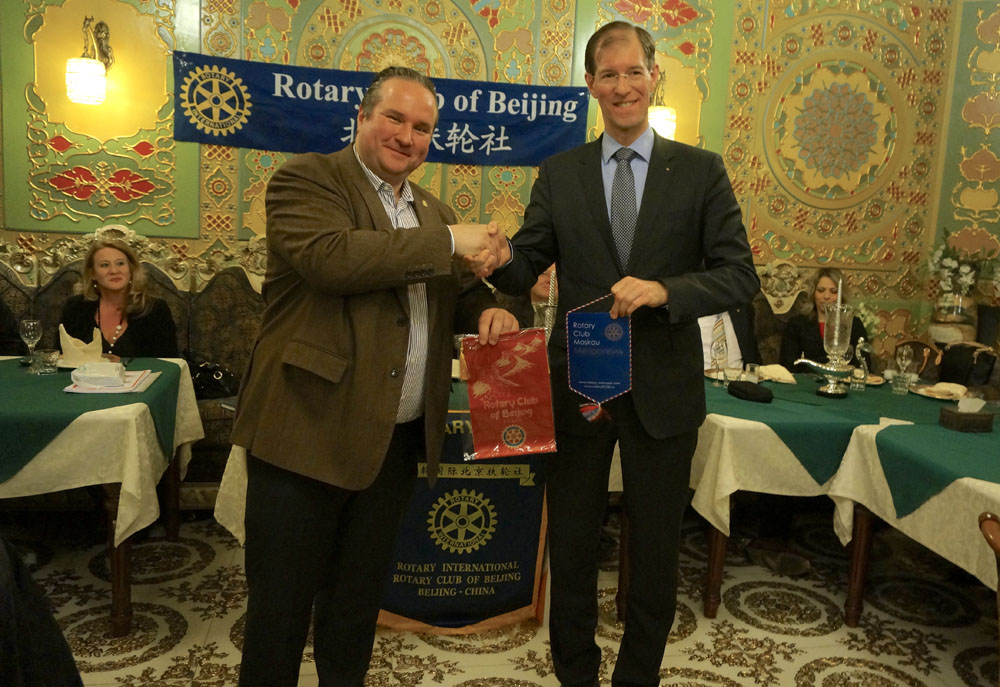
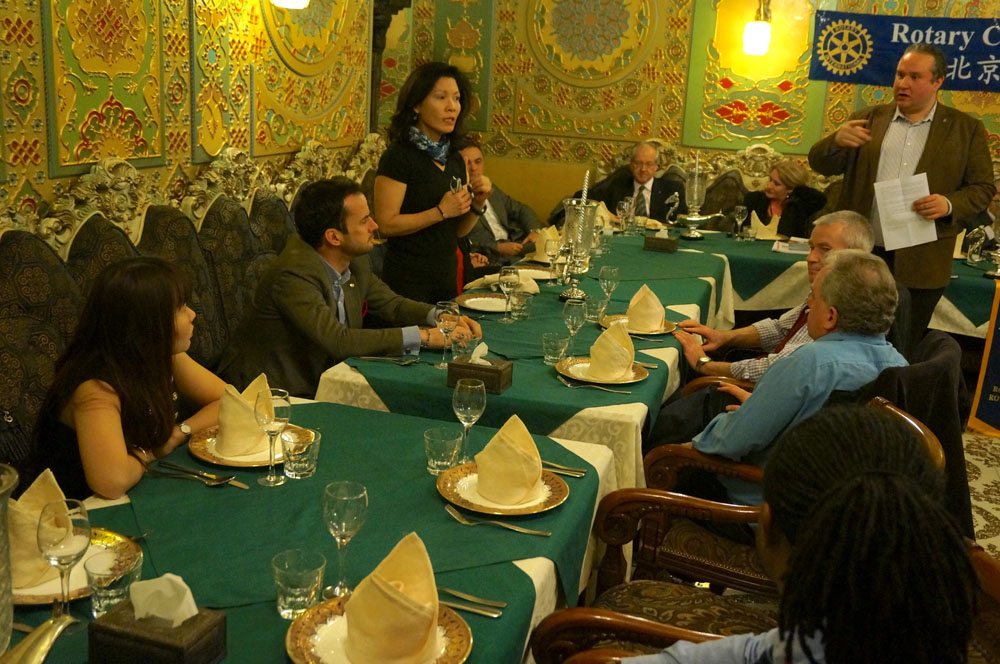
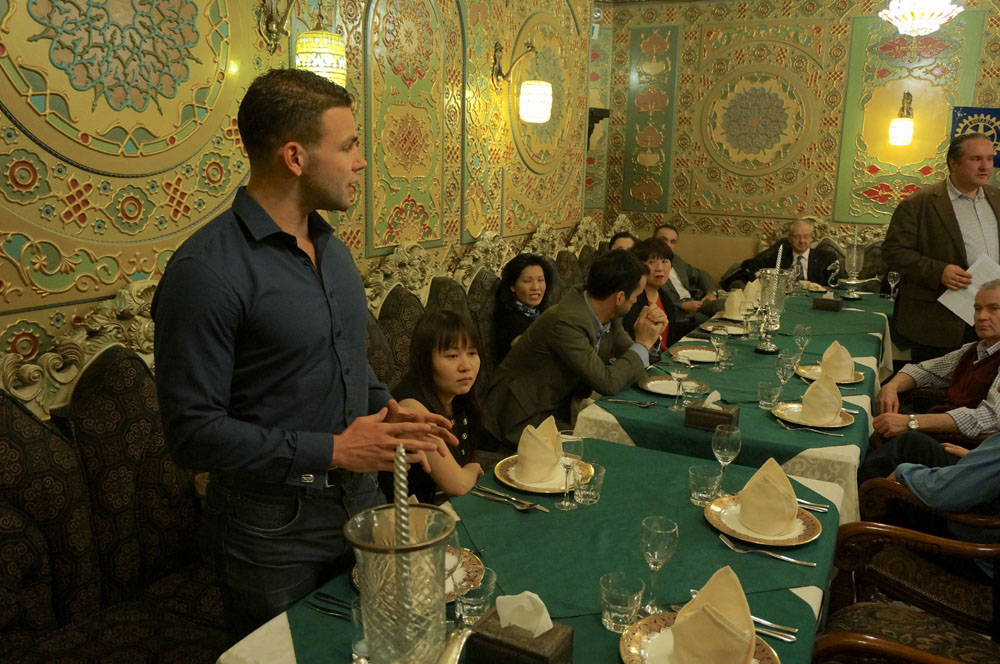
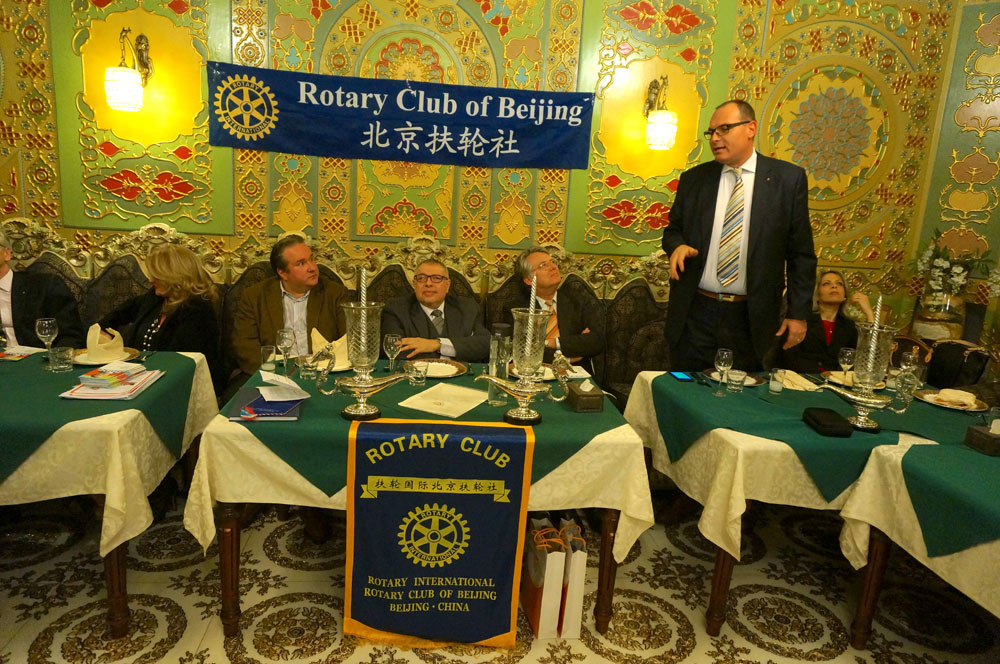
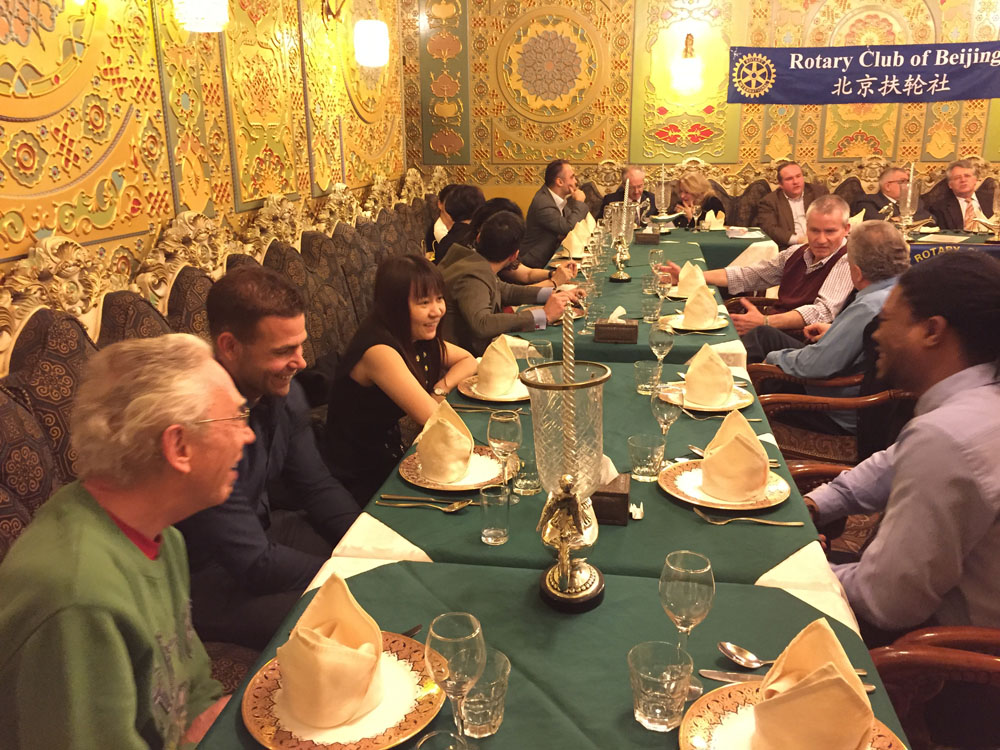
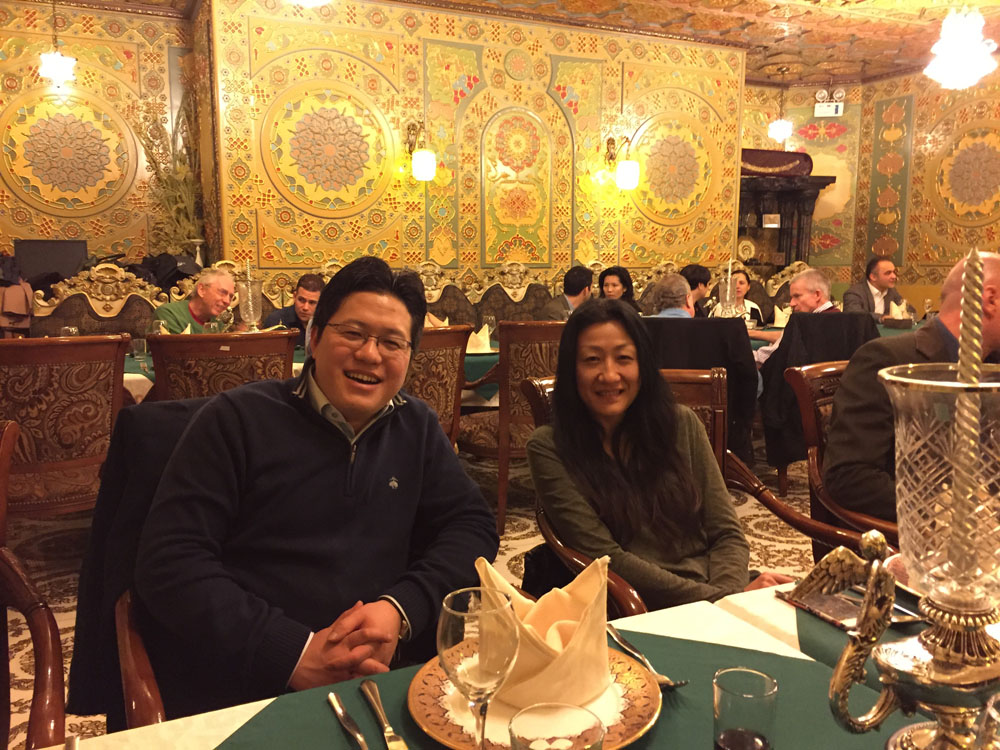
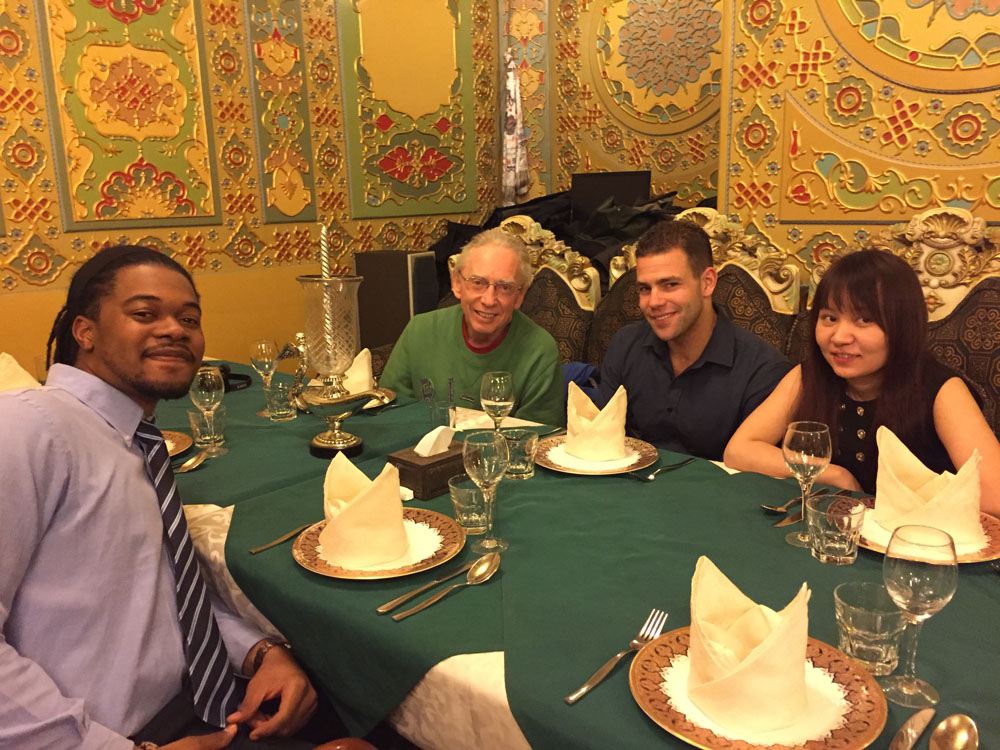
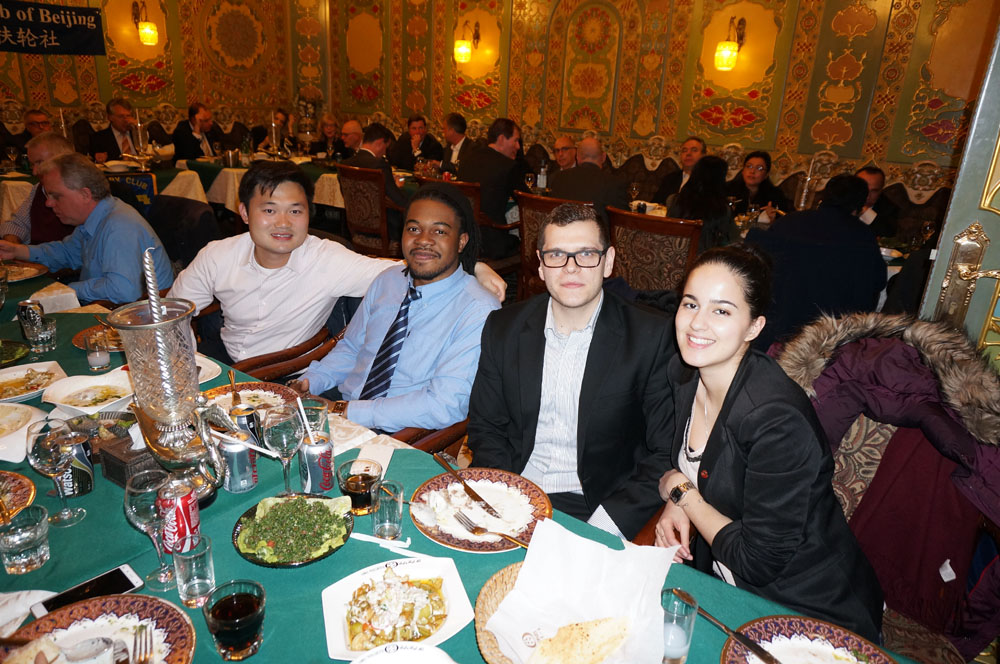
Andrey Kirillov from TASS speaking to Beijing Rotary

On 23 February we had Andrey Kirillov as our speaker, on the Shanghai Cooperation Organization (SCO).
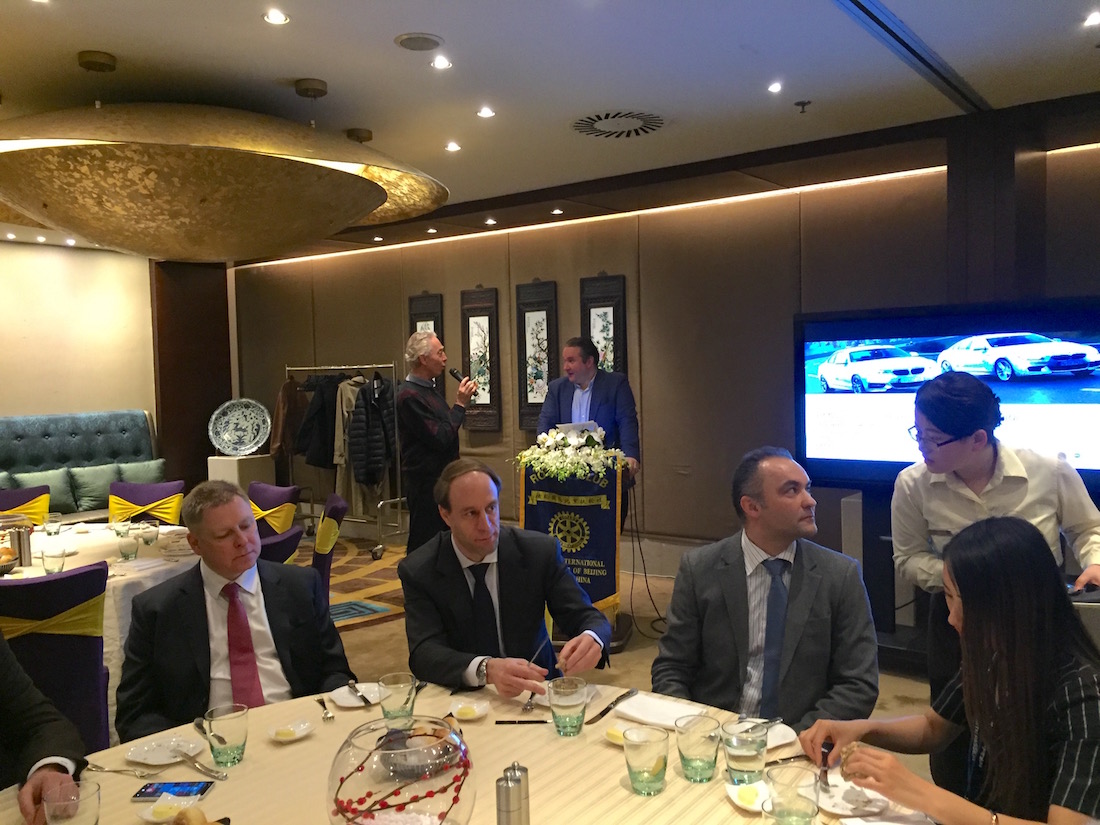
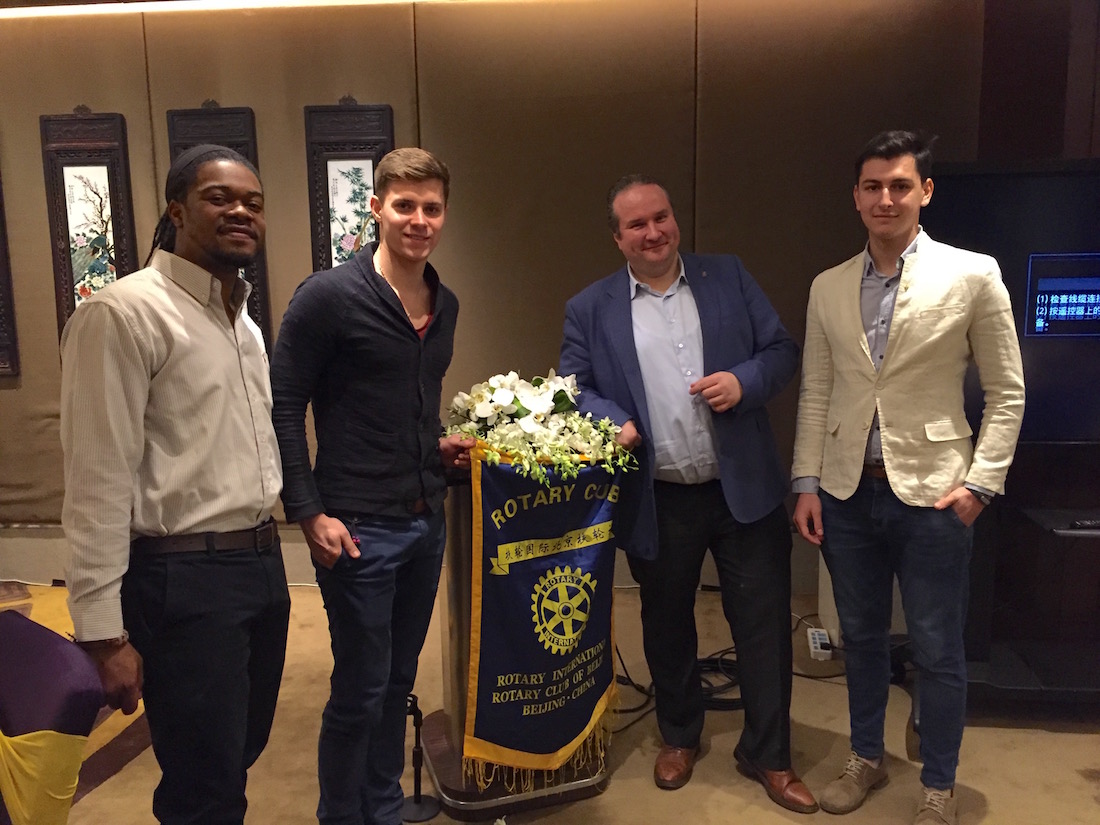
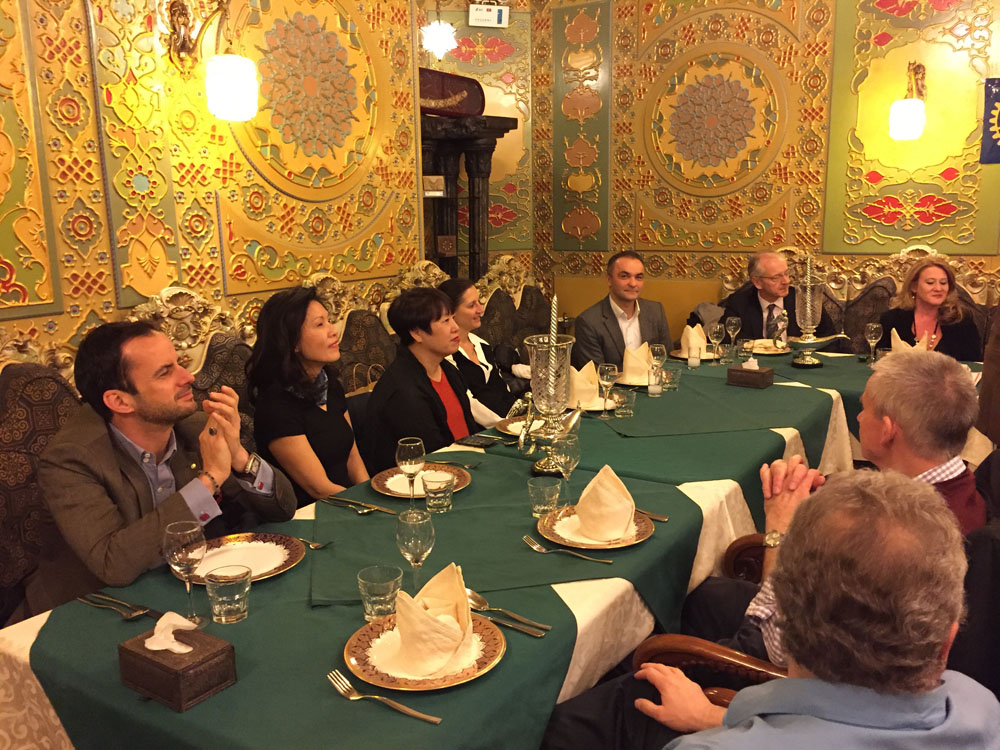
This time we had a dinner in the Four Seasons Hotel, instead of the usual lunch in Kempinski Hotel. I was once more acting Sergeant-at-Arms…

(Thanks Celine for the pics!)

He explained the SCO, its history and structure. It is a Eurasian political, economic and military organization which was founded in 2001 in Shanghai by the leaders of China, Kazakhstan, Kyrgyzstan, Russia, Tajikistan, and Uzbekistan. These countries, except for Uzbekistan had been members of the Shanghai Five, established in 1996; after the inclusion of Uzbekistan in 2001, members renamed the organization. In July 2015, the SCO decided to admit India and Pakistan as full members, and they are expected to join by 2016. The SCO is primarily centered on its member nations’ security-related concerns, often describing the main threats it confronts as being terrorism, separatism and extremism. A Framework Agreement to enhance economic cooperation was signed by SCO member states in 2003. In 2009, China announced plans to provide a US$10 billion loan to SCO member states to shore up the struggling economies of its members amid the global financial crisis.
I invited Andrey to join my “Old China Hands Lunch” as he is a China veteran.

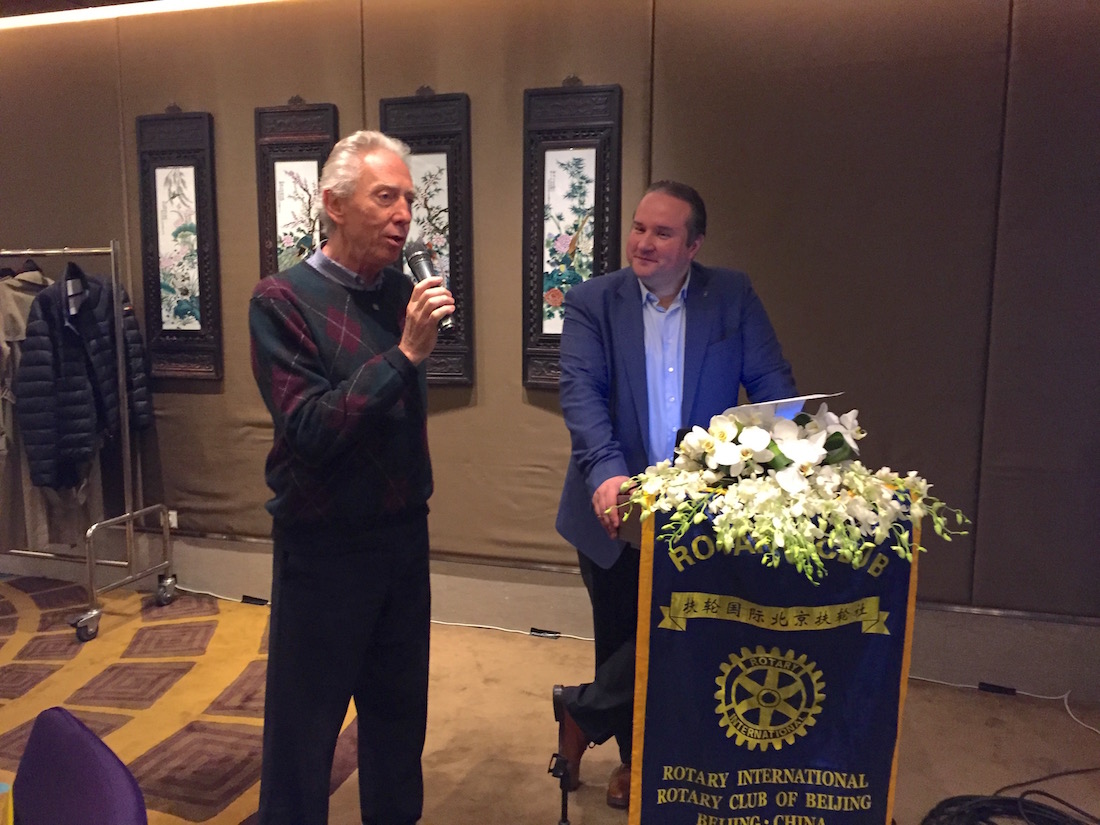
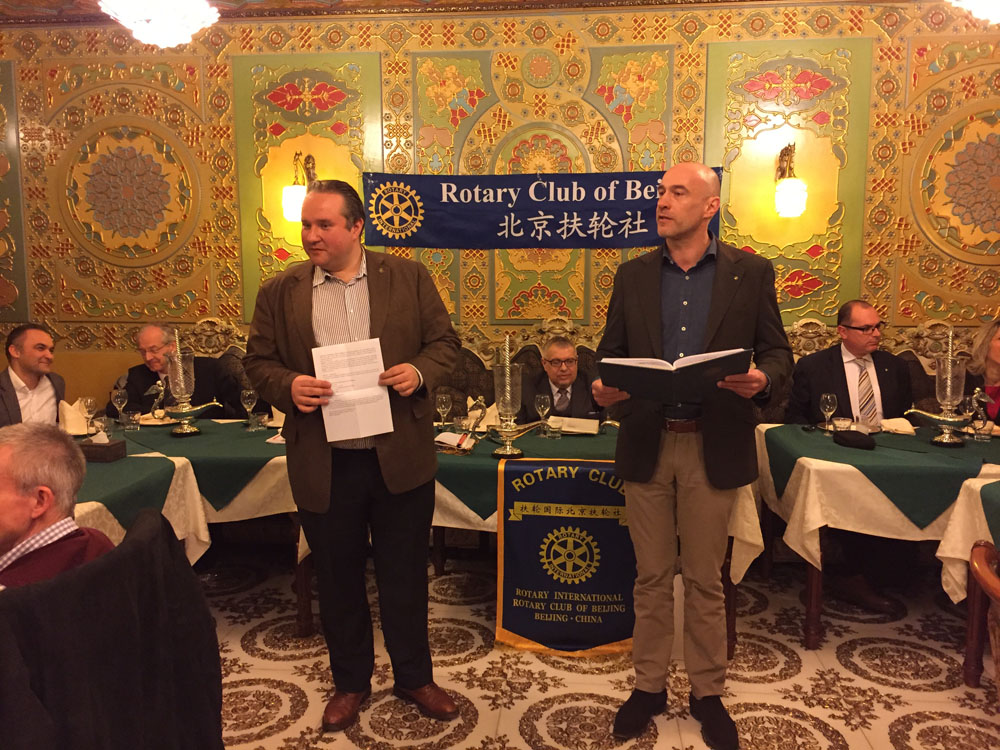
David Kelly speaking at Rotary Beijing

On Tuesday 19 January we had as speaker Mr. David Kelly. His topic: Going Global 2.0 on Capacity Cooperation.

Mr. David Kelly works at China Policy. With interests encompassing a sweep of issues affecting China’s domestic reforms and its strategic positioning, David leads the governance and law, and geopolitics teams at China Policy. He has a particular interest in the external impact of China’s governance model.
A skilled workshop facilitator and driver of organizational learning on China, David is known for leading tough, China-grounded debate in corporate boardrooms. A sought-after international media commentator, he frequently appears on the BBC, Voice of America, Australian ABC, Al Jazeera and in leading print media.
In his speech David focused on China’s new globalization drive and how it differed from the country’s earlier going out initiatives.

President Rotary Beijing at the Rotaract meeting

The President of the Rotary Club of Beijing attended our weekly Rotaract meeting at Lyrics Cafe (SOHO Sanlitun) on 18 January.

He was impressed by our dynamic group of Rotaractors, coming from all corners around the world )Belgium, France, Germany, Kazakhstan, Holland, China, Guyana, and maybe more. Good job by the Rotaract President Anissa!
I hope we can see more Rotarians attending!

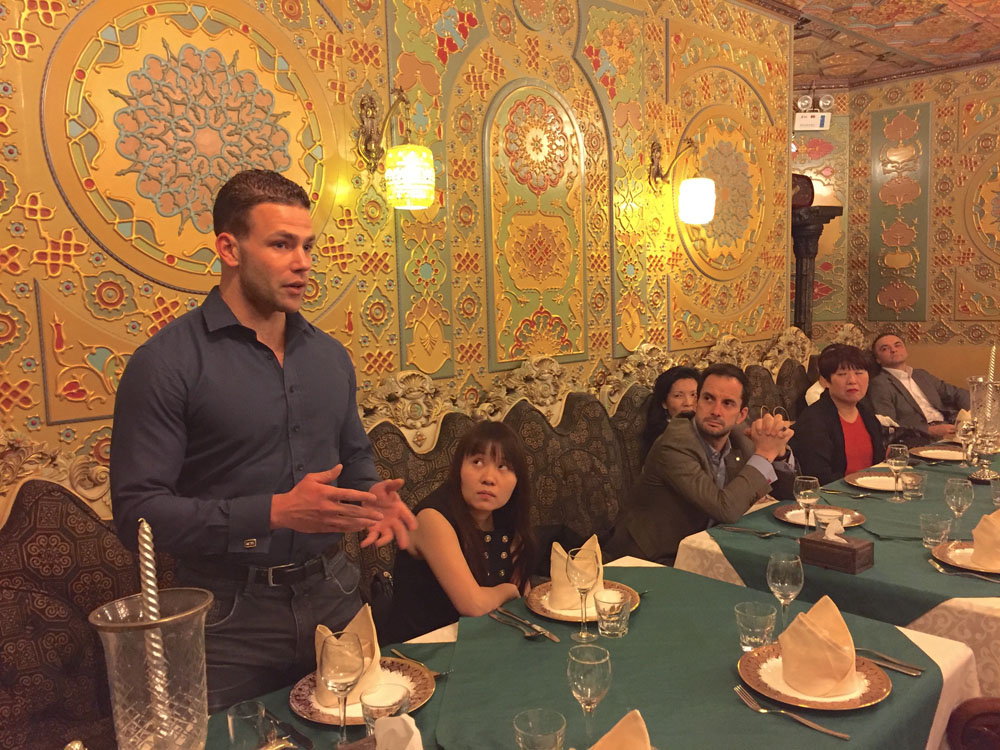
Thomas Brandt speaking to our Rotary Club

On 26 January we had the pleasure to have Thomas as a speaker. Before he even started I bought his book “China In Those Days”, a remarkable collection of postcards showing a much forgotten past of China. One more example of how foreigners have been much more engaged preserving China’s history and culture. Other examples are the preservation of hutongs and antiques.
The book is not for sale on the market, so a really precious volume.
The Tuesday Speaker, Mr. Thomas Brandt, talked indeed about “China In Those Days”

Thomas Brandt is General Manager of the German Chamber of Commerce and Industry in Kuala Lumpur, Malaysia and is a passionate collector of post cards and view cards. He is the author of several publications focusing on Asia. Furthermore Mr. Brandt has written four books in the field of intercultural management, journals and handbooks. His bestseller “China in Those Days” was published in 2008.
In his presentation Mr. Brandt used pictures from his collection of around 49.000 postcards and view cards from the years 1890 to 1914. His collection presents a photographic report of the political upheavals in China of the Qing Dynasty. It also visualizes the phenomenon of overseas Chinese, which is still of high relevance in recent history. The historical pictures took the audience to a journey to the early 20th century in China, an era when it was a privilege to send or receive postcards from a country as far away as China.

The Great Hall of the People: ode to Zhou Enlai

As Sun Bin is deeply involved in the study of China’s period under Zhu De, Zhou Enlai and of course her grandfather Sun Bingwen, we get involved in unusual events. Like this one in the afternoon of 17 February. We thought at first it was a “small event”, till we reached the gates and saw half of Beijing was there queuing up to enter. We were in that huge hall that filled up completely. And me the only foreigner…
Boring at first, it was pretty interesting. For Sun was it rather emotional as it showed the old times, so many memories for her.
On stage, the original seat of Zhou Enlai. And some of the most famous singers in China’s history, some like 90 years old.
Also the “Third Red Generation”, the ones all with a long red scarf.

I was moved by what I consider to be one of the most beautiful pieces of Chinese music. See here the story behind it:

The Butterfly Lovers is a Chinese legend of a tragic love story of a pair of lovers, Liang Shanbo (梁山伯) and Zhu Yingtai (祝英台), whose names form the title of the story. The title is often abbreviated to Liang Zhu (梁祝). The legend of Liang Shanbo and Zhu Yingtai is set in the Eastern Jin dynasty (265-420 CE). The Butterfly Lovers is also known as China’s play of Romeo and Juliet.
In 1950s, Chen Gang (陈钢) composed the internationally famous violin concerto themed with Liangzhu, and in 1954, ex-premier Zhou Enlai introduced the movie named Liang Shanbo and Zhu Yingtai, China’s first colored opera-type artistic movie, to the journalists of the world when he attended at the Geneva Conference, and then this movie based on the love story was widely called Chinese Romeo and Juliet. In a short time, this story becomes internationally famous.

The internationally famous violin concerto named Liangzhu or The Butterfly Lovers: see here one of the many versions. Just simple moving….

There are also versions with erhu instead of violin. Great stuff.
See also the old picture of The Great Hall and Tiananmen, when I arrived in Beijing it was still nearly like that: no barriers anywhere. Now, to go there or leave there, what a fuss. All that security. Times have changed and not always for the better.