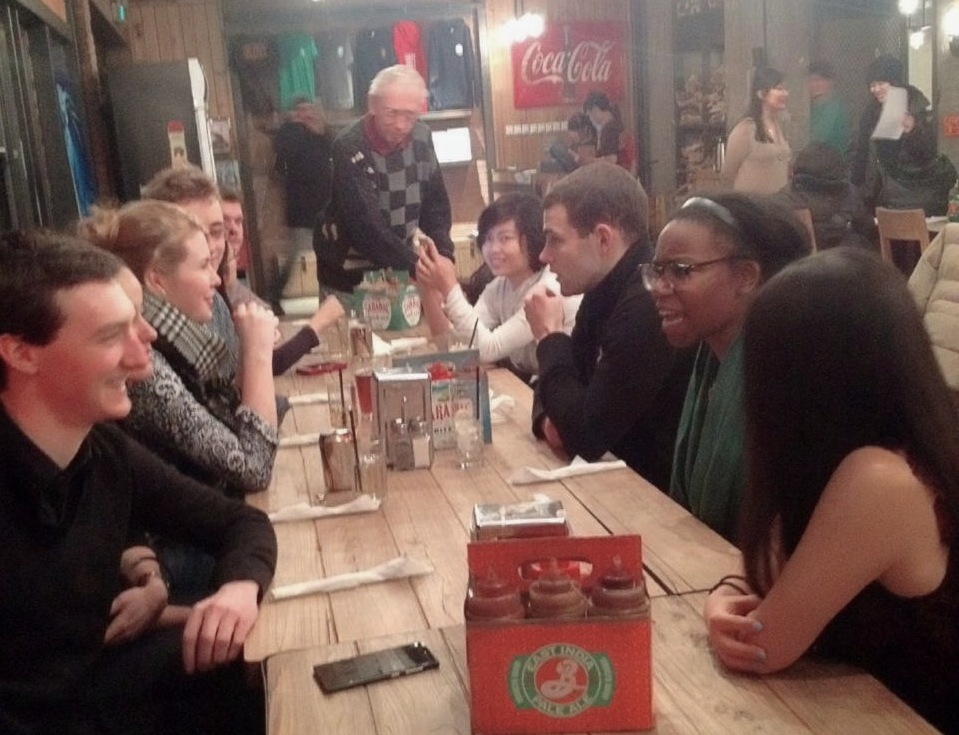
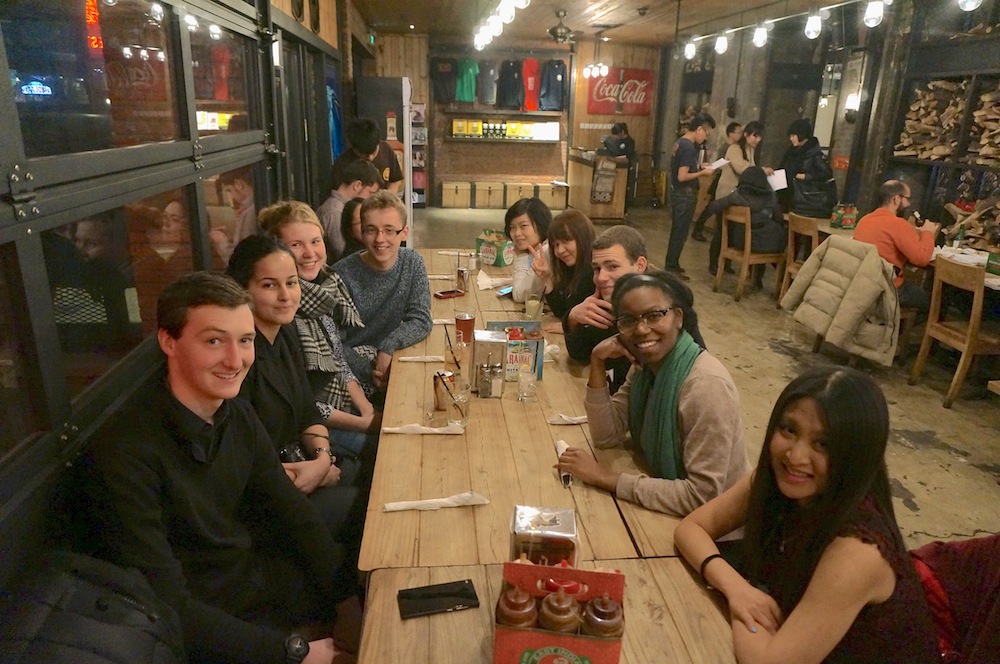
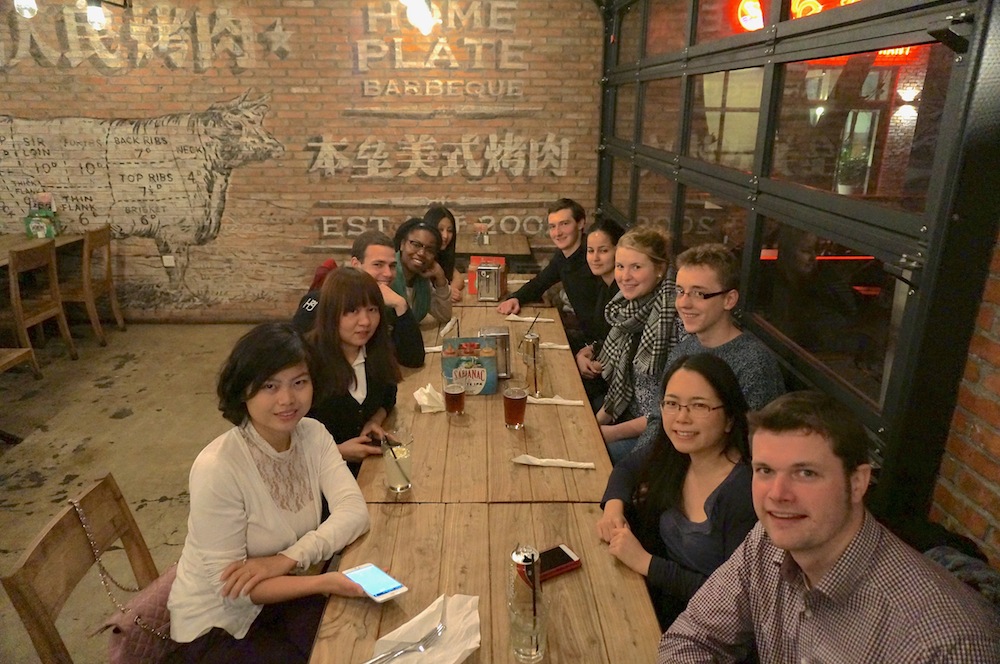
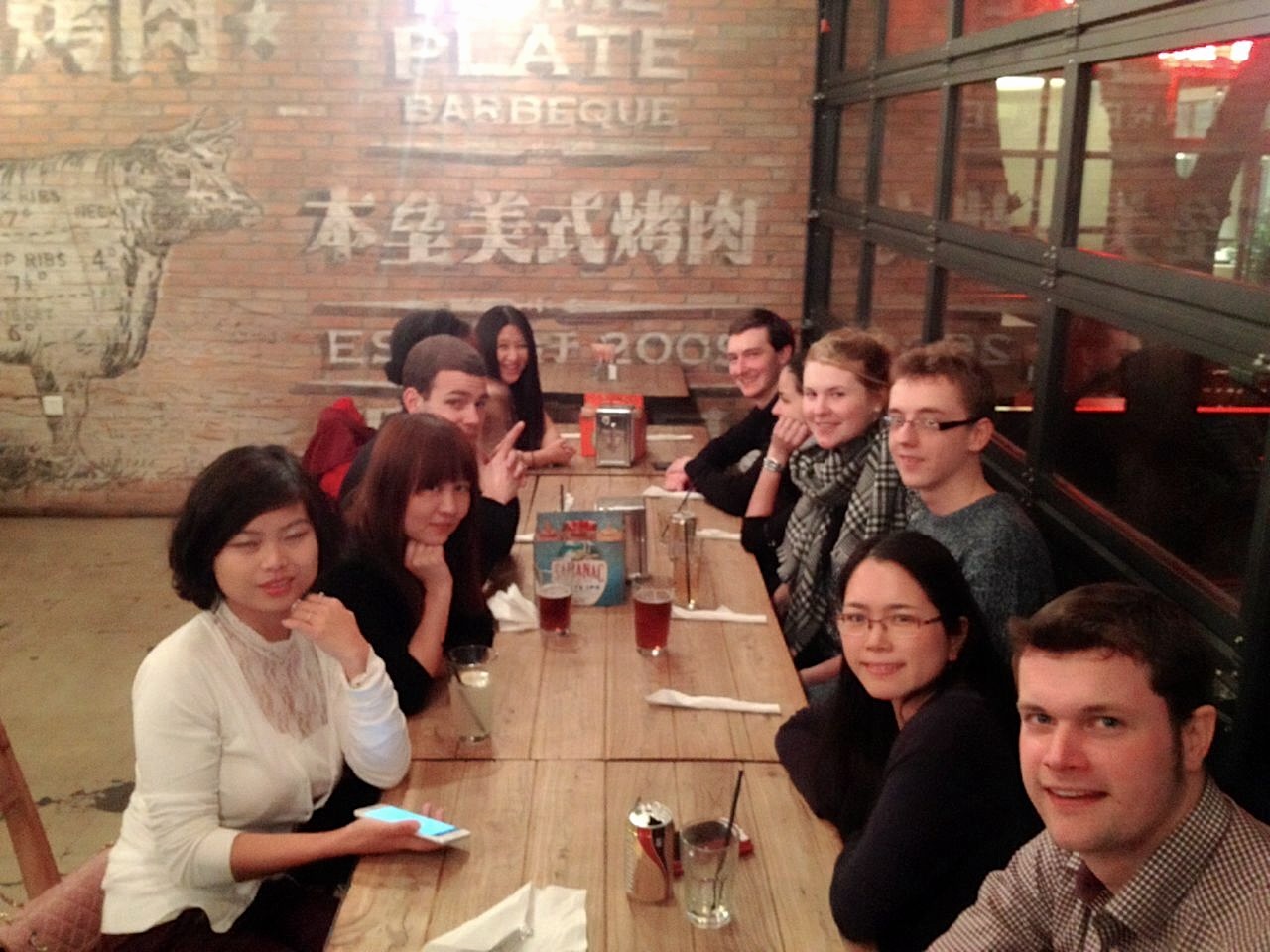
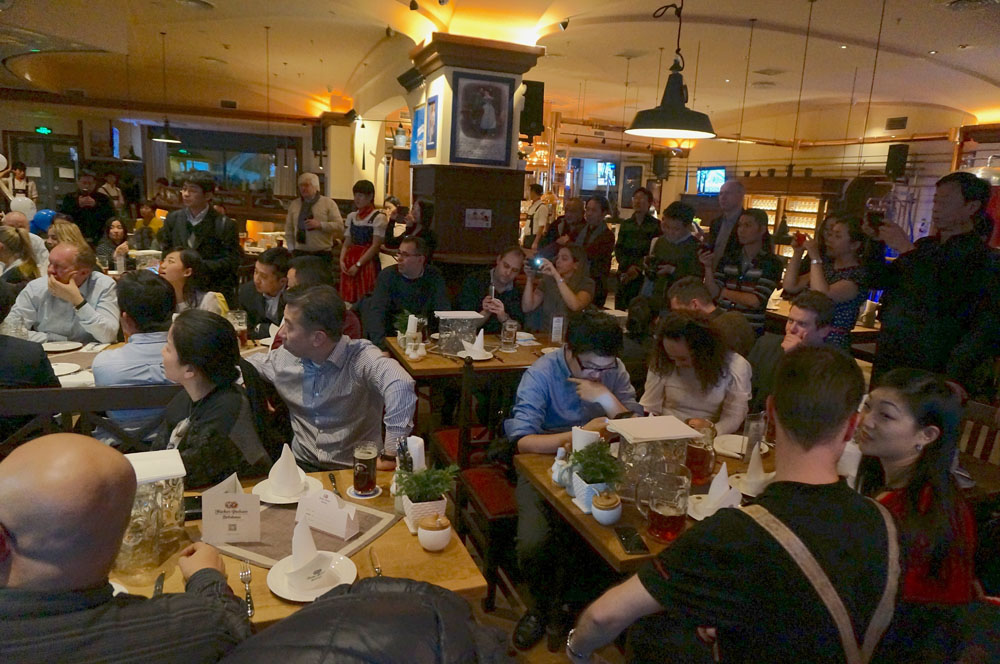
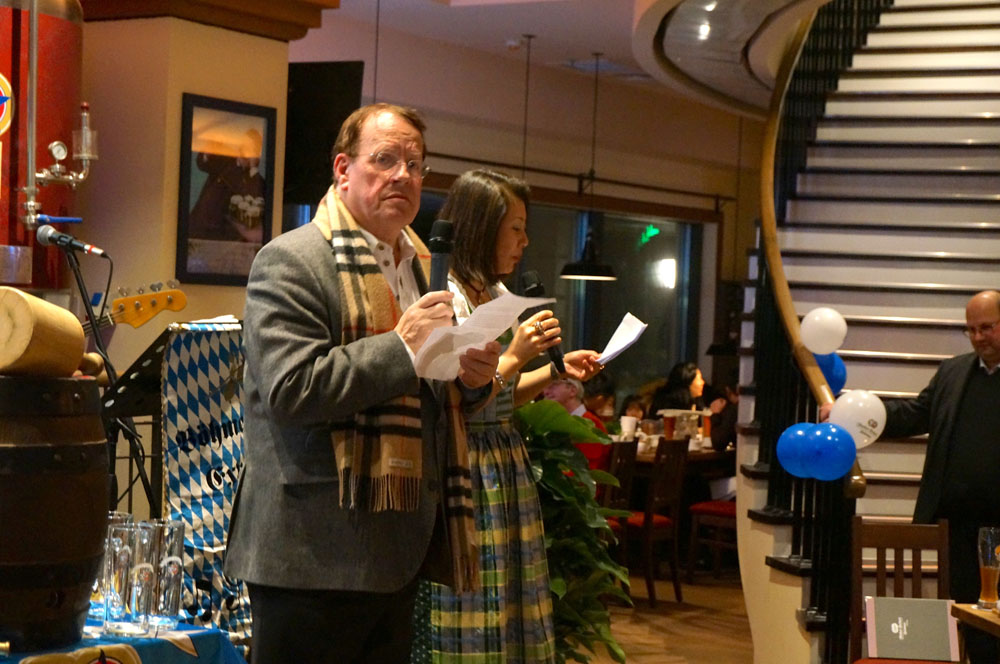
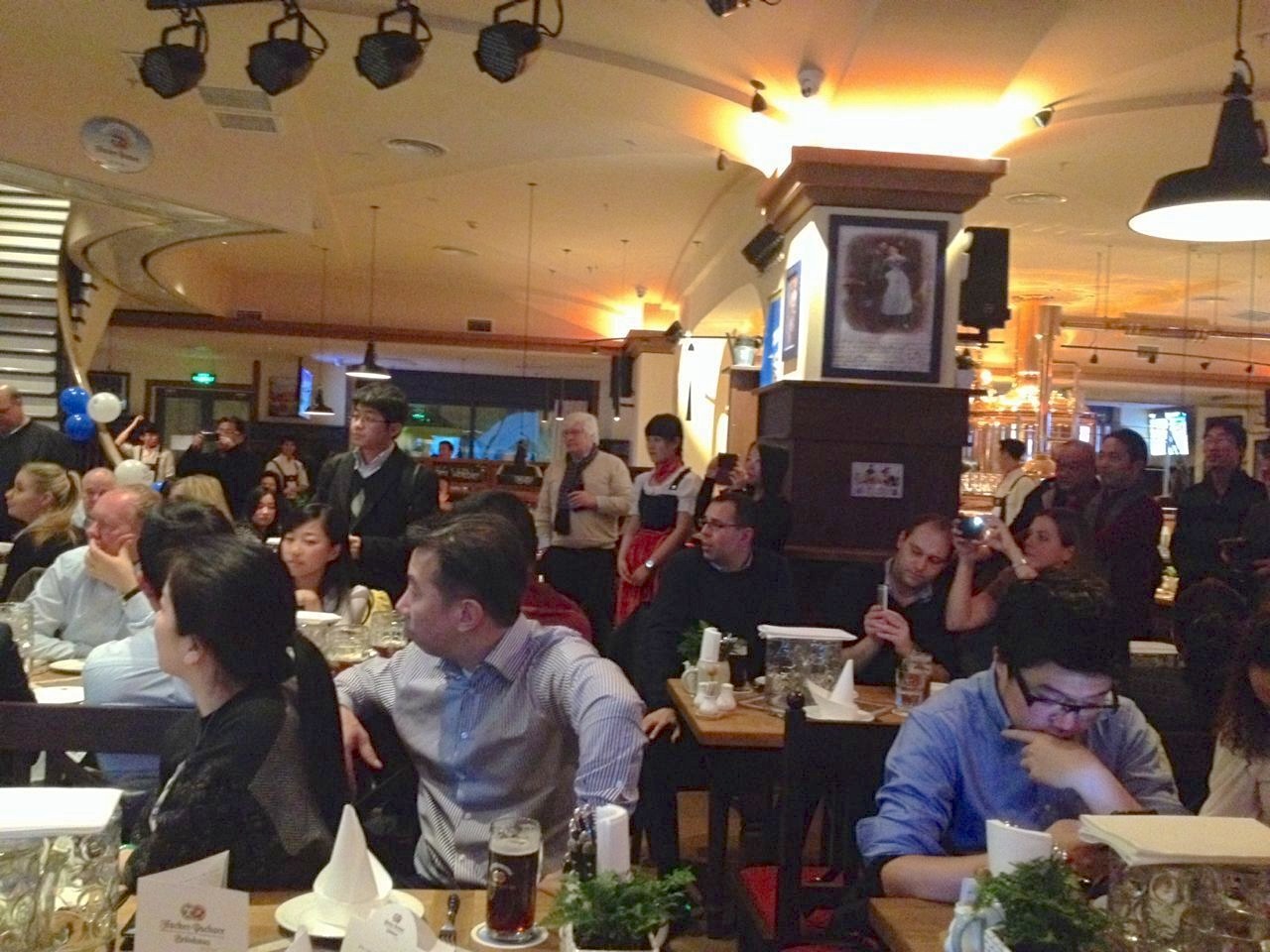
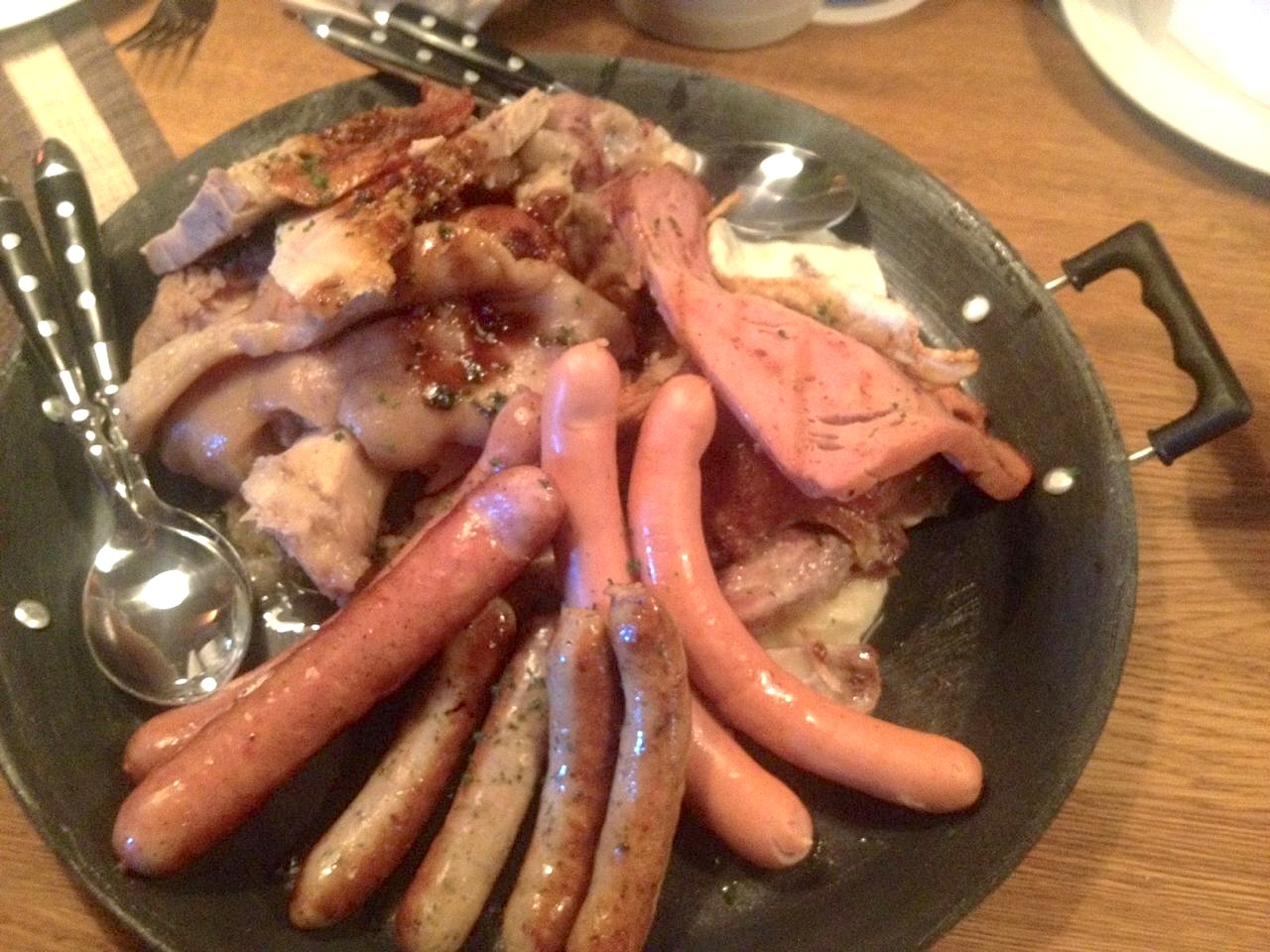
Social Rotaract evening in Home Plate BBQ

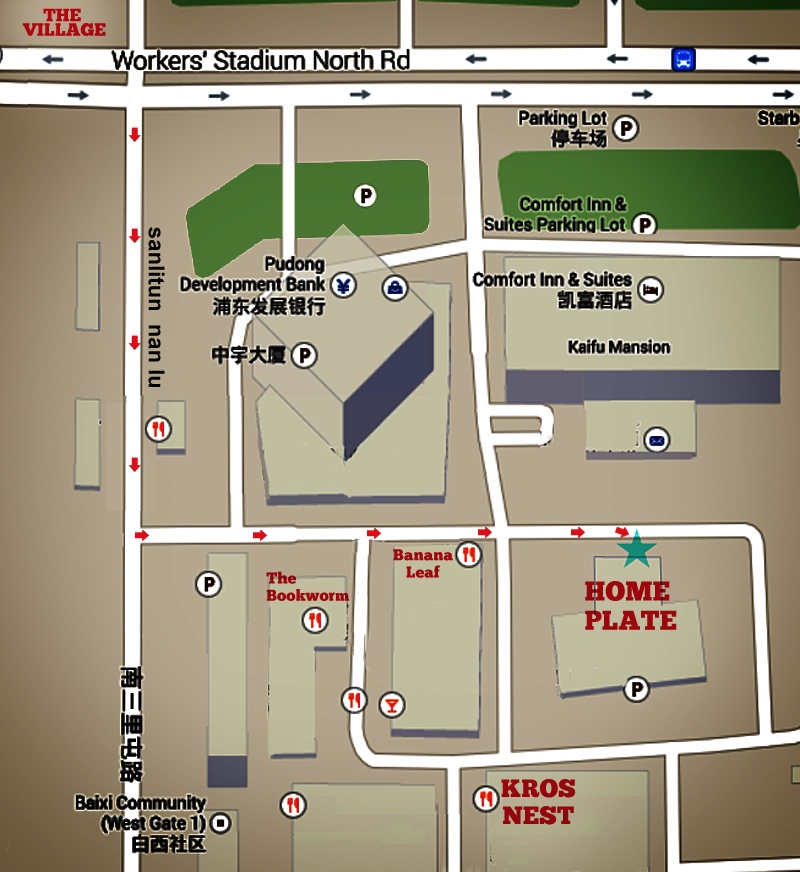
On Monday 2 February another nice social evening in Home Plate BBQ, a popular place and usually packed. They have some great dishes and my favorites are Pulled Pork Sandwich and Pulled Pork Plate. They also have a wide range of American beer and locally brewed ales. The Wifi on the other hand never works!
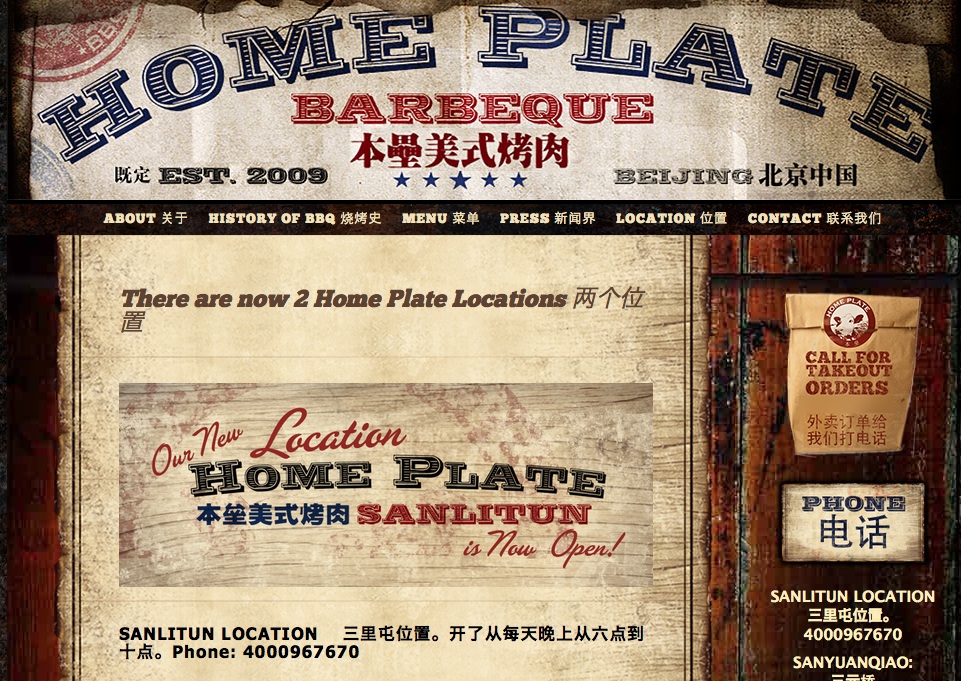
See:  http://homeplatebbq.com/?page_id=35

Rotaract social evenings are always popular, even being in the “low season”.

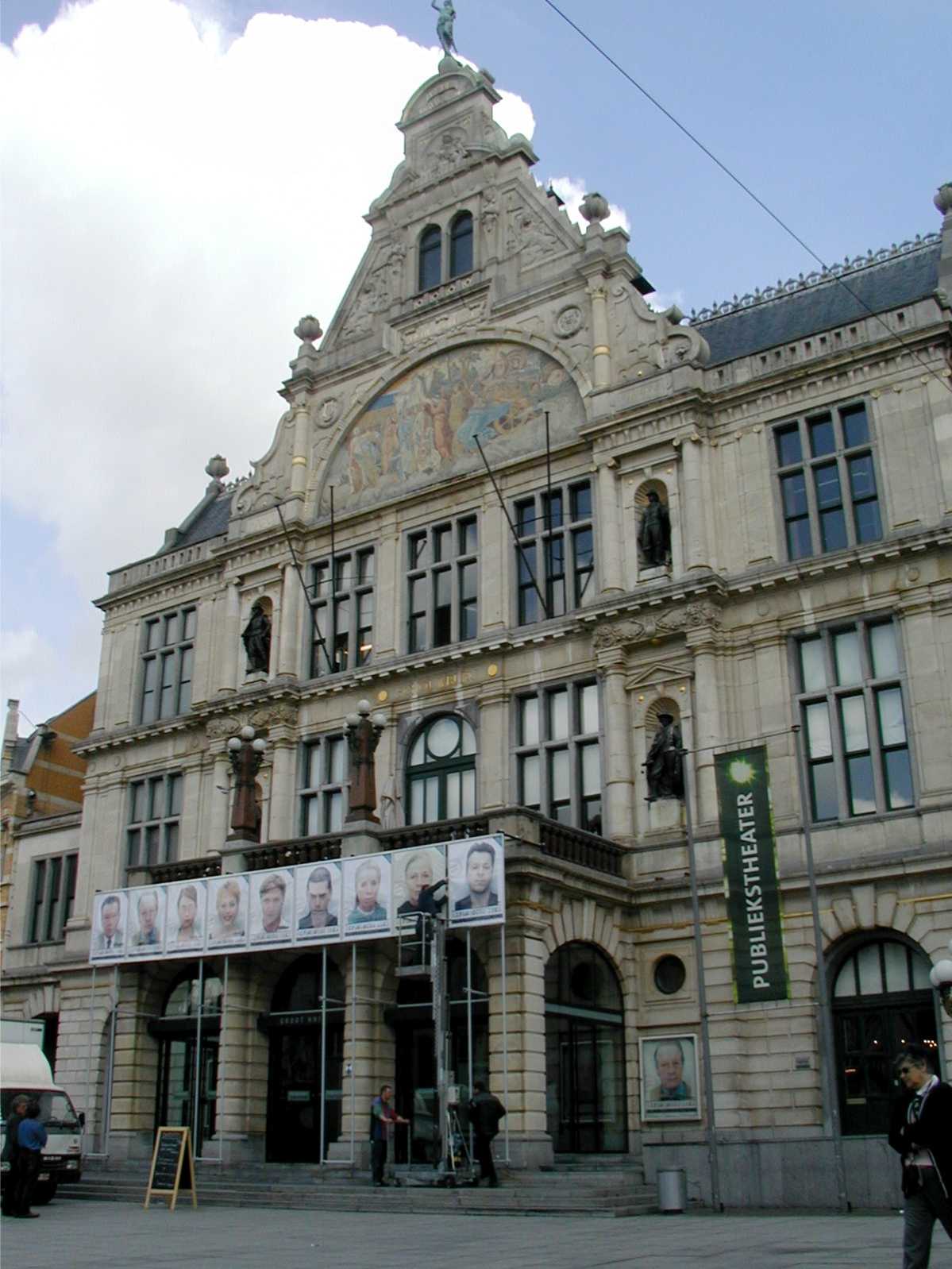
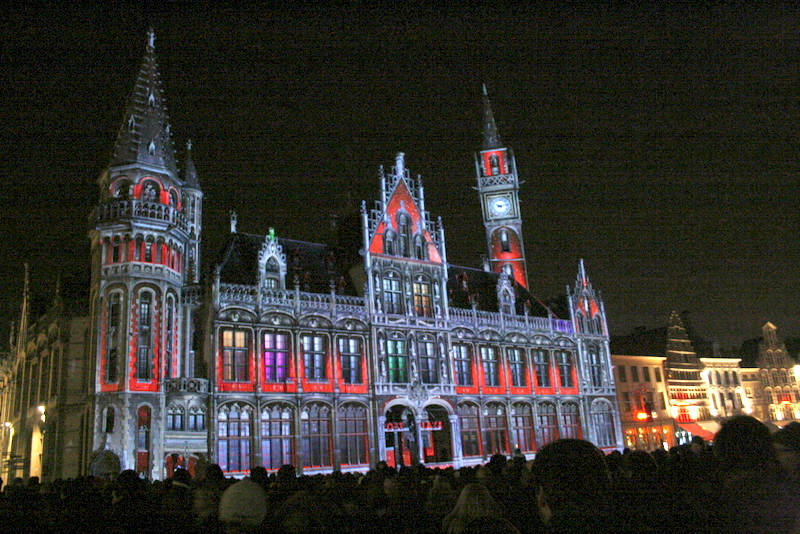
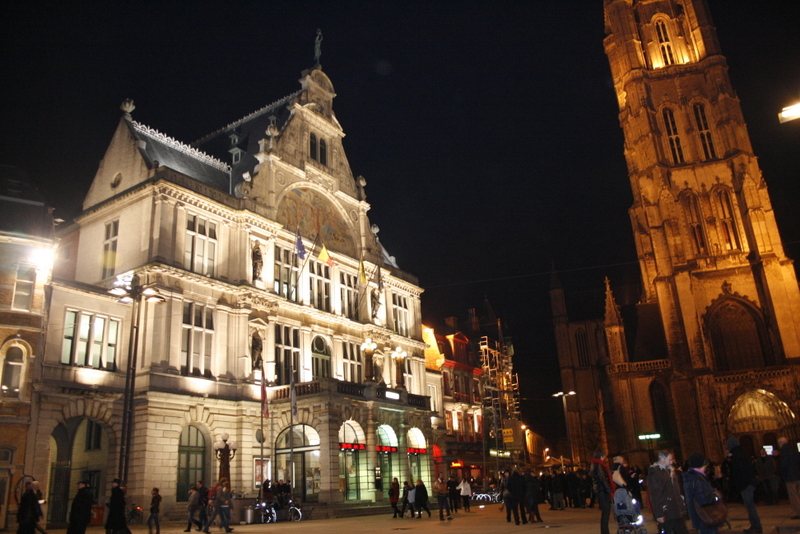
Ghent, my hometown in Belgium

Gent (Ghent / Gand)

I always write about Beijing but I should not forget Ghent, my hometown in Belgium, where I was born, grew up, went to school and university.
I always write about Beijing but I should not forget my hometown, Gent (Ghent / Gand) in Belgium, where I was born, grew up, went to school and university.
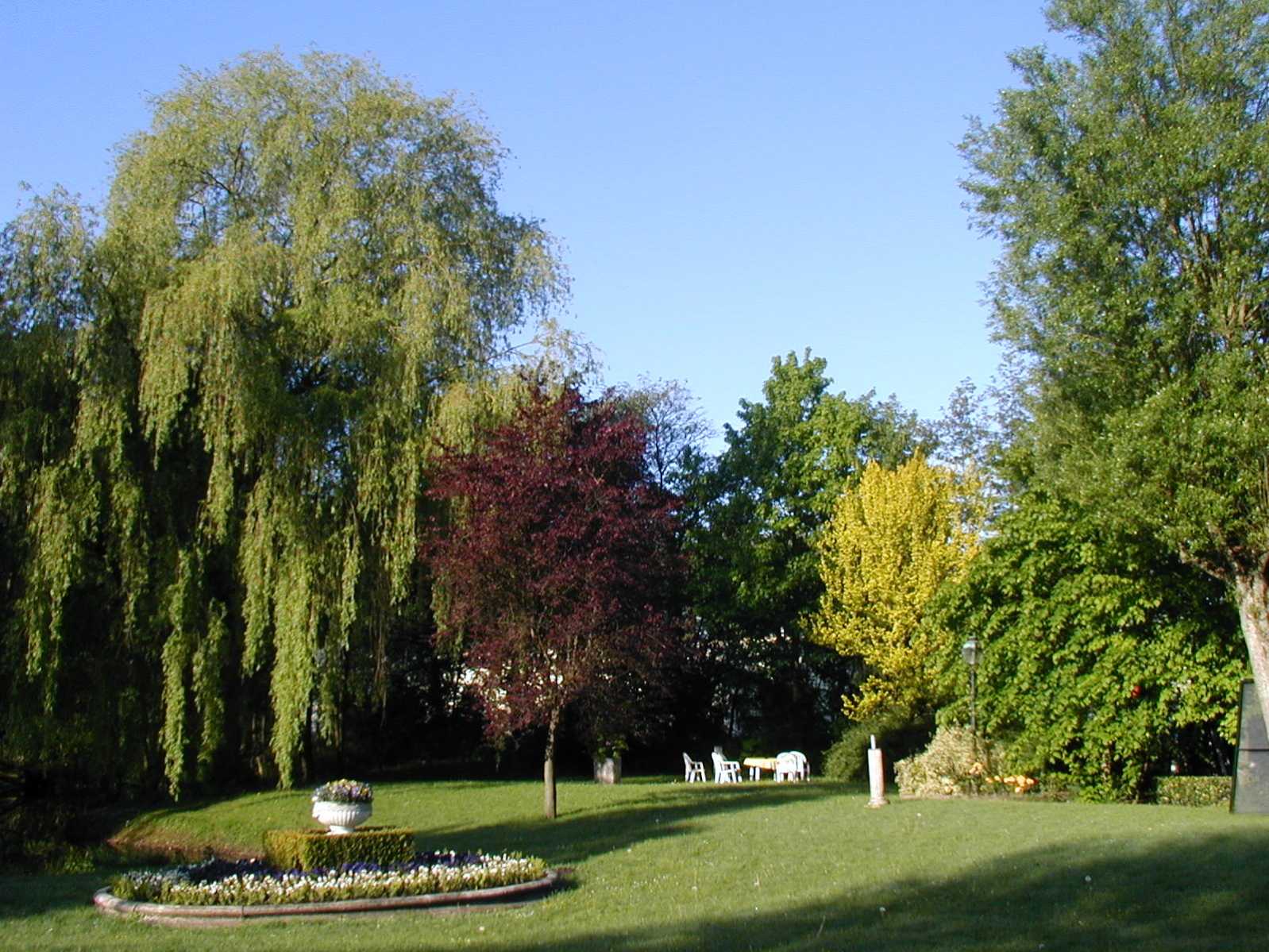
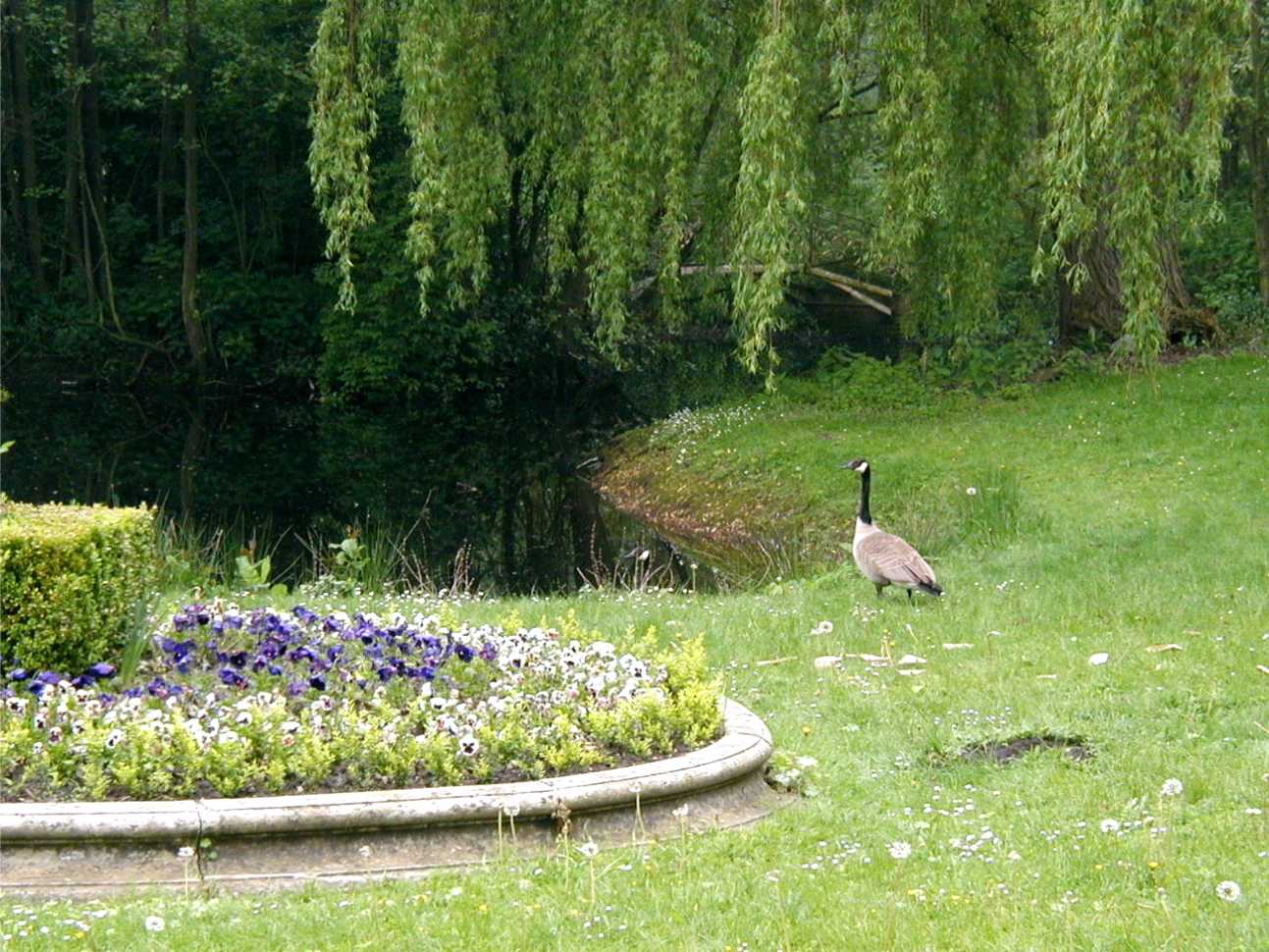
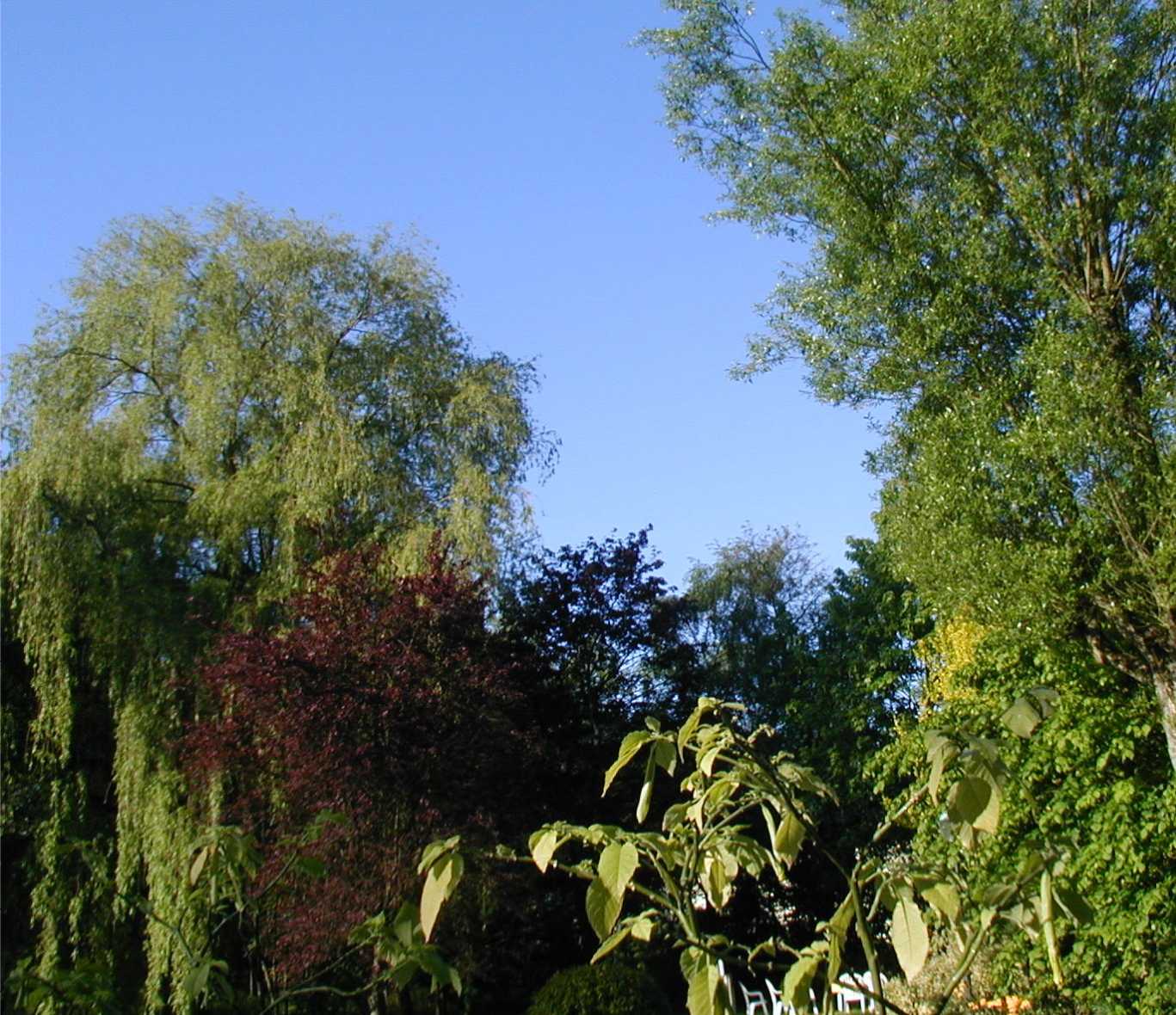
I sometimes miss it all, looking at the pictures I took in the hotel garden, a small family hotel near Sint-Denijs-Westrem that is now closed and again a private villa. So green, so blue, so unlike Beijing…

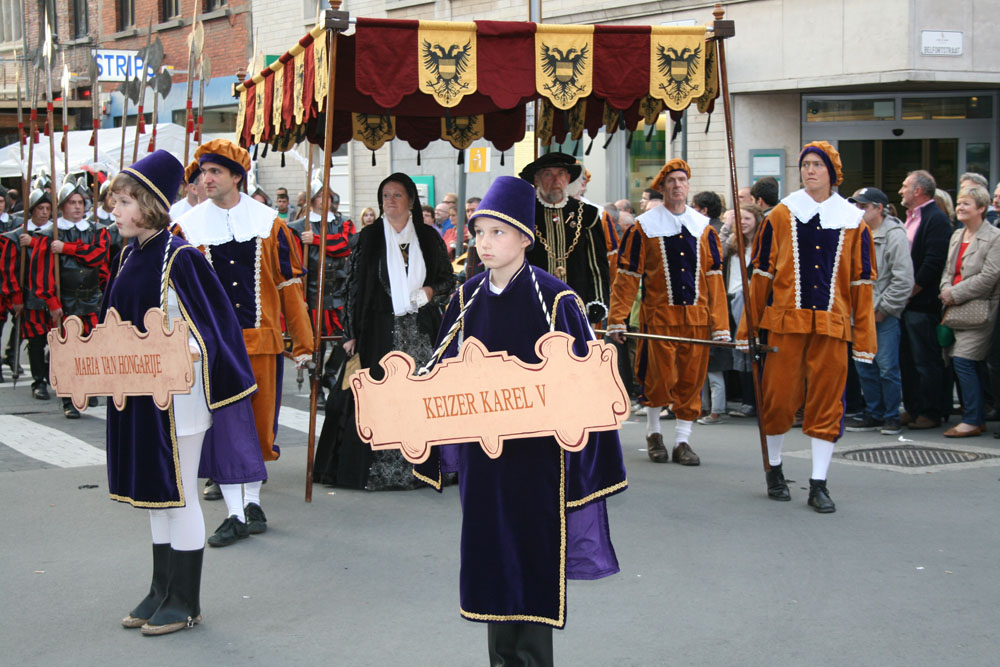
Pictures are from Jan de Cock, (Keizer Karel), the Internet and myself.

Ghent, a tourist destination

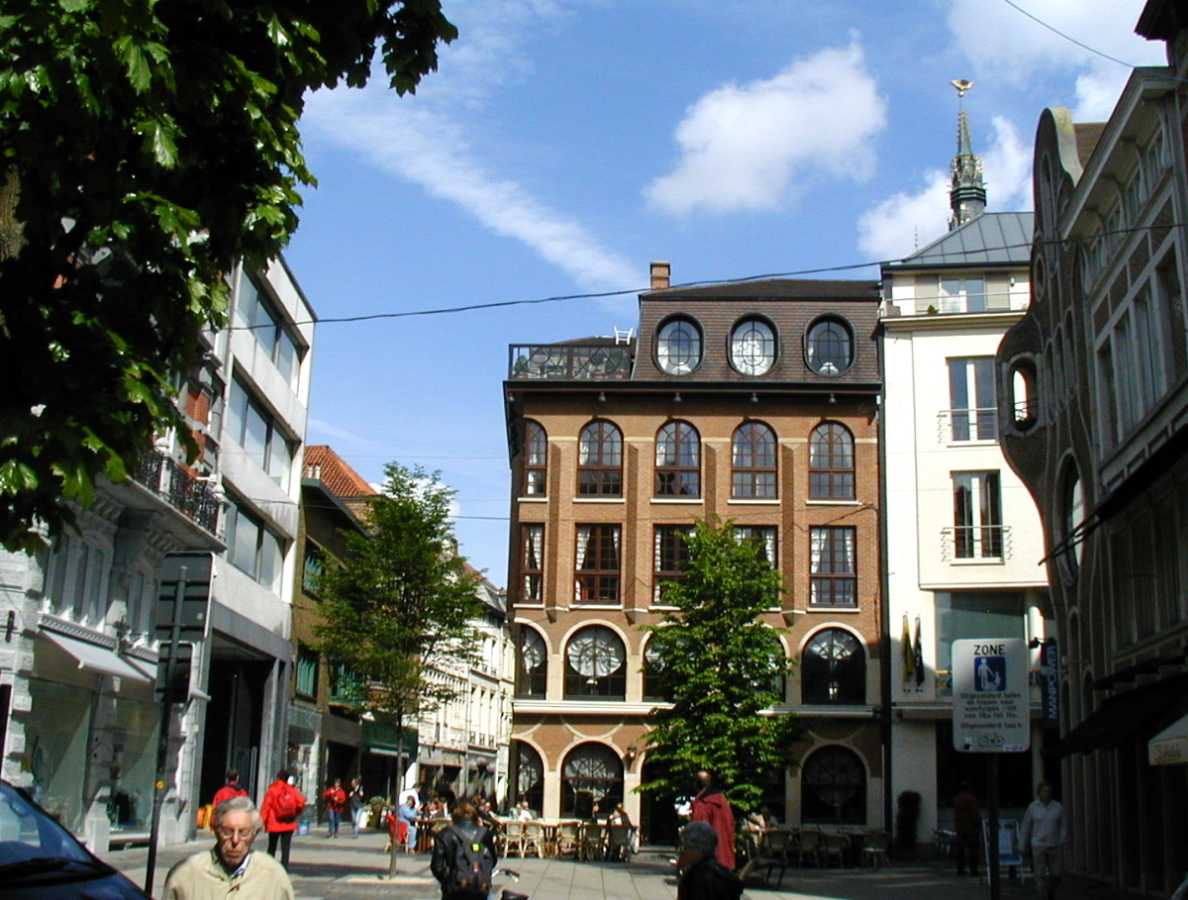
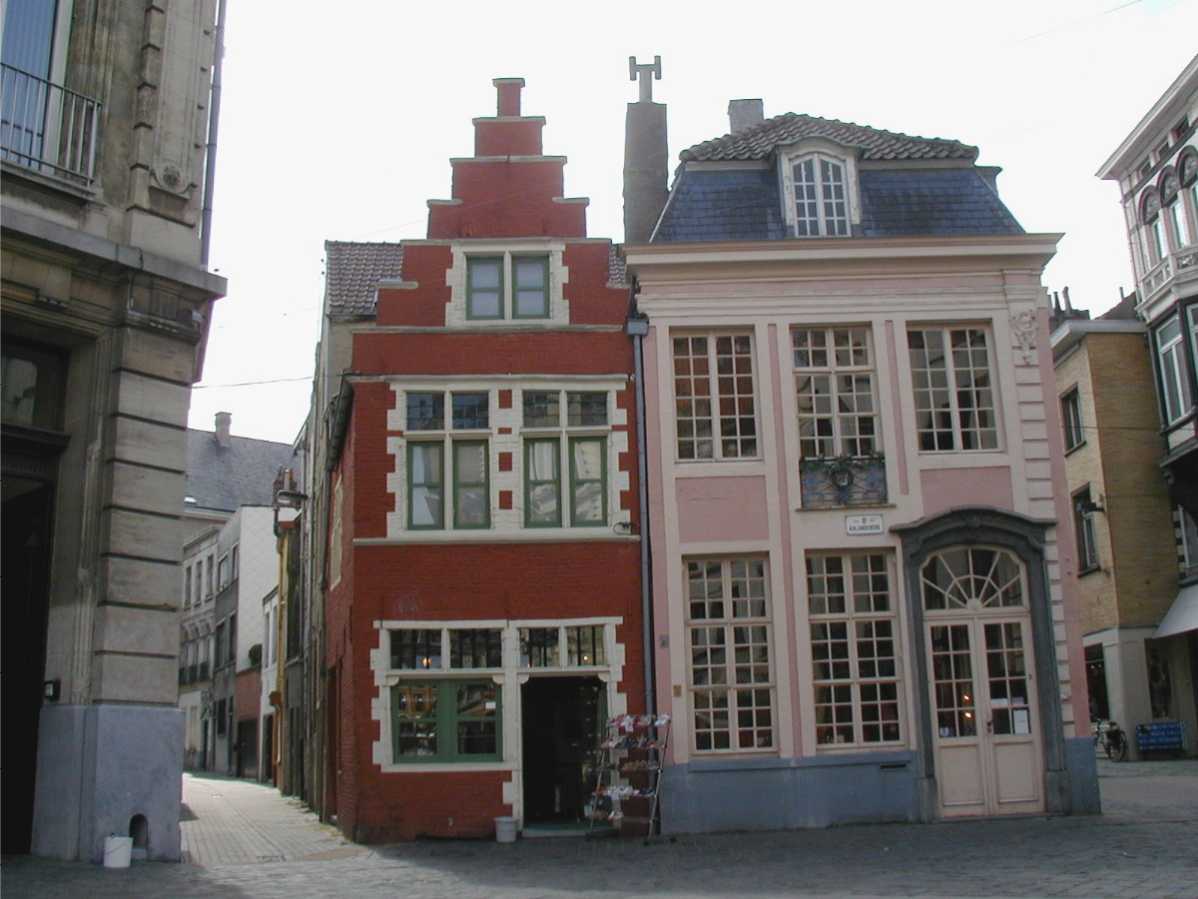
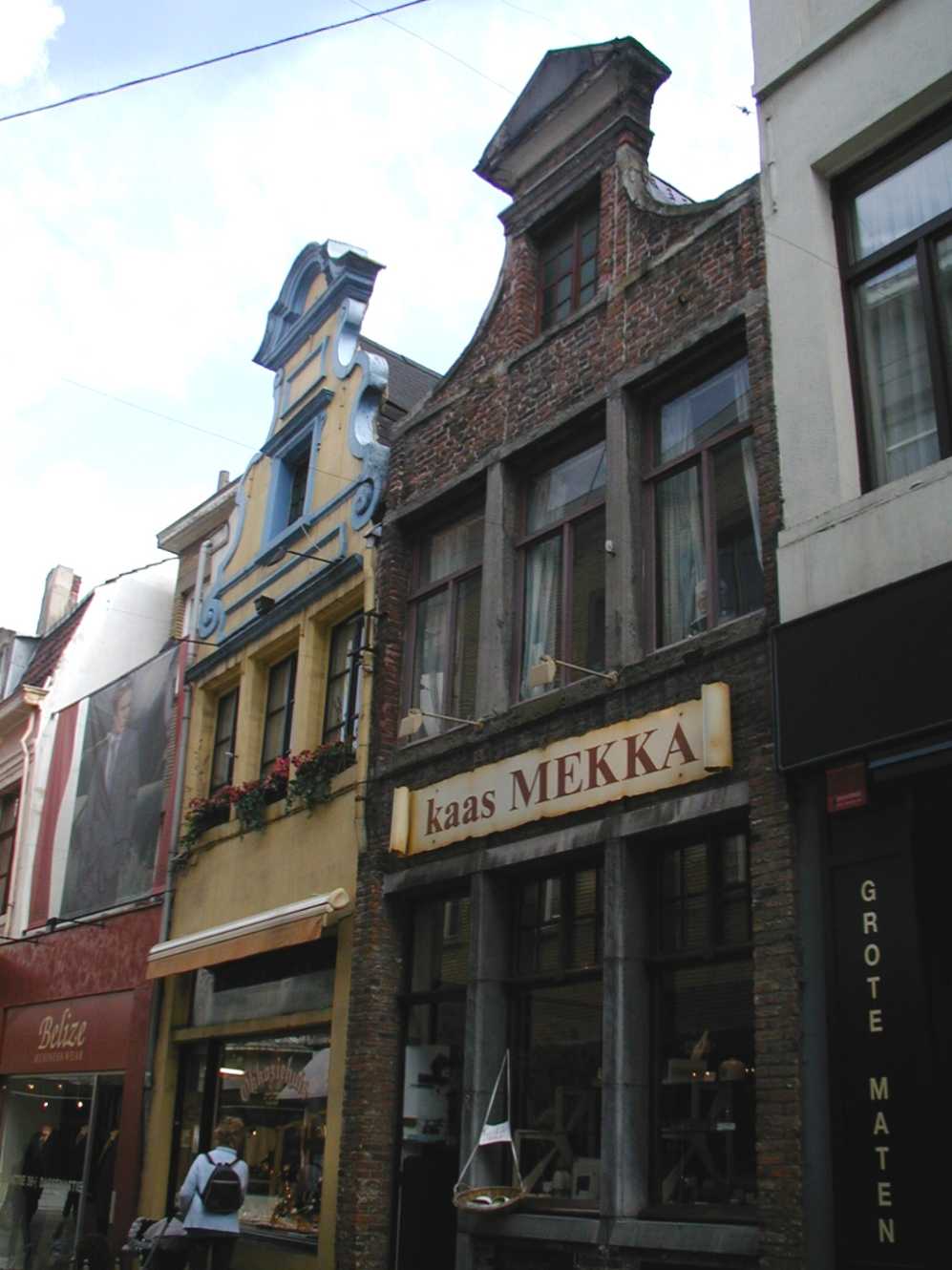
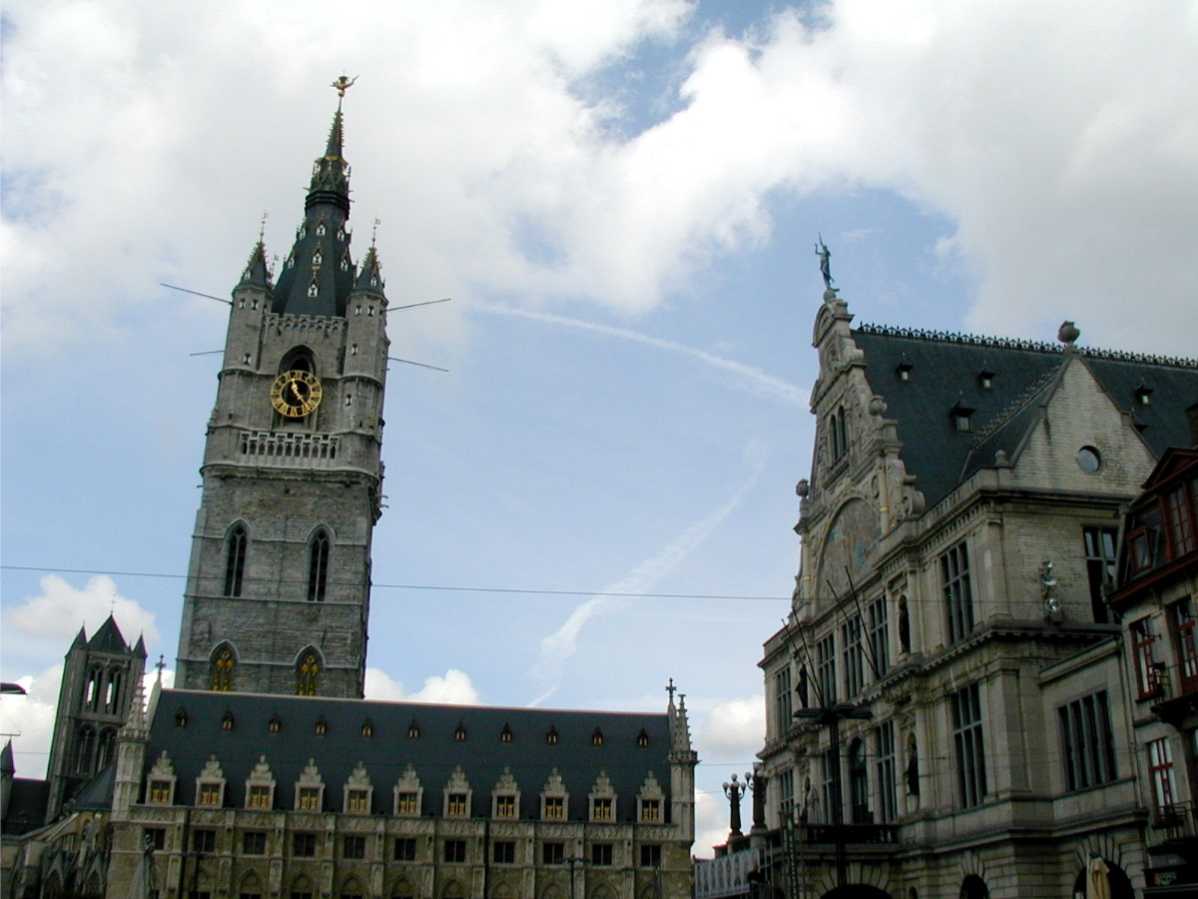
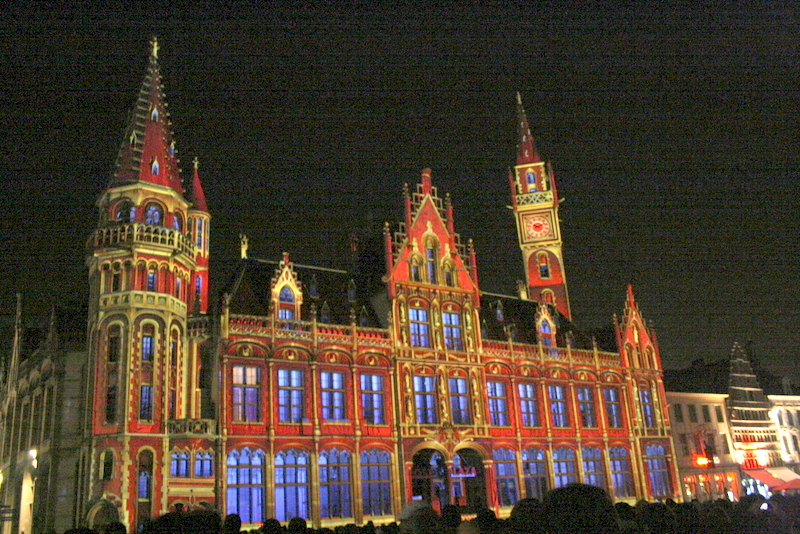
There are many things to see and talk about. Gent is rather small (for Chinese standards!) but it has a number of unique historical sites, too many to mention here. So, just a few words.

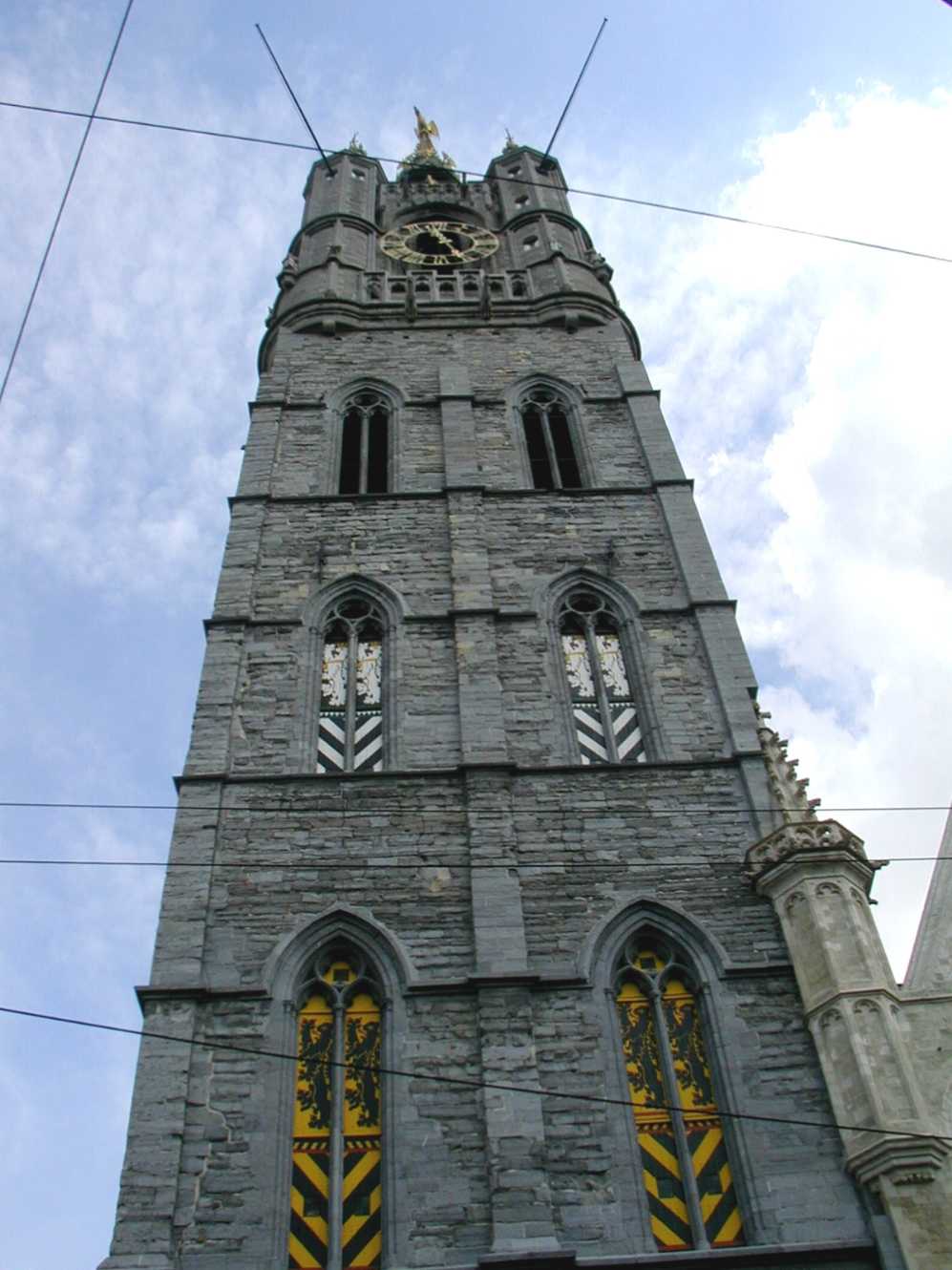
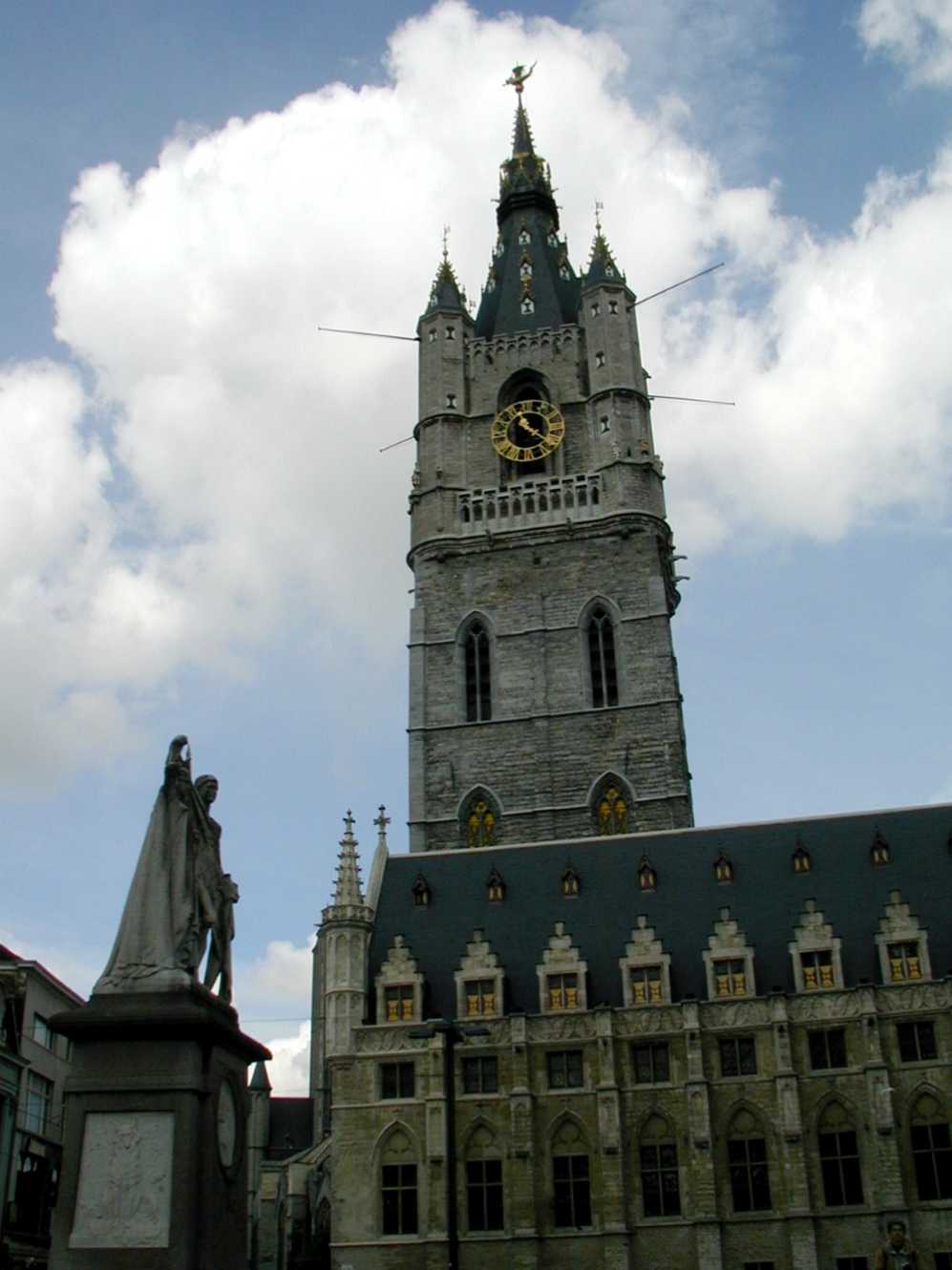
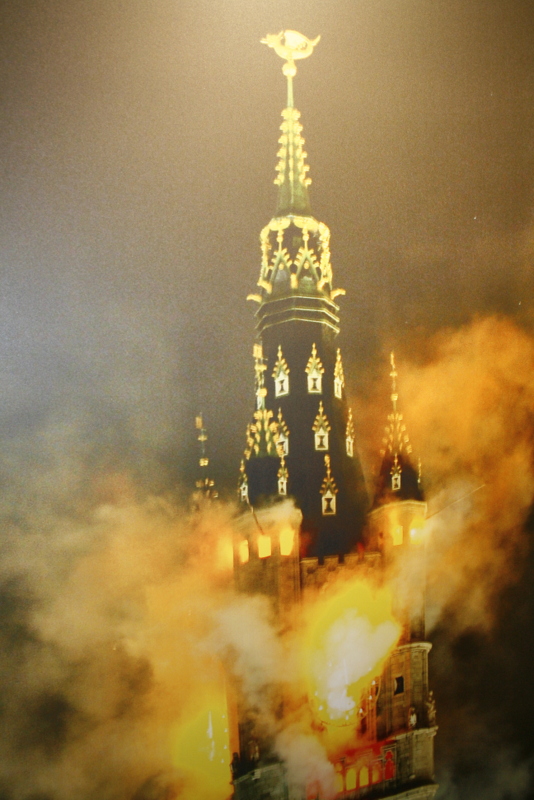
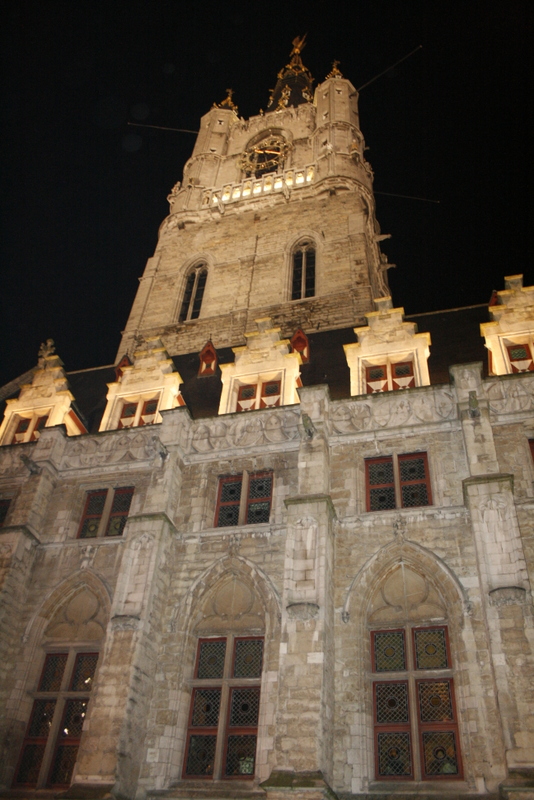
The story of  “Belfort” – Belfry of Ghent and the Golden Dragon
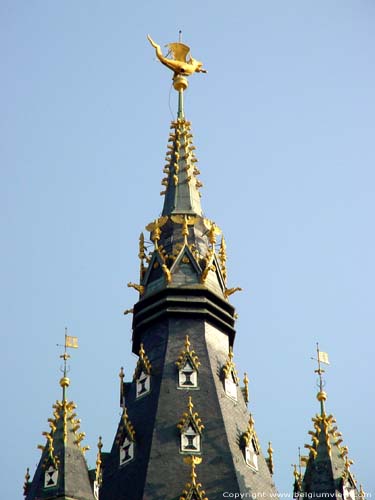
The bell tower is 95 m high and construction probably started before 1314. It was modified several times, especially the top piece that was originally in wood.
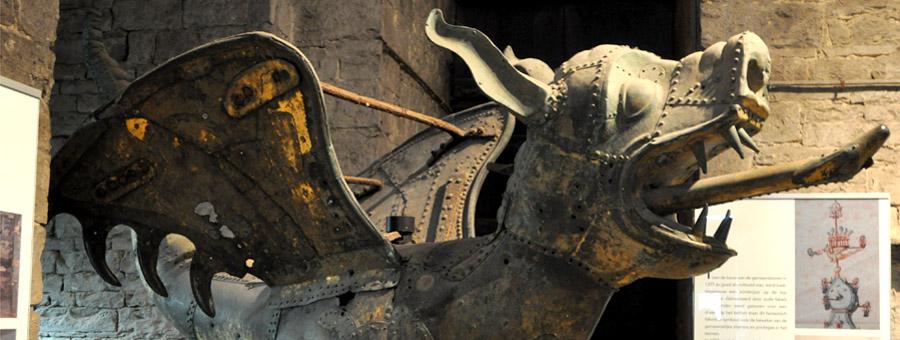
There are some complicated stories about the Dragon, involving the Crusades, Norway, Bruges etc. But the real story is a bit different while some still refer to the Crusades. The Dragon is much the symbol of the city and its protector.
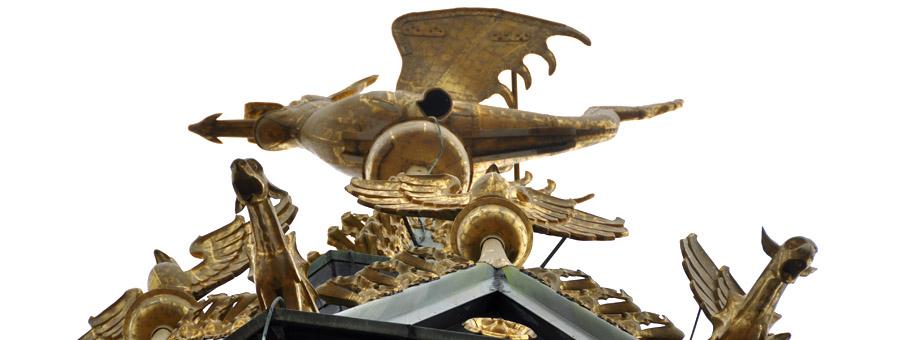
The dragon was made in 1377 on order of the then city government. It was already on top of the Belfort before 1401.
The dragon is very popular in the city and at certain occasions it was throwing fire. The first time that happened was on 17 March 1500 on the occasion of the baptism of Prins Karel. As from 1595 it was done regularly. The last time the Dragon threw fire was in 1819 during the visit of the Prins Van Oranje.
The Belfries of the cities of Ieper and Doornik also have a dragon on their bell tower but the Ghent dragon is by far the biggest being 3.55 m long, 1.5 m wide, 1.8 m high and with a weight of 398 Kg. It is made of iron and covered with golden-plated copper plates.
See here (in Dutch) historical details of “het Belfort van Gent”:
http://www.scholieren.com/werkstuk/55
http://nl.wikipedia.org/wiki/Belfort_van_Gent

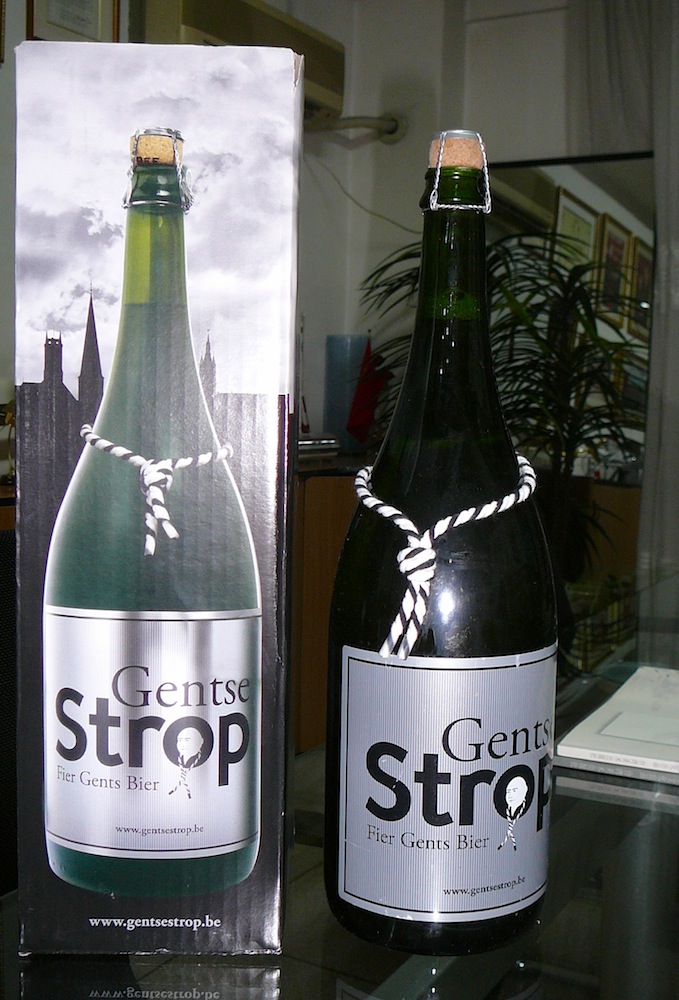
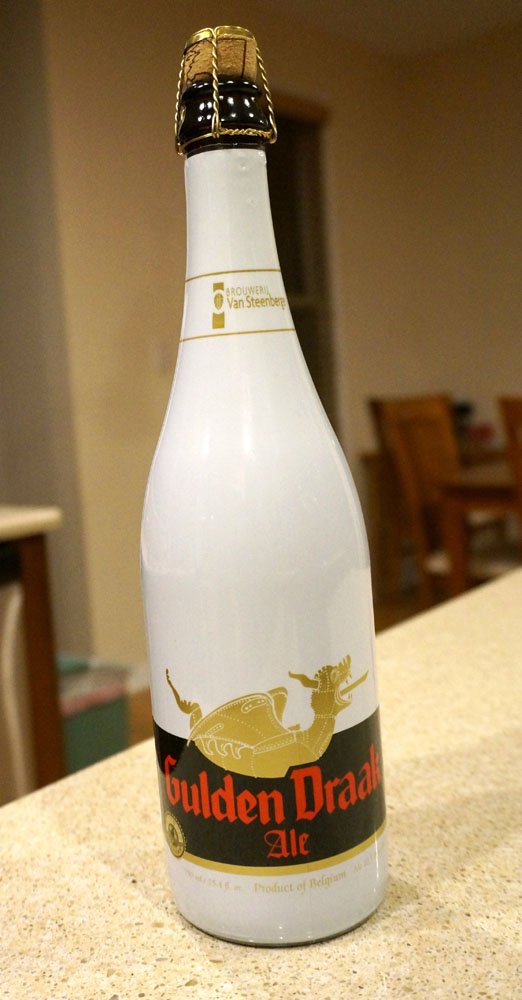
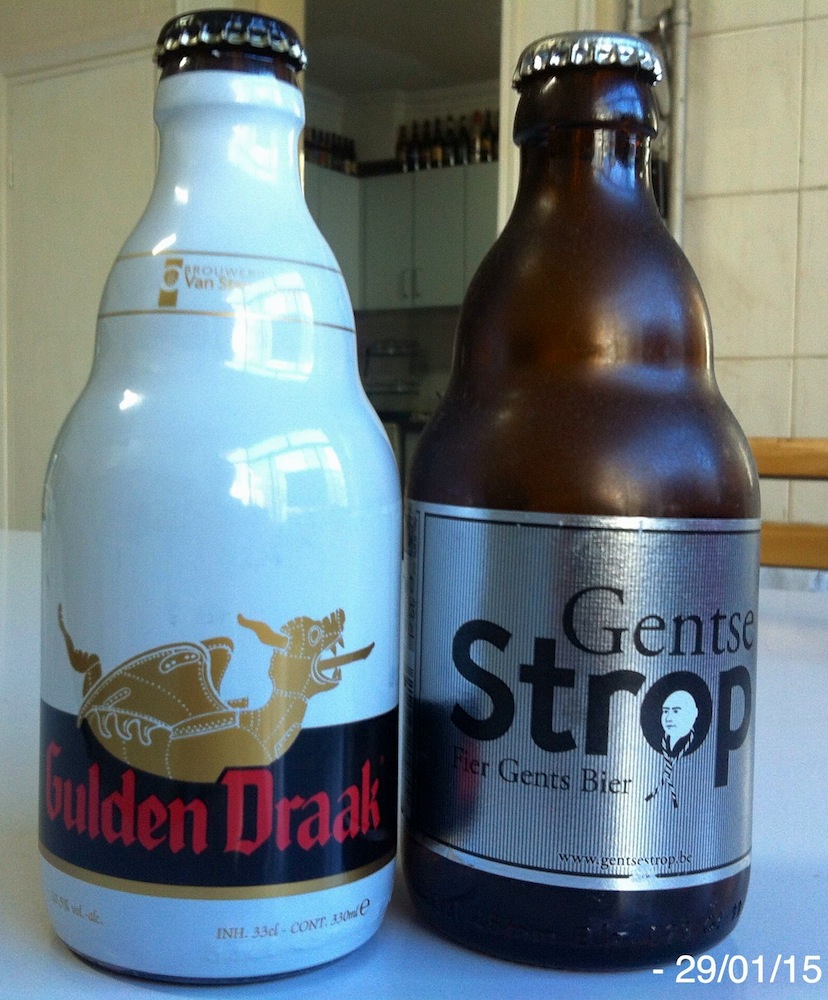
There is also a beer “Gulden Draak”. I had it for the first time in … Indianapolis (USA, November 2014), the big bottle. In January 2015 I found it in Beijing, the small bottle, see it along with a small Strop beer.

Stroppendragers

Indeed, that brings us to our nickname: “Stroppendragers”, that means:
The people of Ghent came to be known as ‘Noose Wearers’. Today, they are proud of their nickname, “stroppendragers” or “noose bearers”, but back then that certainly wasn’t the case.
Stroppendragers or also de Stroppen is the nickname of Gentenaars, people from Gent.
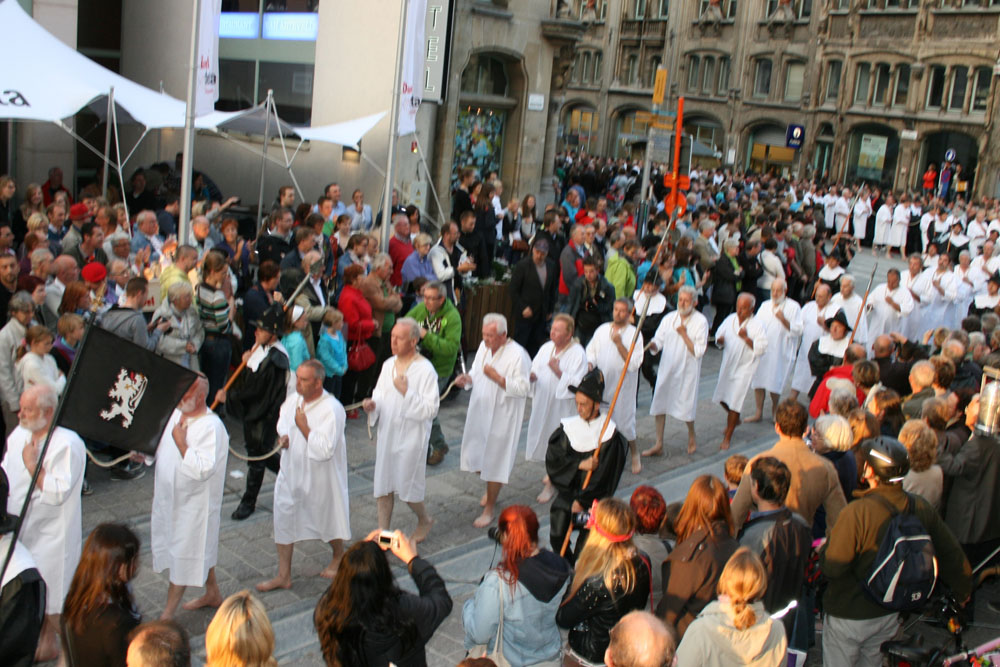
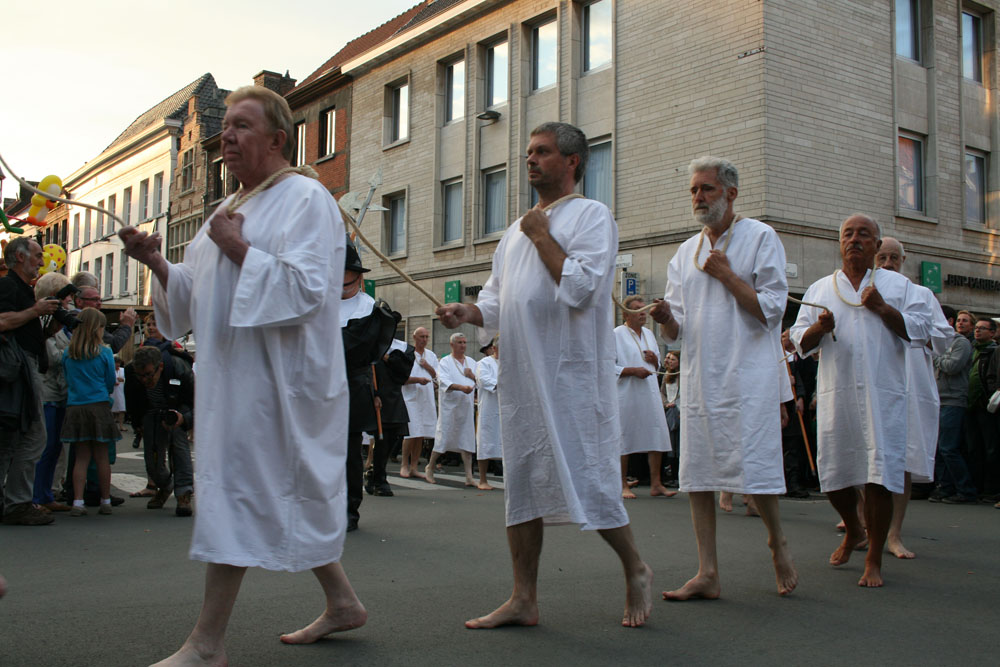
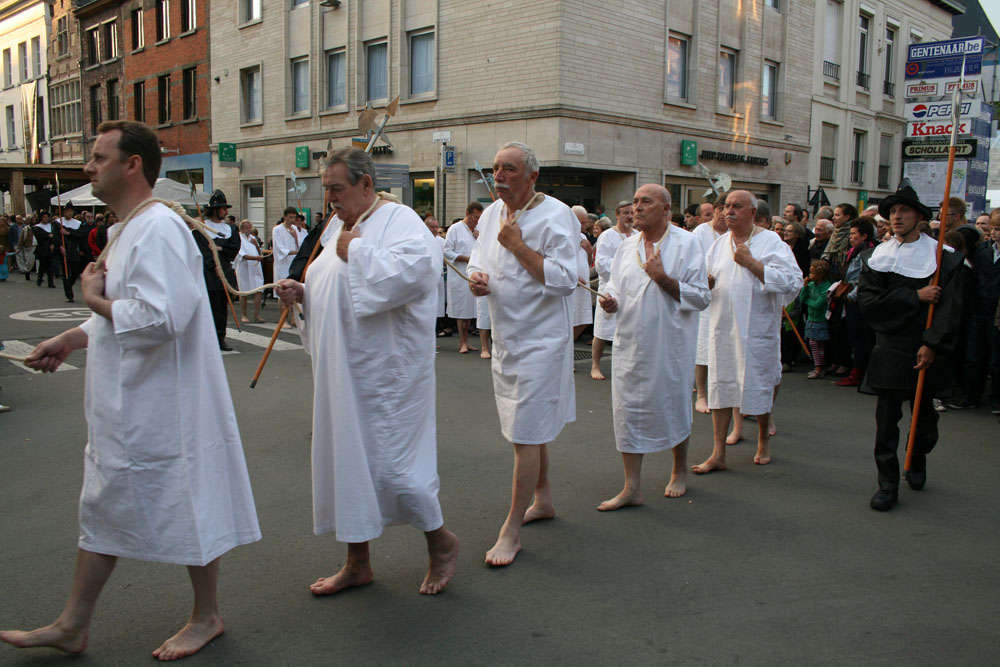
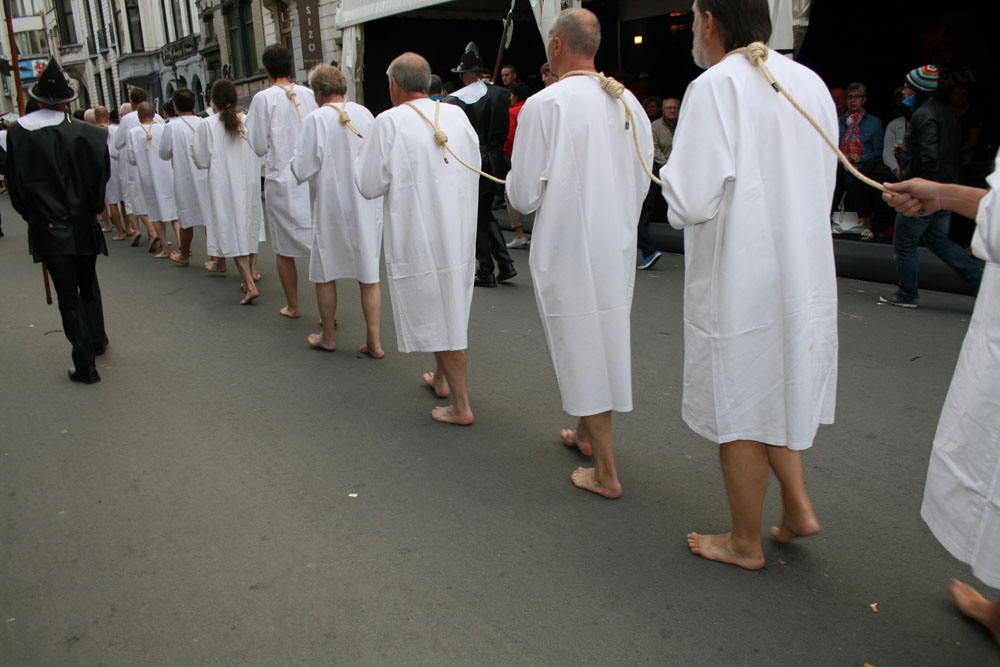
After a short revolution in Gent against him, Emperor Charles V (Keizer Karel V) the emperor arrested the leaders of the rebellion, killed 25 of them and then let the others go through the city with a noose around their neck, on 3 May 1540.
The noose is a potent symbol of resistance against any form of tyranny en bad government. People from Gent are said to be stubborn and who also leave room for other opinions and favor free scientific research. So I guess I perfectly fit the bill.
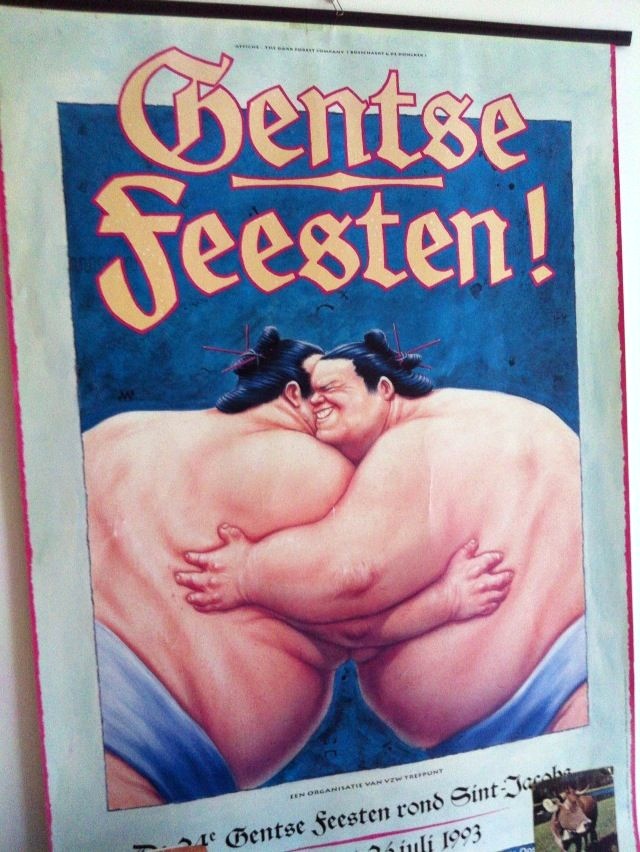
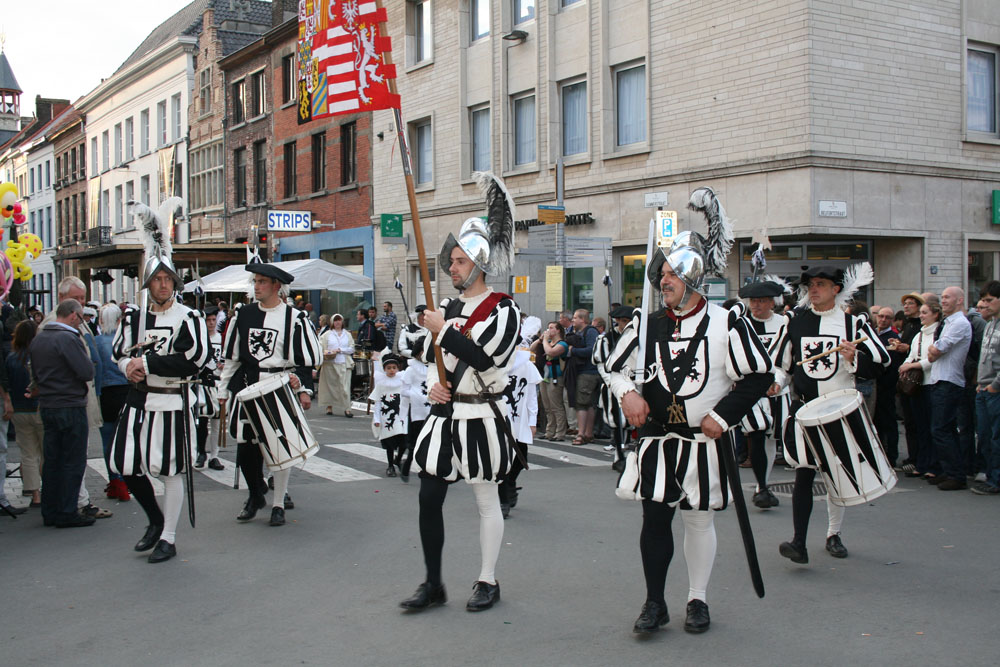
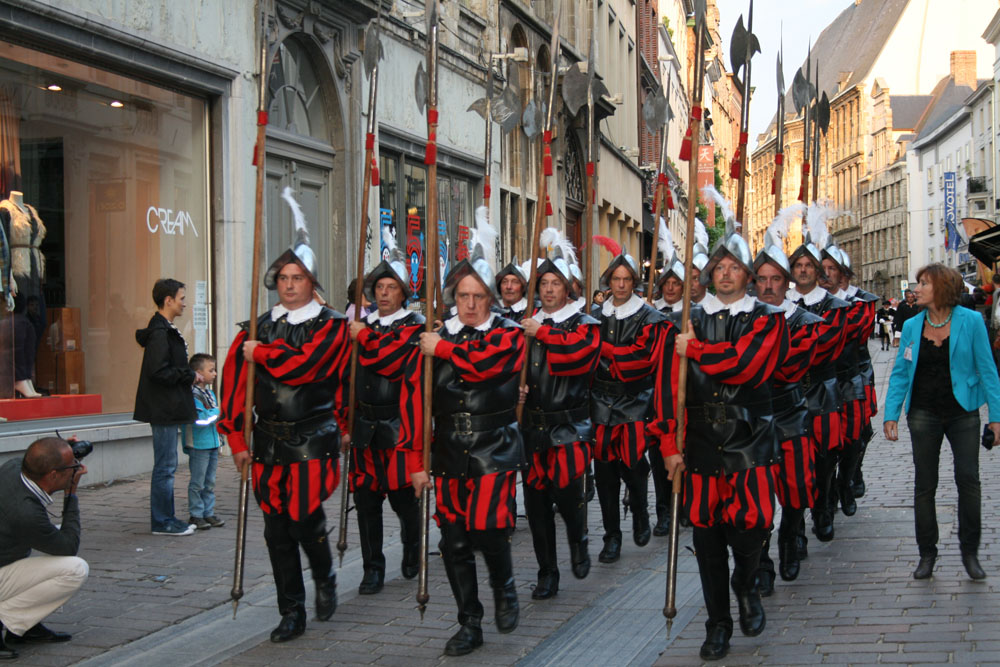
During the famous “Gentse Feesten”, the festivities in summer time, there is re-enactment of the procession (see the pictures). On the occasion, many people put a noose around the neck )black & white, the colors of the city shield). As for the Gentse Feesten, I have in my office a unique poster from 1993…
And of course we have Strop beer here that I drink in Morel’s restaurant! And I also managed to empty the huge bottle!
See: http://nl.wikipedia.org/wiki/Stroppendragers
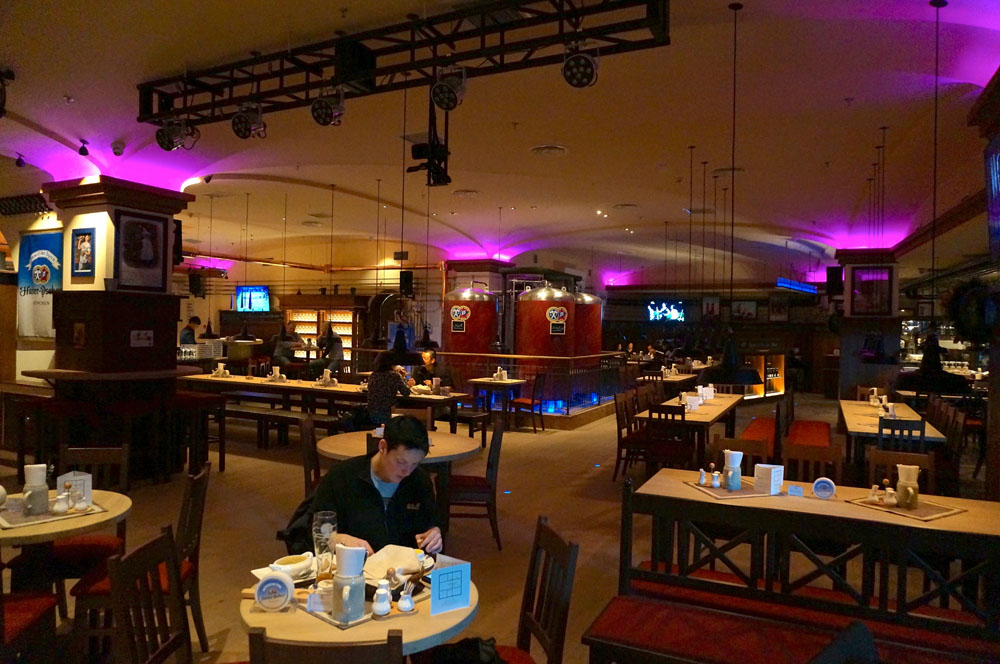
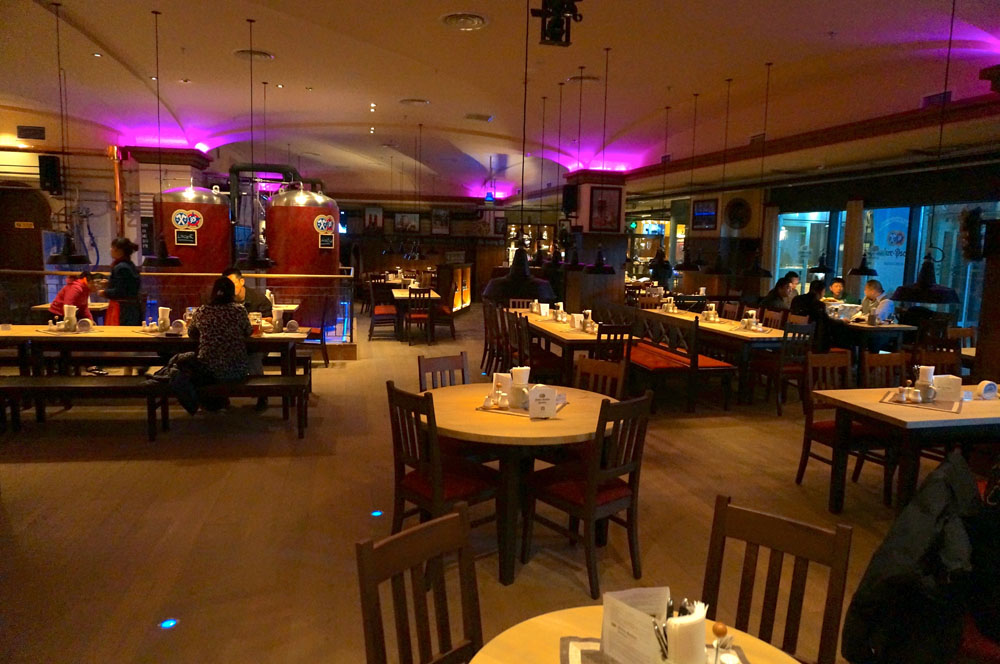
A new German restaurant in Beijing: Hacker-Pschorr Bräuhaus

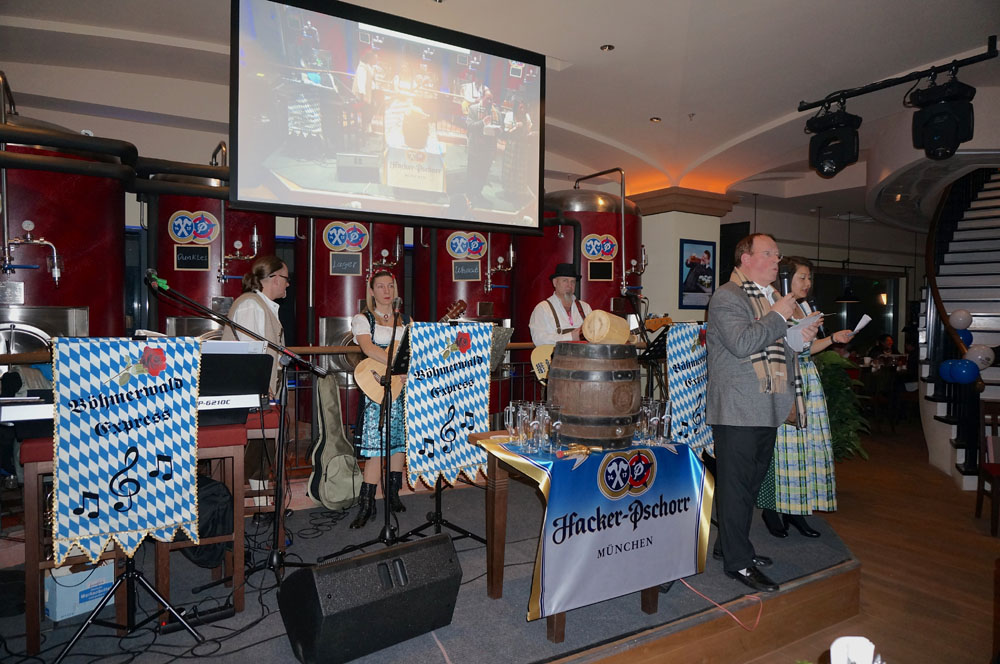
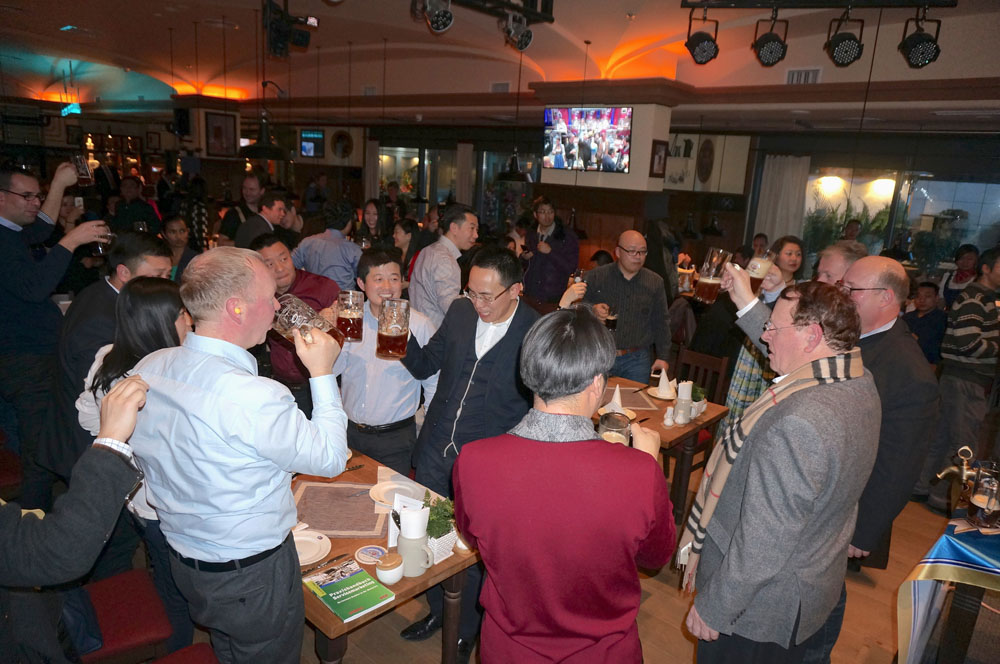
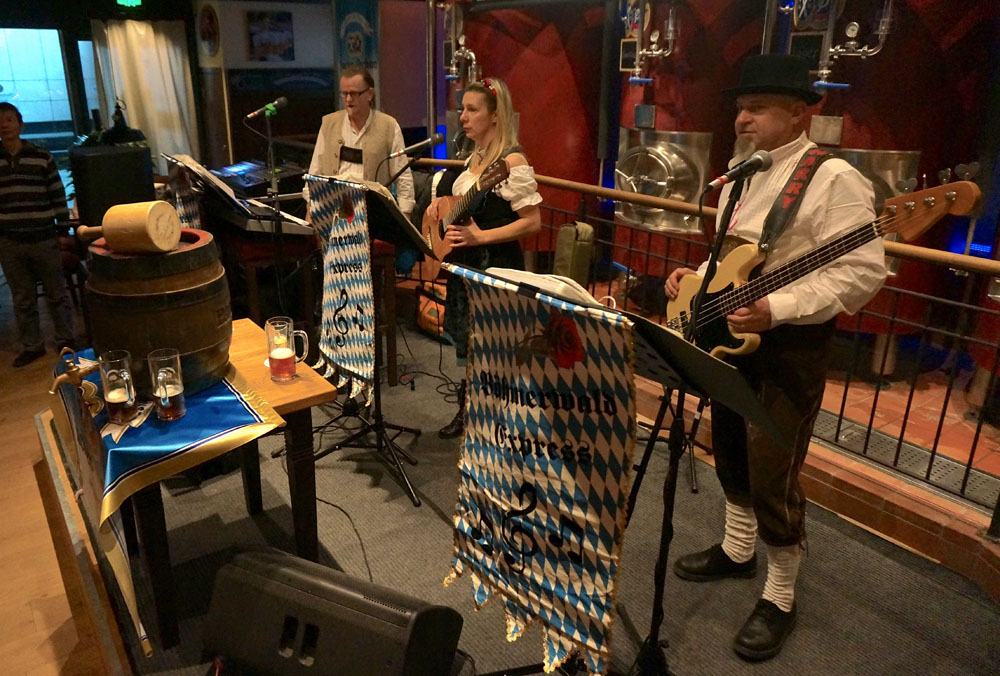
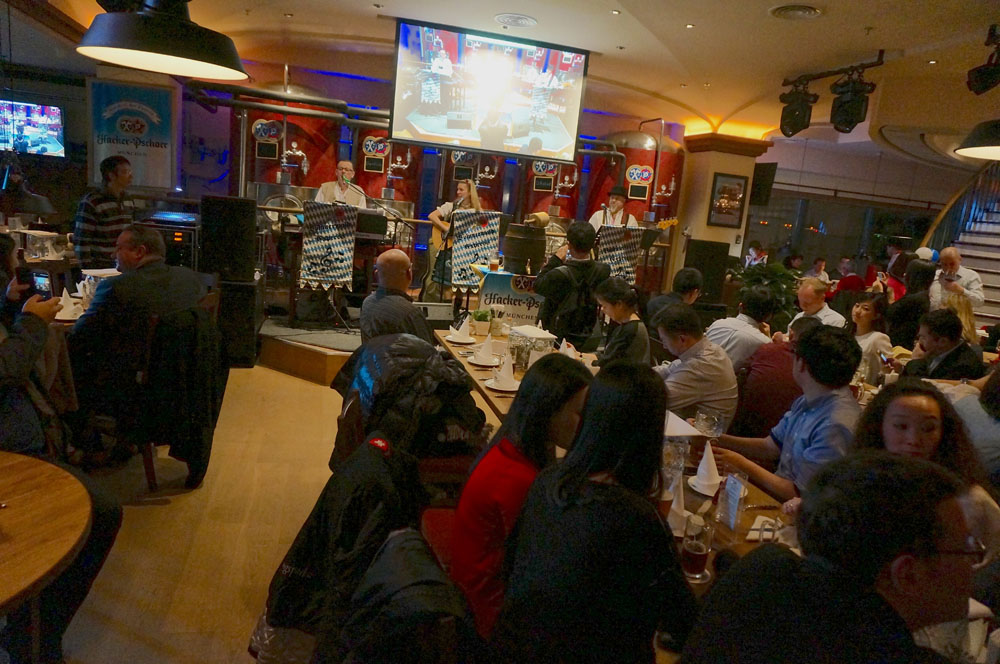
Our friend Rotarian René has finally done the official opening of Hacker-Pschorr Bräuhaus!
The name Hacker-Pschorr dates back to the marriage of Teresia Hacker and Joseph Pschorr. Under the couple’s leadership, Hacker-Pschorr advanced to become Munich’s leading major brewery in the 18th century.
“As a vibrant, traditional brewery with deep roots in Bavaria, Hacker-Pschorr delivers the highest quality and finest art of brewing according to the Bavarian Purity Law, while embodying Bavarian characteristics of conviviality, earthiness, tradition and craft brewing like no other brand. This is the „Himmel der Bayern“ („Heaven of Bavaria“), and this is what Hacker-Pschorr has stood for since 1417.”
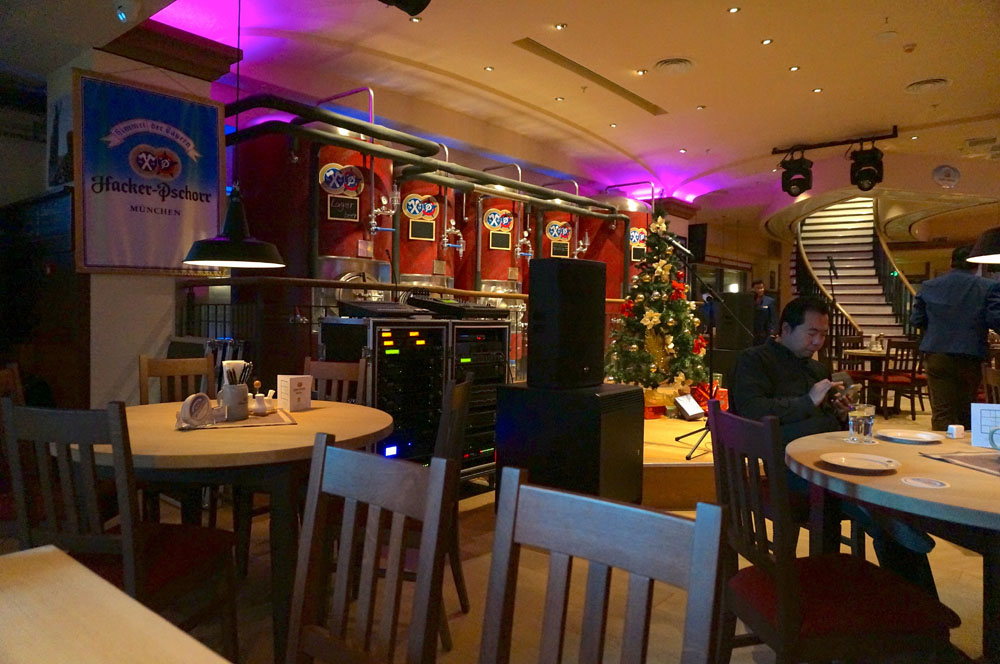
See: http://www.hacker-pschorr-brauhaus.com/

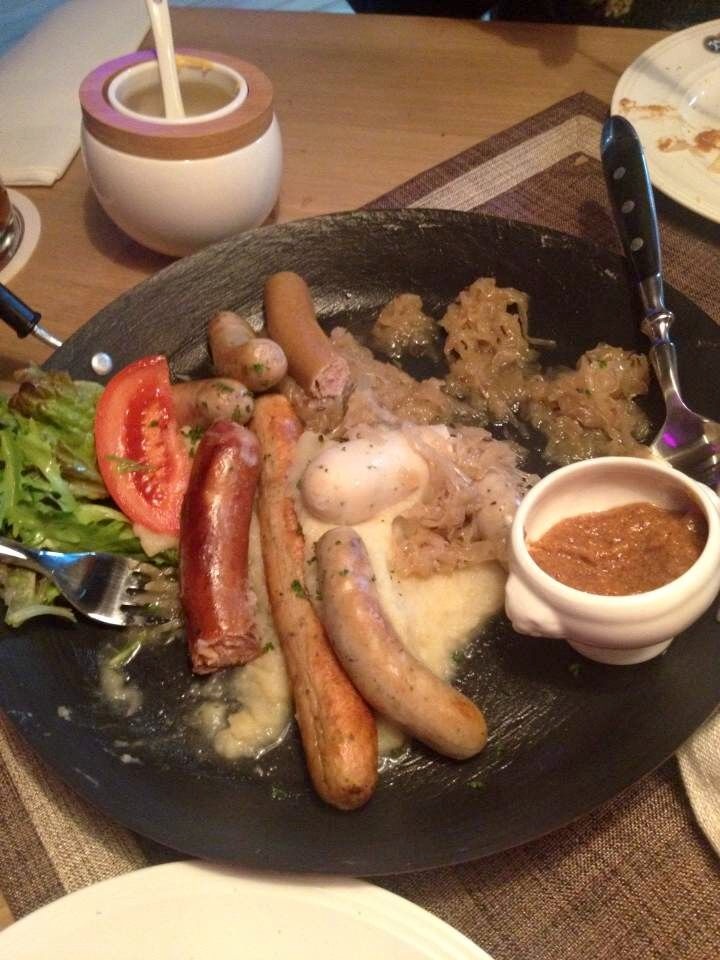
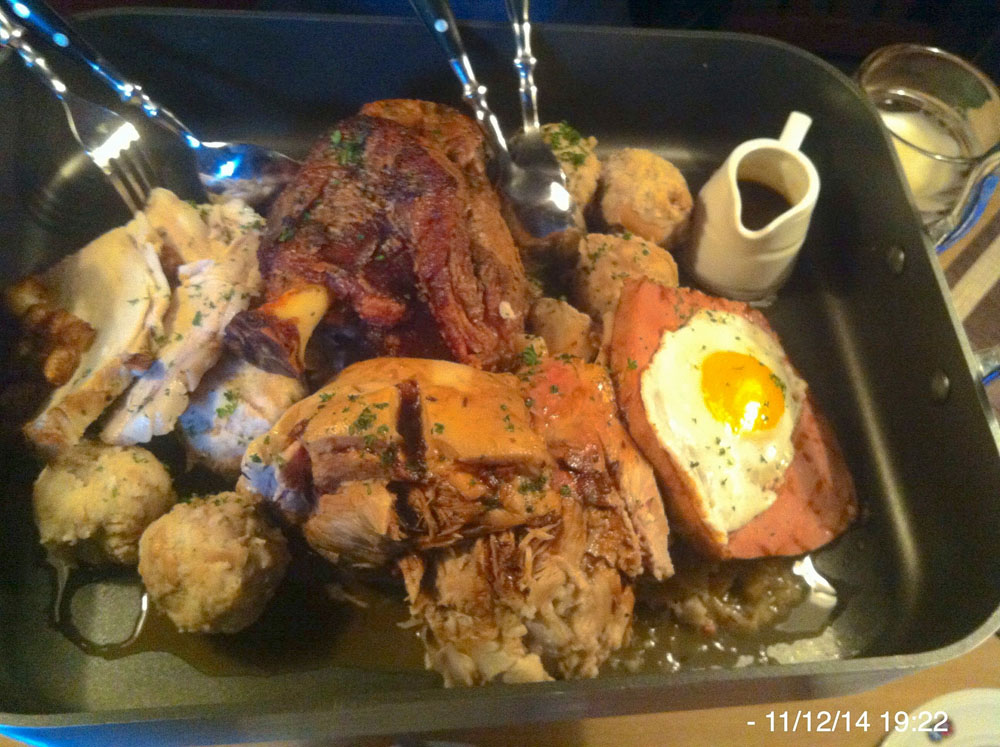
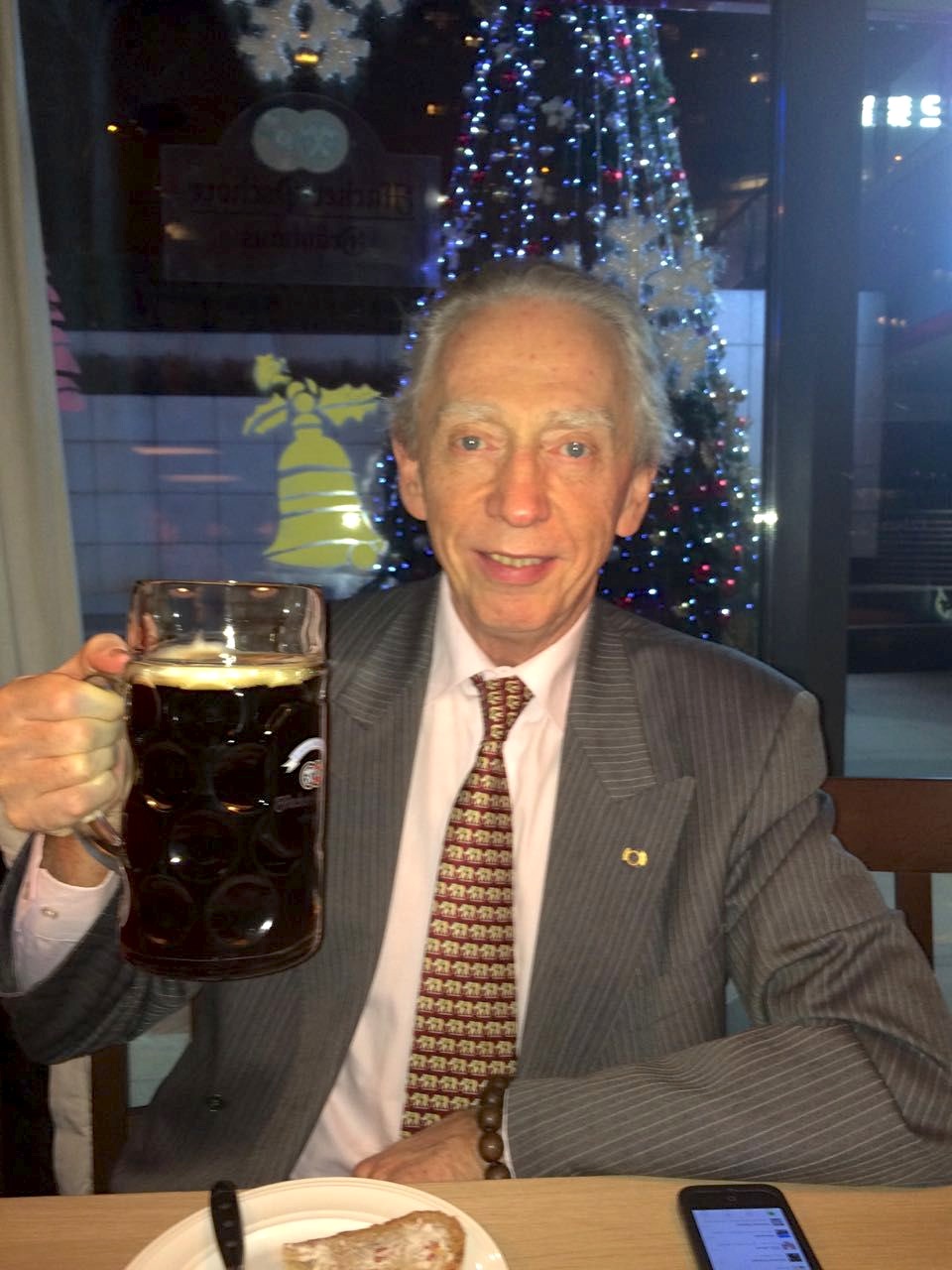
I had already tried out some of the dishes (and the beer, obviously) in December 2014 during the trial run, and gave my feedback to René. See the dates of the pictures. The restaurant will be fully operational after Chinese New Year.
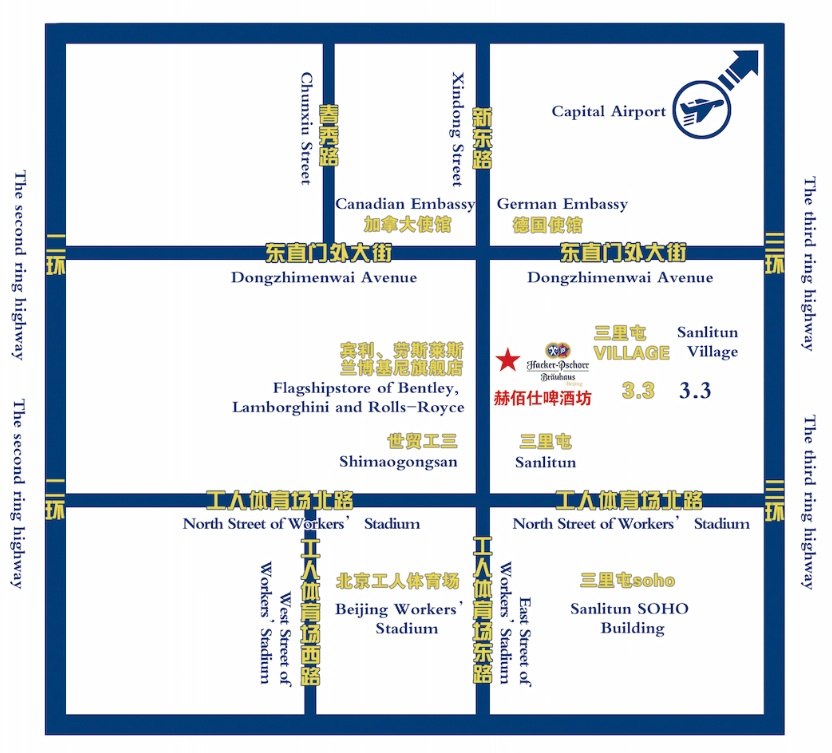
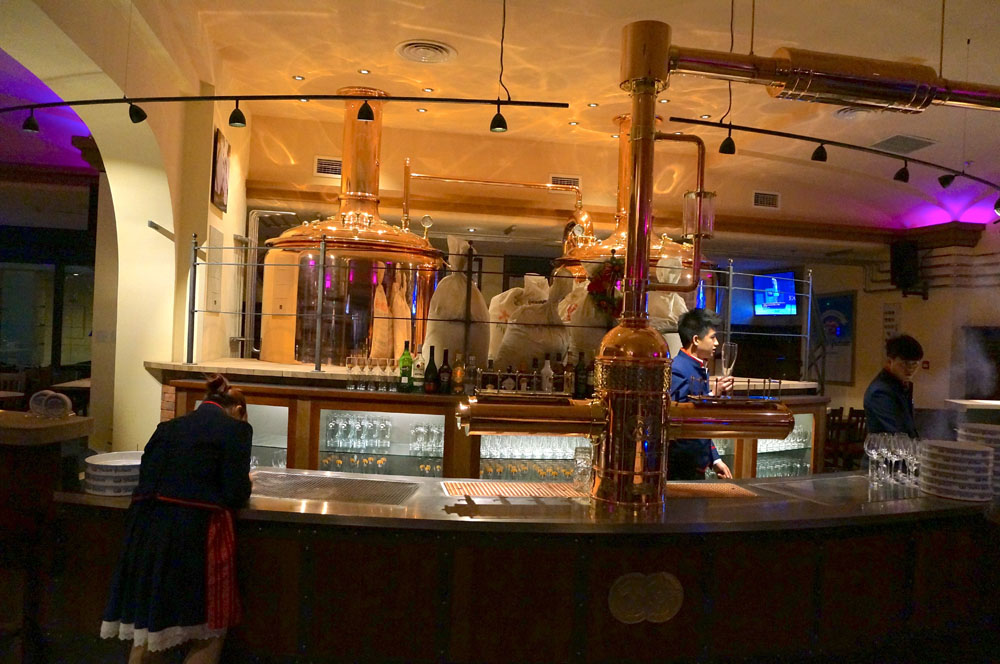
The Sanlitun location is on Xindong Lu across the street from the Bentley Car Showroom. The restaurant is really large and cozy. There is a bakery and meat shop on the street level. And it is in walking distance of the German embassy.
It joins other German restaurants in the area: Drei Kronen 1308 Brauhaus, a bit further south on Gongti Dong Lu, and Taps – German Bar & Grill (Sanlitun Tongli area, same building as Luga’s, close to 3.3). It will all depend on management, price/quality…

Not all Chinese weddings are alike! The history of Quanjude Peking Duck

I have been to quite a number of weddings and some blog entries on my other site show pictures.
A wedding is a big thing in China and normally also complicated and very expensive. Especially the bride has to change the dress several times during the banquet. Red envelopes and other presents are brought by the guests. Most of the banquets are held in hotels with intrinsicate decorations, large wedding posters, video showing the young couple, a tower of glasses to pour the champagne, etc. The crowd can be … huge.

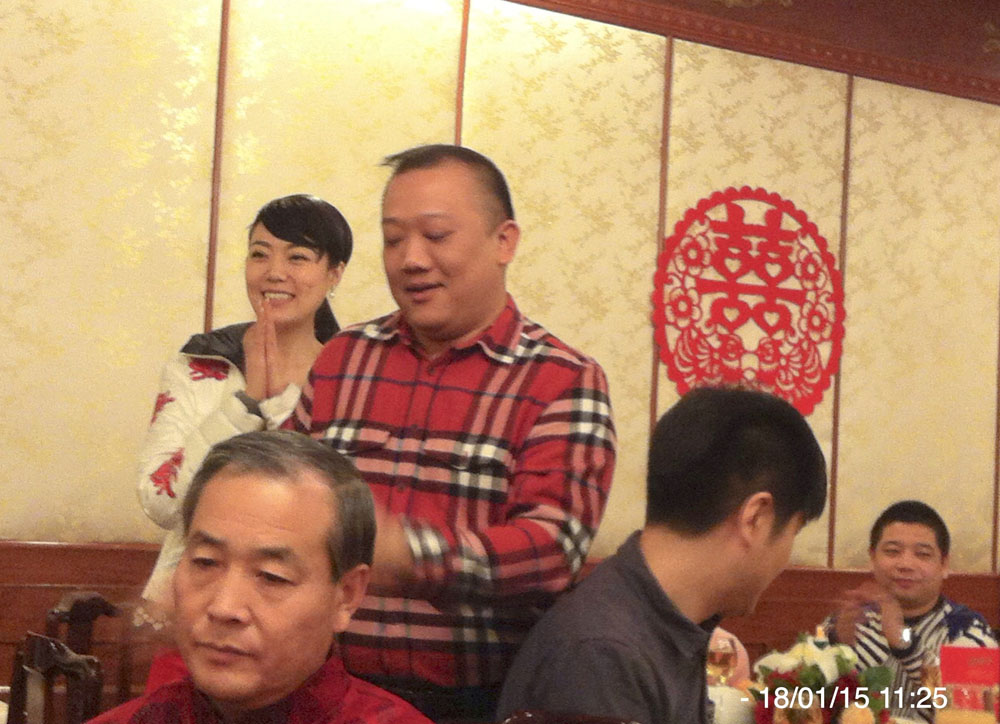
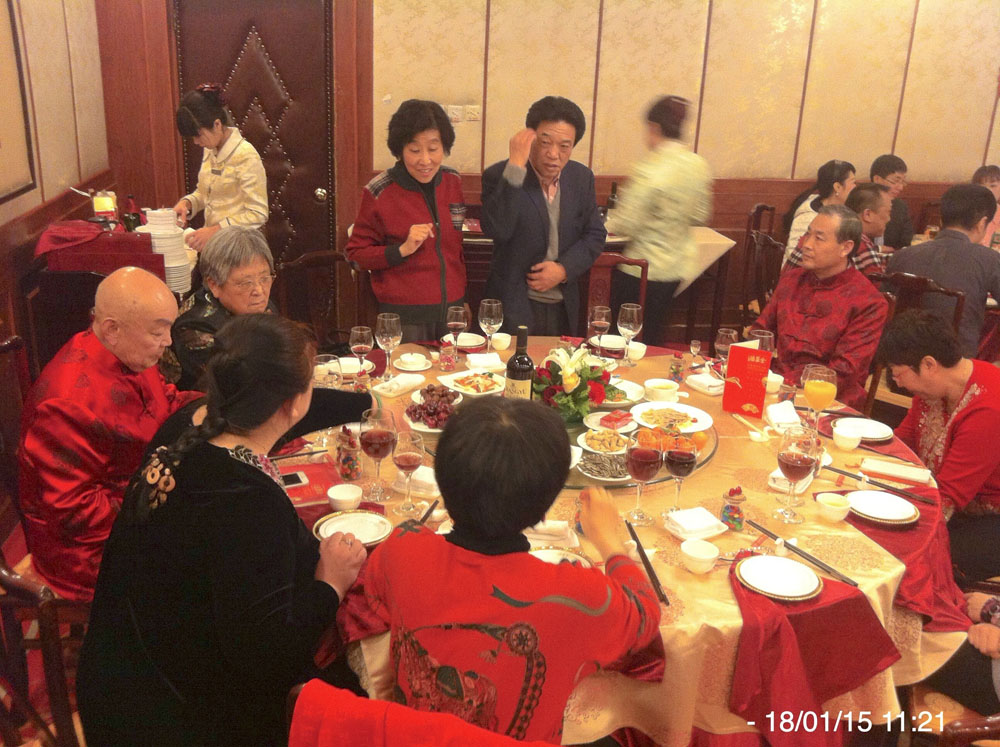
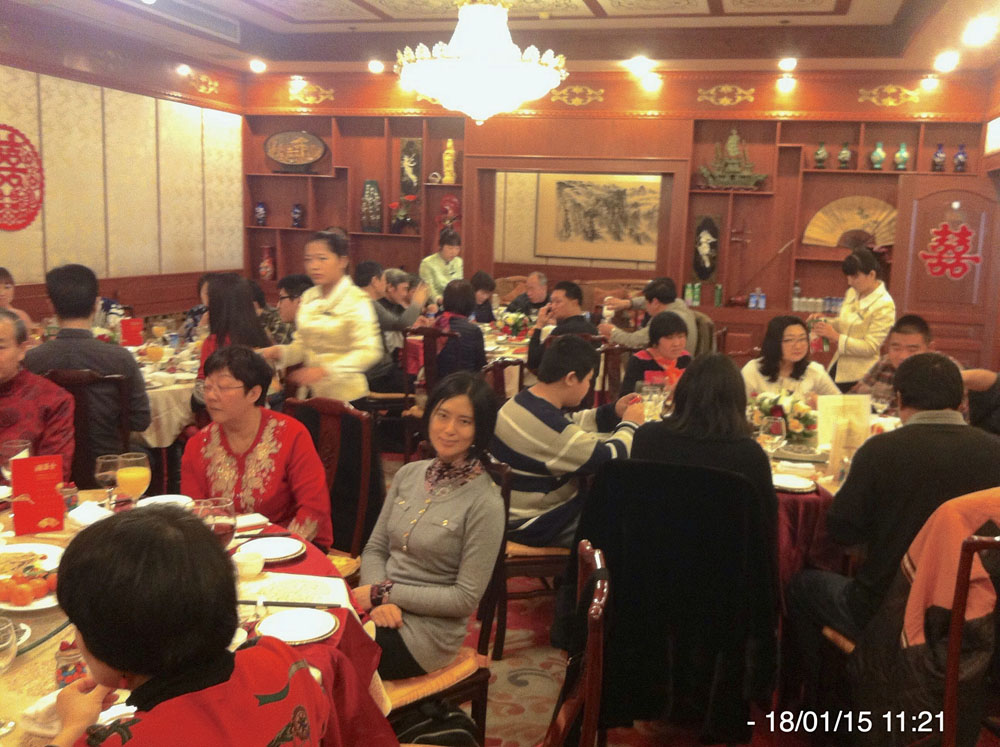
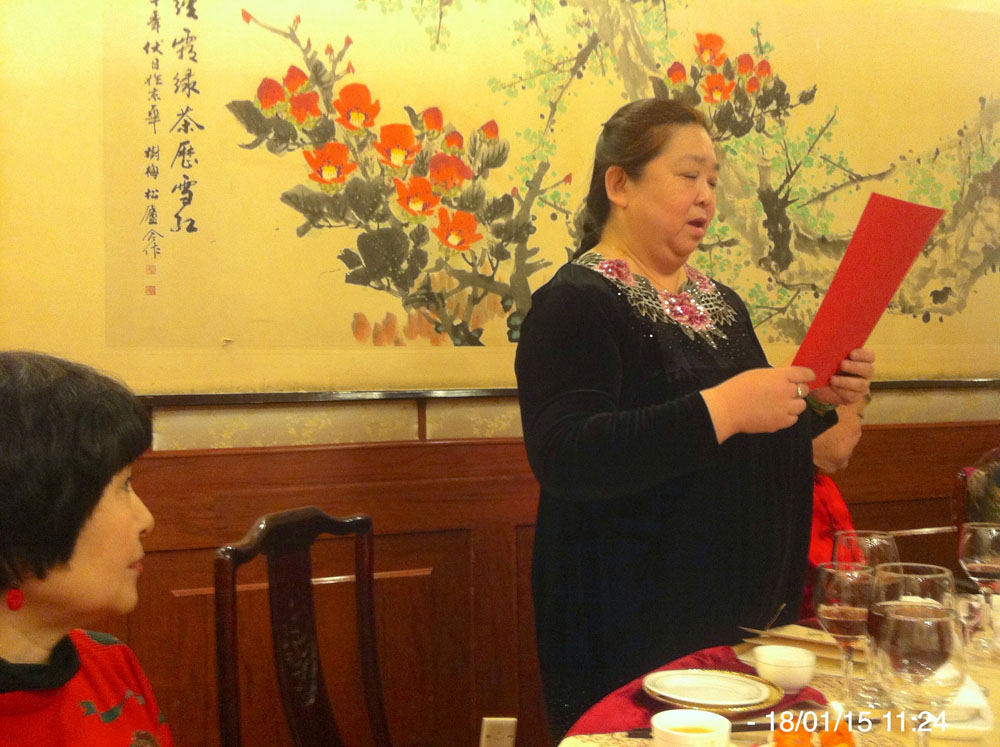
Well, not always. This wedding of a close friend was simple but very genuine. The couple is in the first picture: the bride had a nice dress but covered it as she felt cold. No fancy decorations. No flood of presents and “hong bao”.
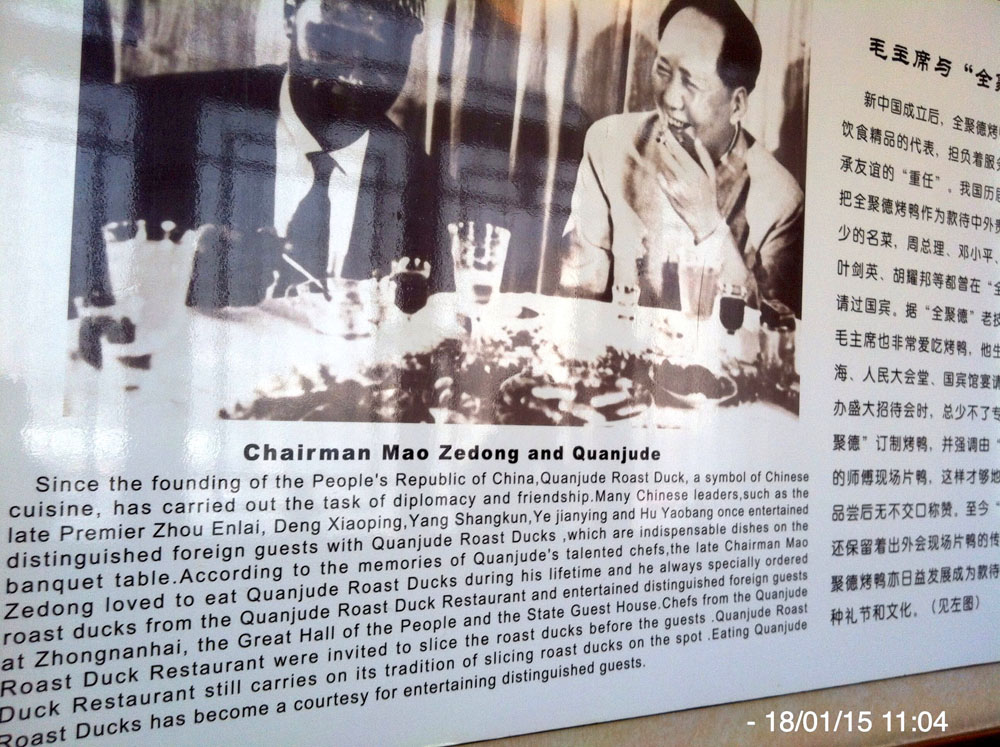
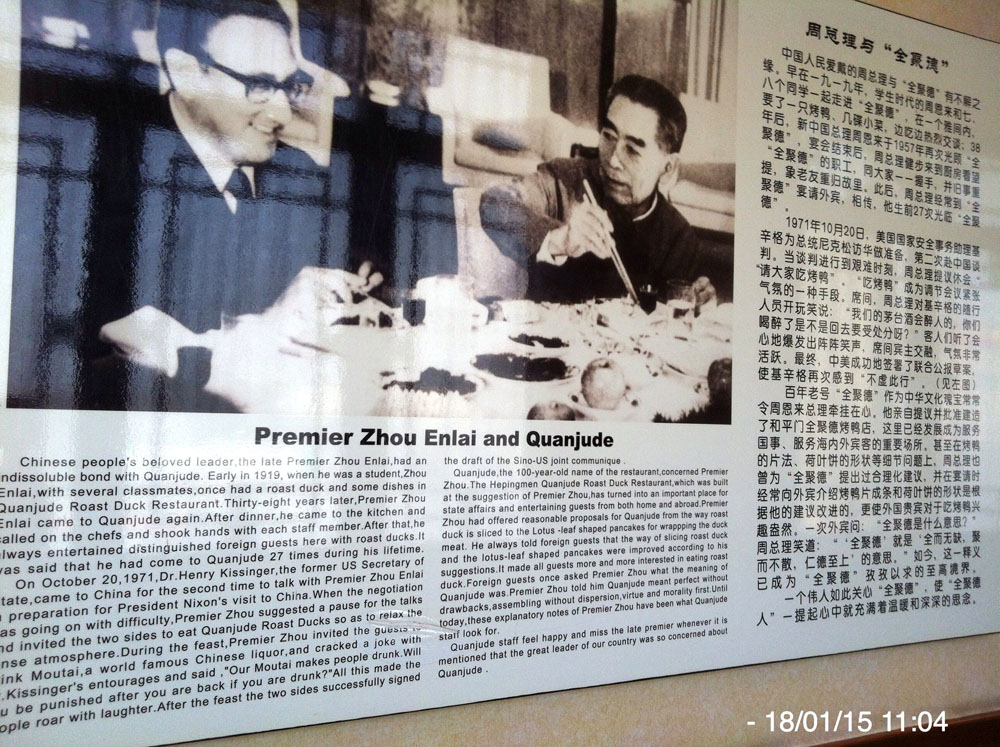
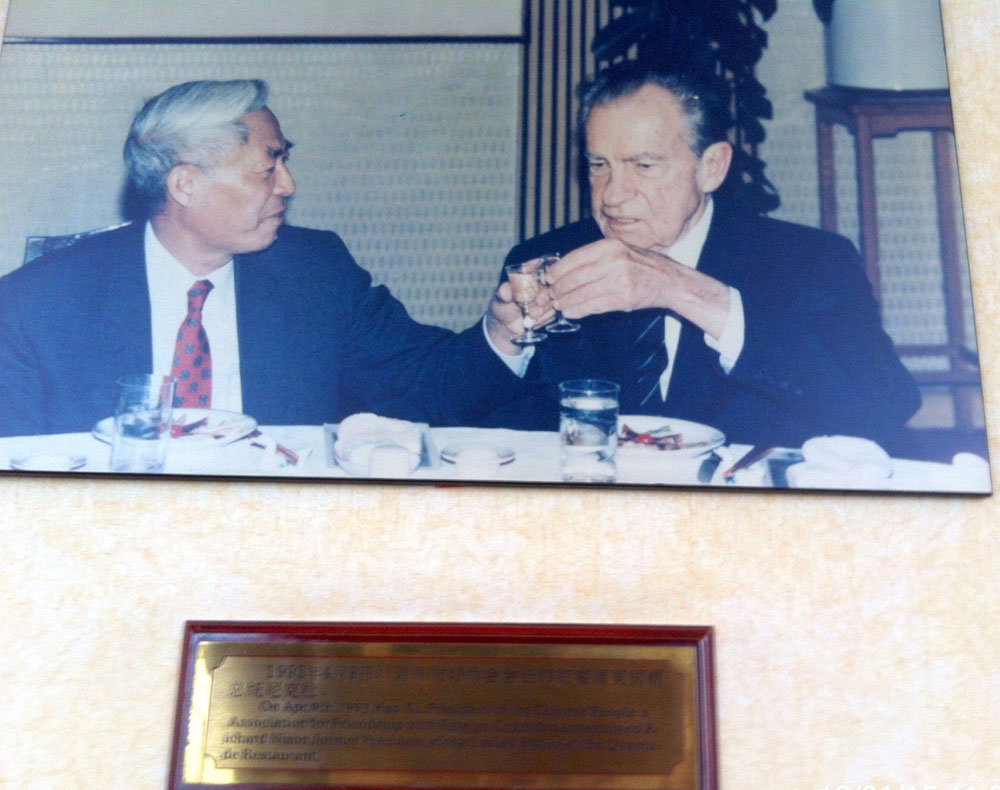
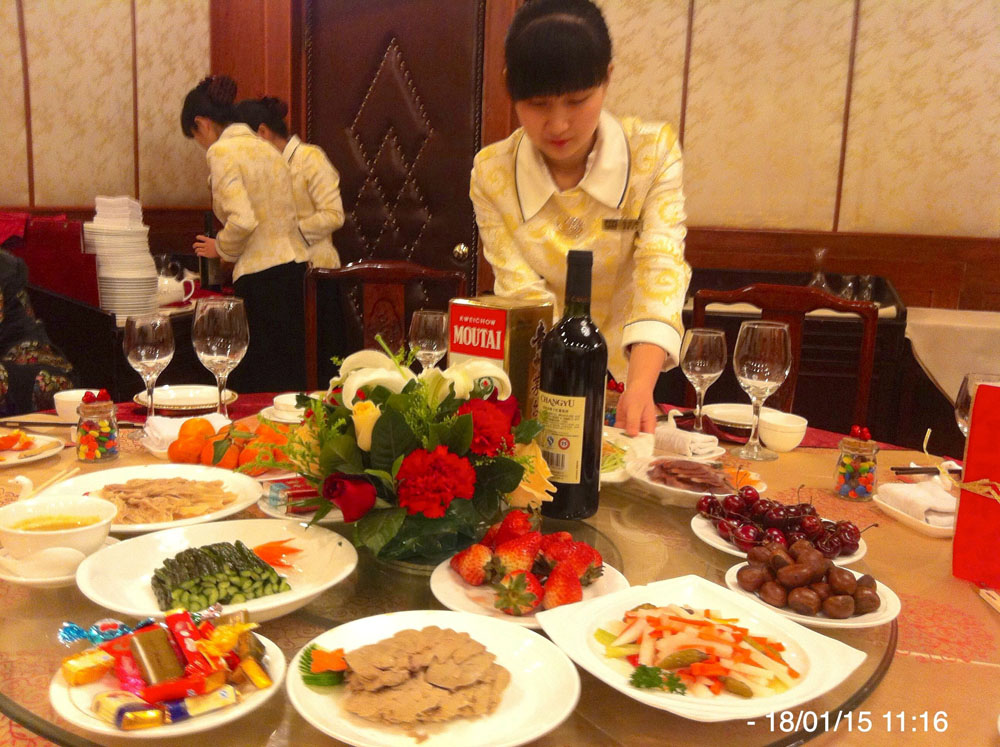
The location was also unusual: the famous Peking Duck Restaurant at Hepingmen, “Quanjude”. I remember that building from the eighties, it seemed a bit “far” from my Beijing Hotel. The restaurant is huge, see below. The corridors are decorated with historical pictures of famous guests. There are many floors with private rooms. The large public restaurant is usually packed and people wait patiently to get a table.
The Peking Duck is of course, delicious. I still love the dish and always eat too much.

Some history of Beijing Quanjude:

Established in 1864, with a history of 150 years, Quanjude has survived the ordeal of time. Quanjude has eight direct branches in Beijing. The original location operates in Qianmen with several other branches in other locations in Beijing.
There is a seven story restaurant on Hepingmen Ave., a location that was hand-picked by former Chinese Premier Zhou Enlai. Serving up to 5,000 meals a day, this restaurant covers a floor area of 15,000 sqm with over forty private dining rooms and can simultaneously seat 2,000 guests.
Having established a history and affiliation with the Chinese government at the municipal and central state level, Quanjude has often been used to hold state banquets and to receive celebrities, dignitaries, and important government figures from over 200 countries as distinguished VIP guests.
Per year the restaurant chain (50 affiliates across China) sells over 2 million roast ducks served in 400 different styles to over 5 million customers. Annual sales reach 500 million yuan (US$81.5 m).
With its long history, Quanjude roast duck enjoys a high reputation among domestic and overseas consumers for the peculiar roast technique and outstanding quality. It ranks the first not only in Chinese Famous Dishes, compiled by all-China famous chefs under the organization of Ministry of Commerce in 1958, but also in Elite of Chinese Famous Dishes, published by China and Japan in 1982.
In China, the well-known All-Duck Banquet is headed by Quanjude roast duck and supported by over 400 dishes with Quanjude characteristic flavor. Government leaders, officials and VIPs from nearly 200 countries and regions had dinner here.
About Quanren Yang, the establisher and the first manager of Quanjude:
Quanren Yang (1822-1890), the first manager came to Beijing from a famine-stricken area of Hebei Province. After arriving in Beijing, he was firstly engaged in buying and selling raw chicken and duck. In 1864, he rolled the dice with a grocery on the verge of bankruptcy. He renamed the firm QUANJUDE. Due to his extreme smartness and painstaking management, QUANJUDE developed from an ordinary roast duck shop front to a real restaurant characterized by roast duck done by hanging in the oven. This laid a sound foundation for the roast duck to become well known throughout Beijing.
See:
http://www.quanjude.com.au/
http://en.wikipedia.org/wiki/Quanjude

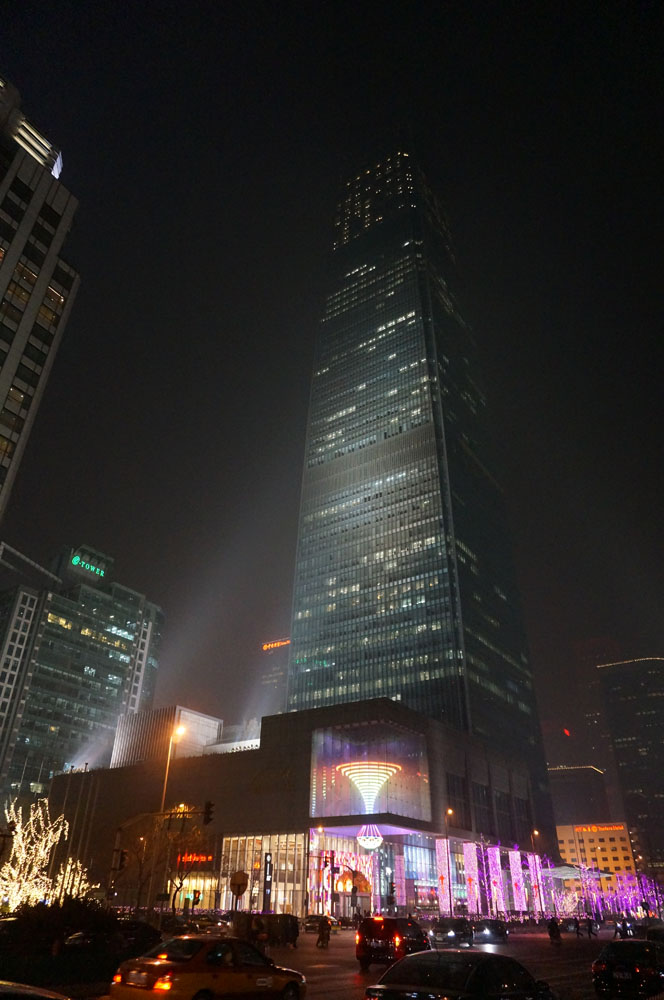
Beijing CBD lights up for the holidays

Another “China Views”.

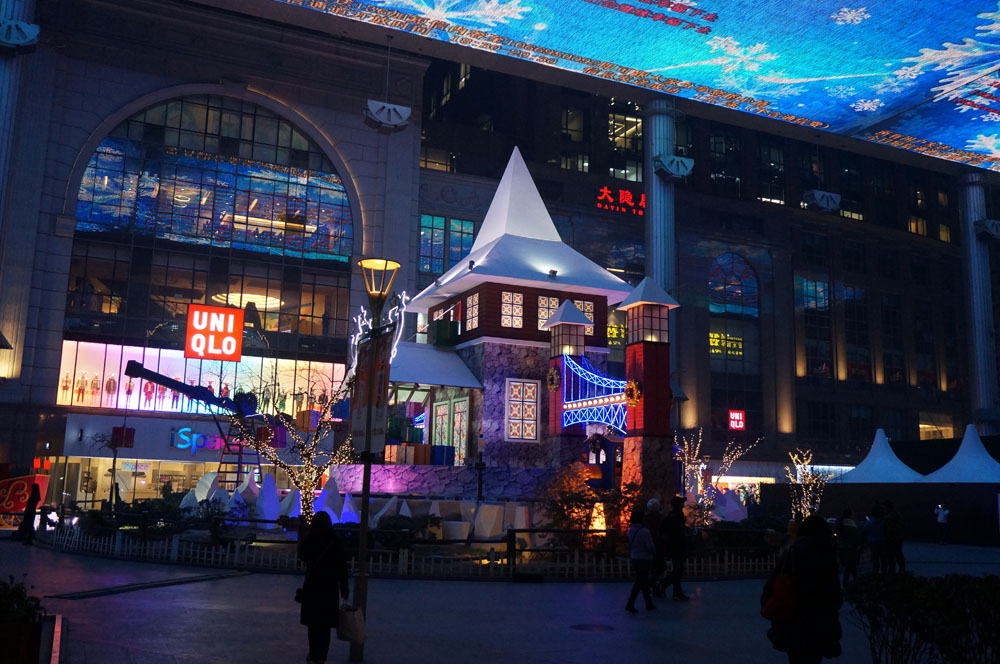
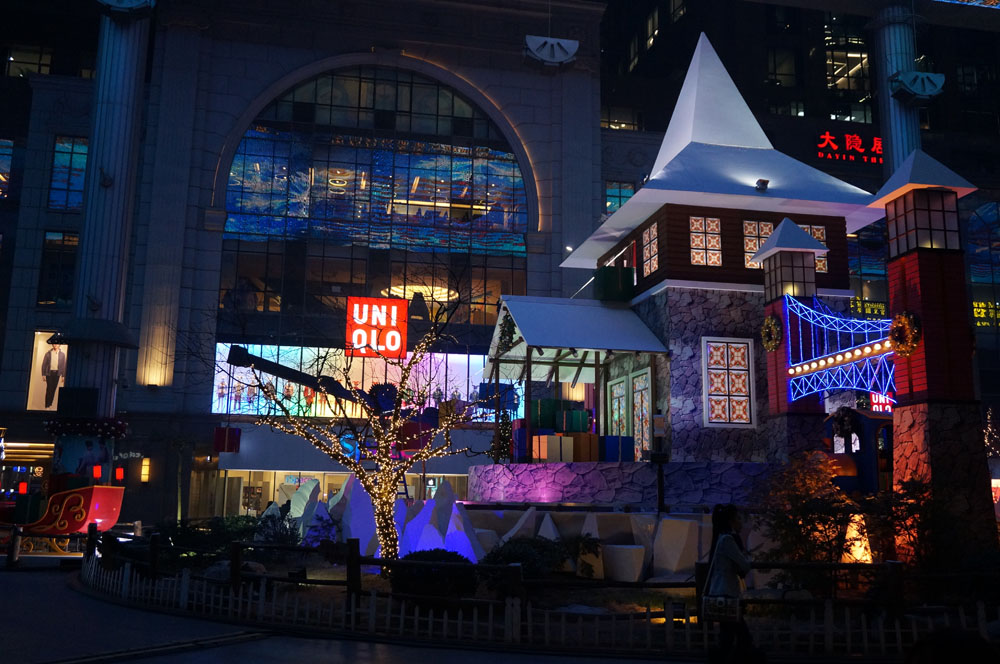
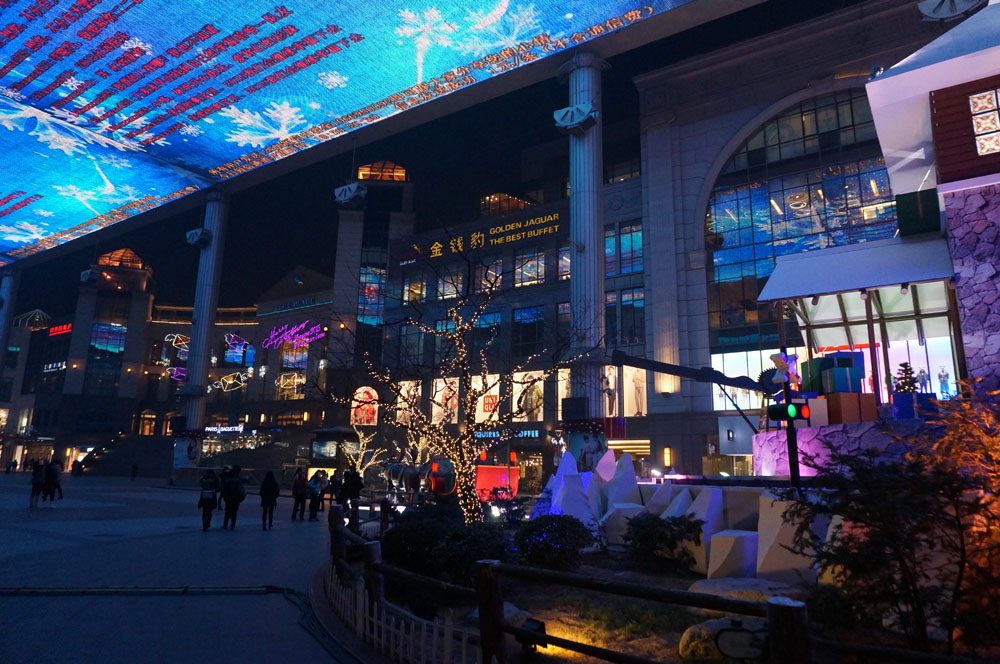
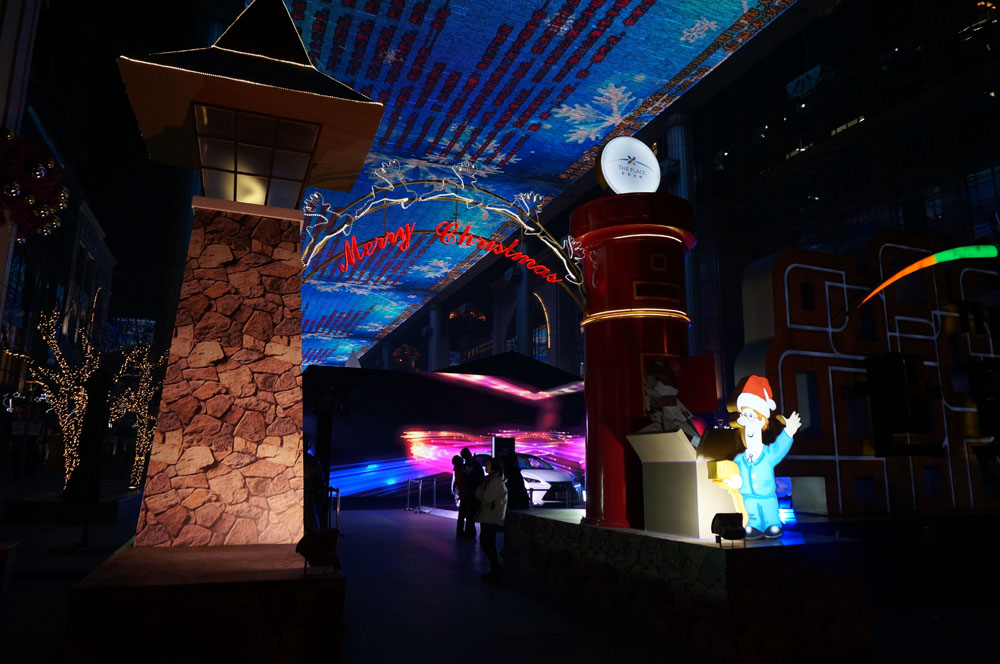
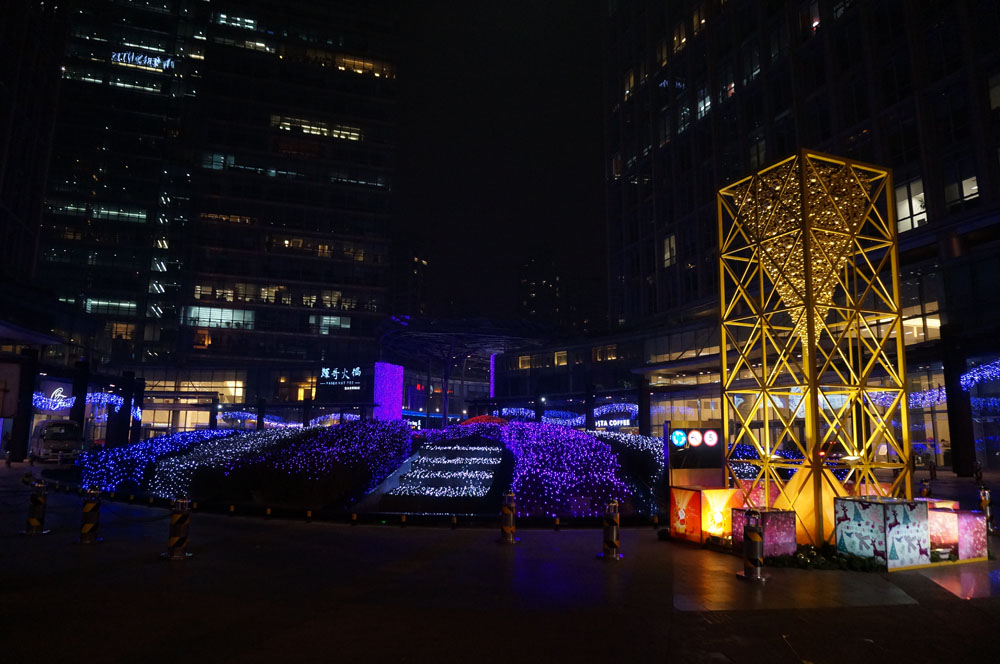
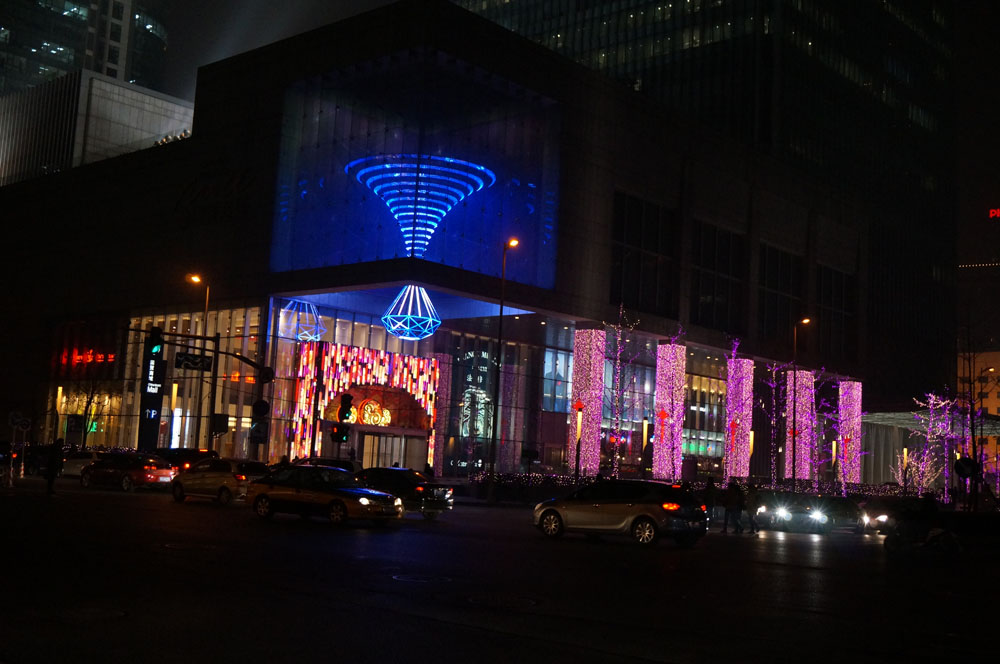
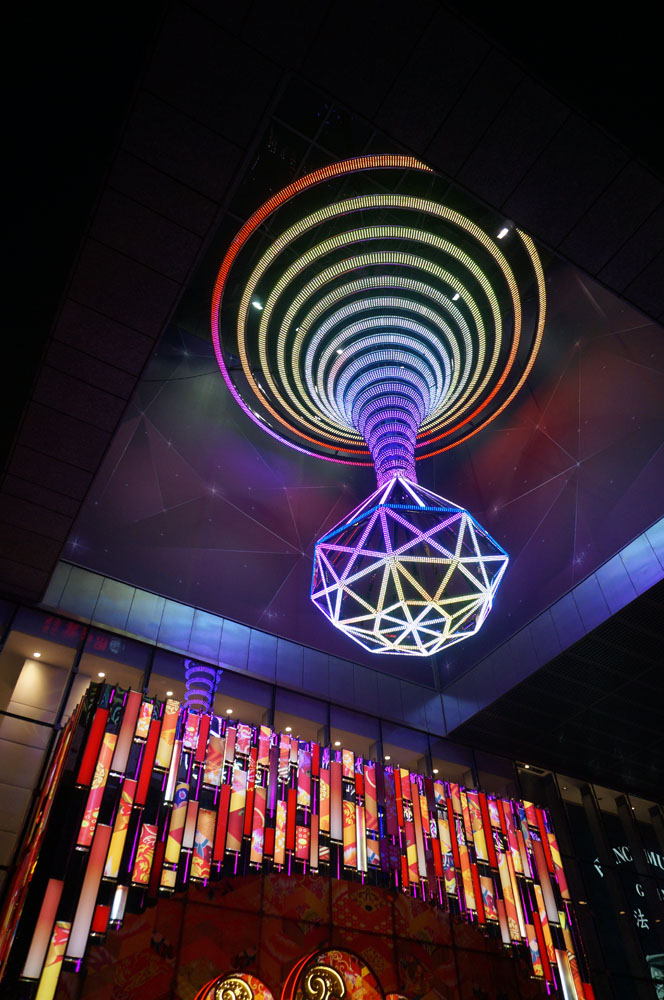
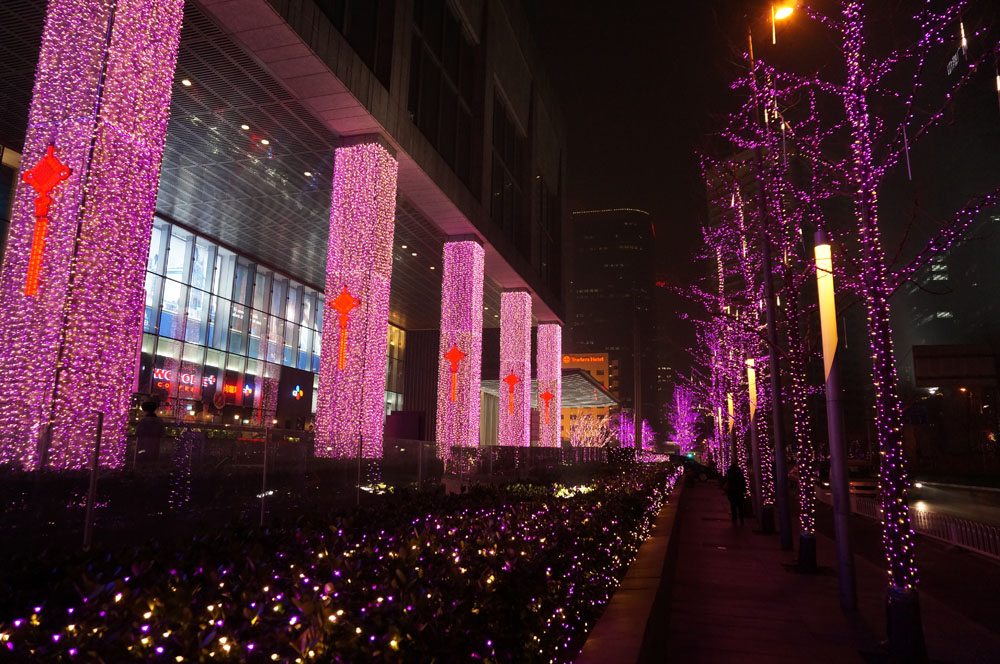
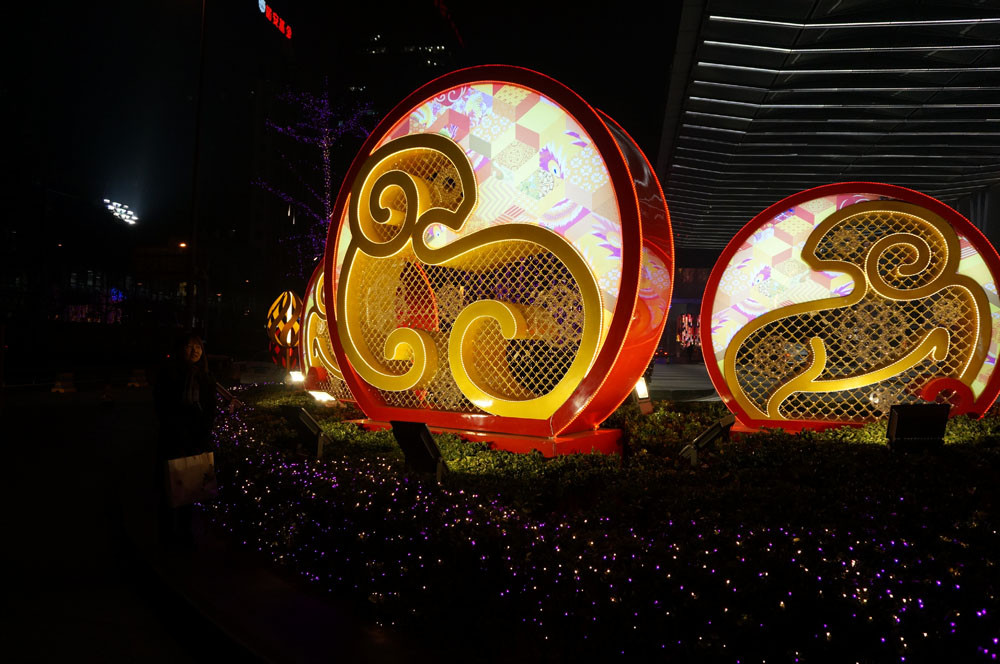
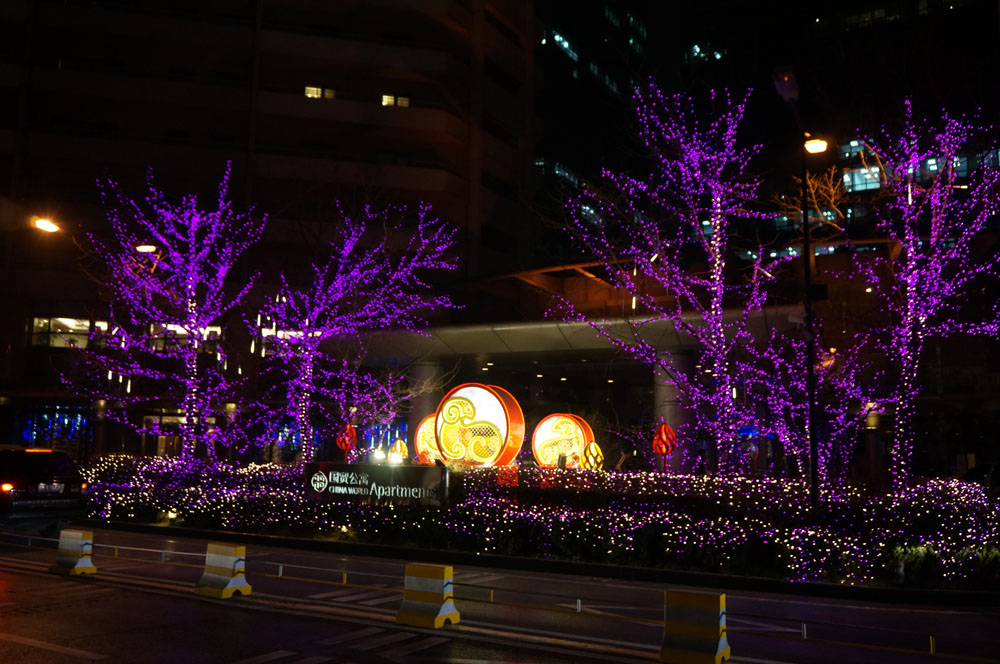
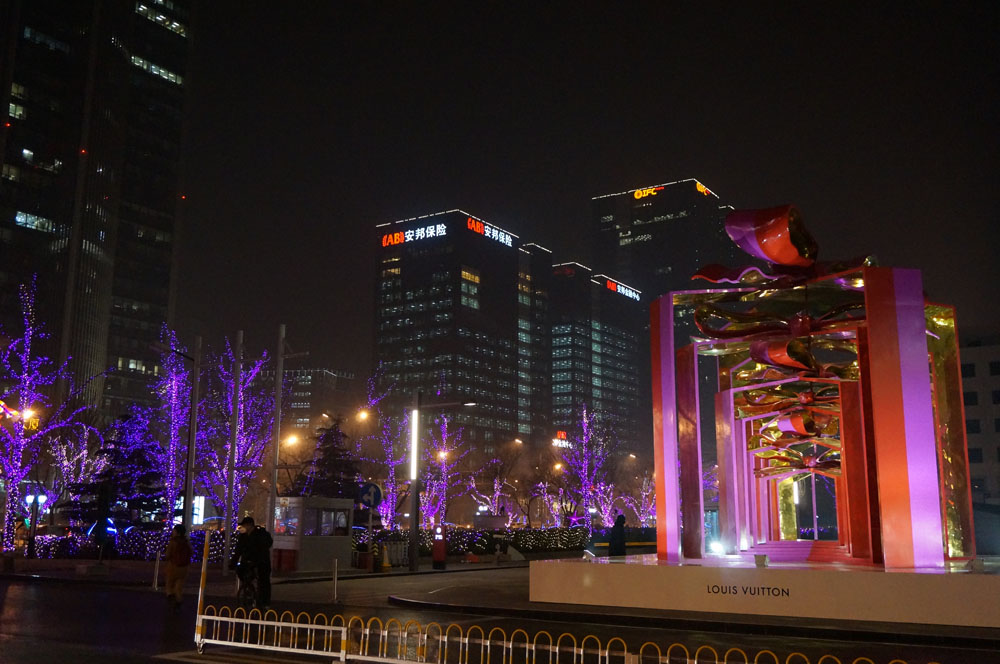
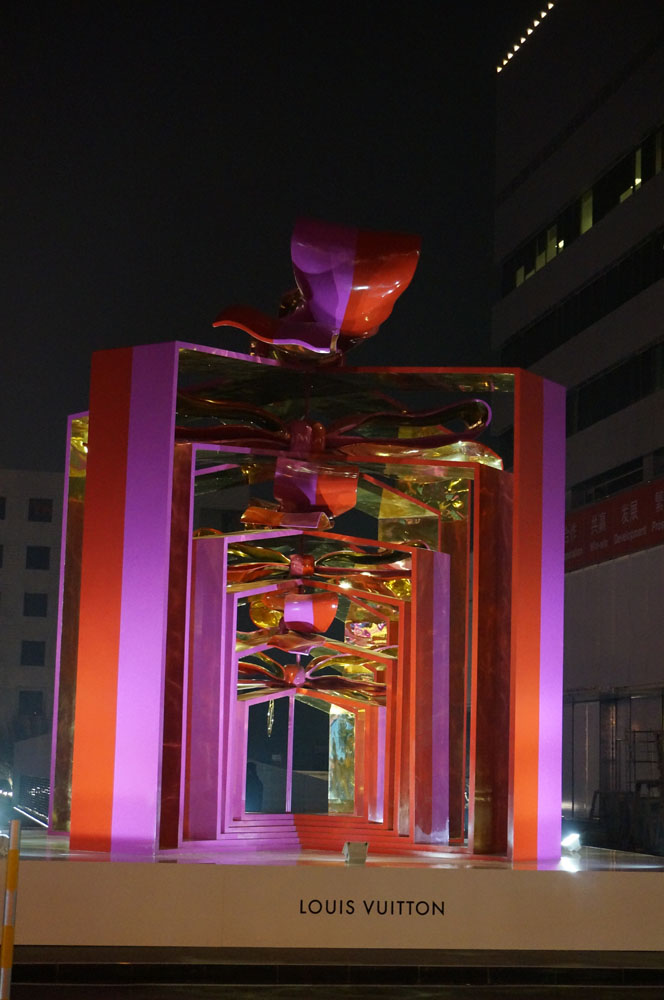
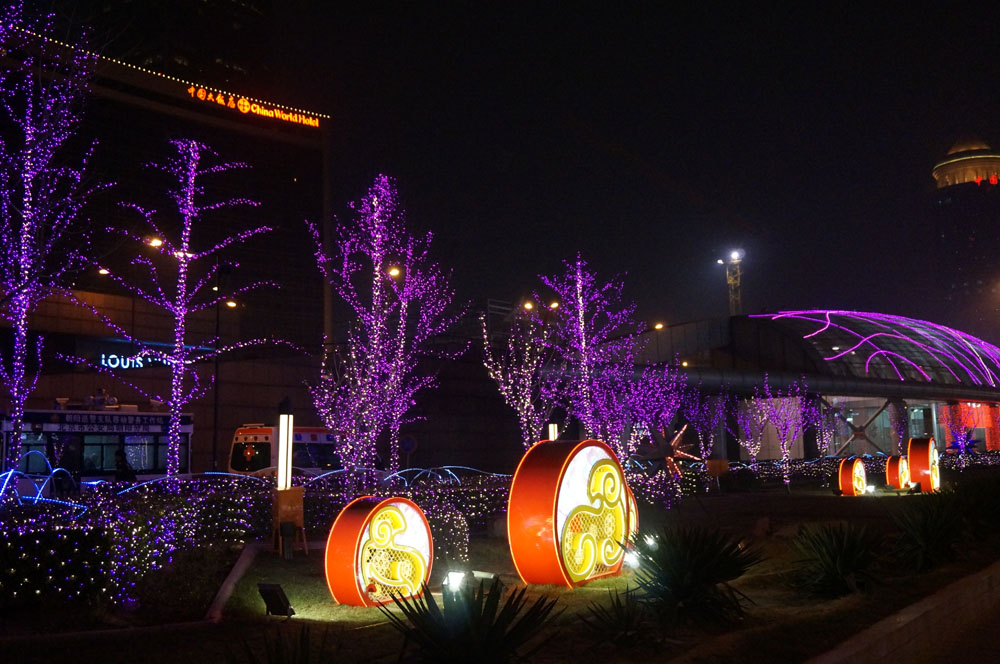
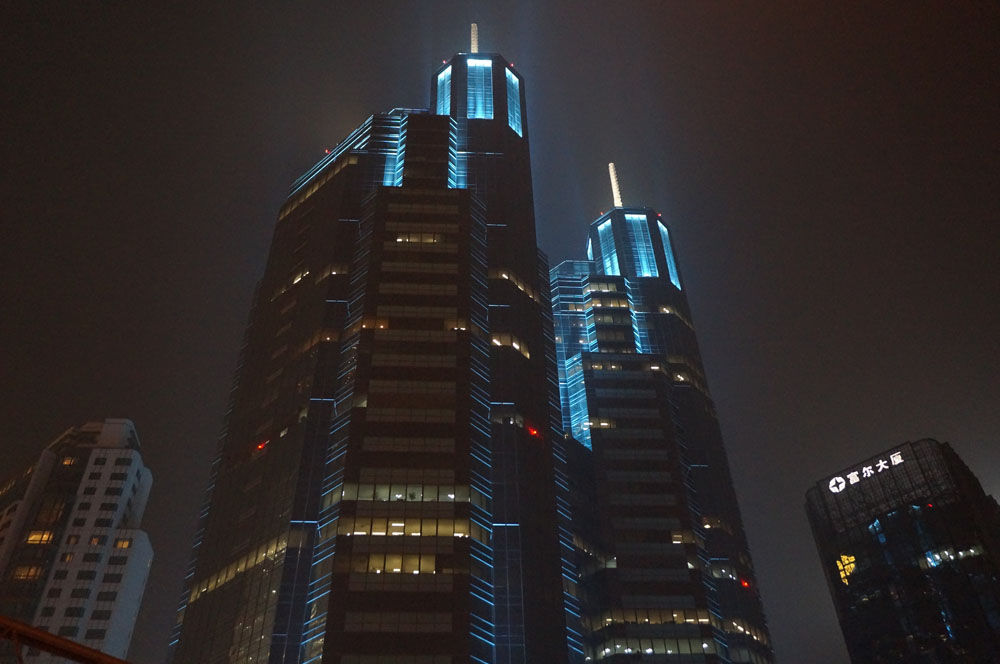
Pretty interesting to explore CBD (Beijing Central Business District) at night. Except for “The Place” (shimaotianjie), with its giant overhead LED screen, the area is pretty deserted.

The lights are pretty nice and it makes a kind of romantic stroll to visit the area of The Place, World Trade Center (the 3 units) and China Hotel.